The most common skid steer attachments are buckets, 4-in-1 buckets, pallet forks, augers, grapples, trenchers, brooms and hydraulic breakers. Whether an attachment works on a particular machine depends on three things: the quick attach plate, the hydraulic flow the machine can supply and its rated operating capacity. Get those right and one skid steer can dig, lift, drill, clear and clean up on the same day.
Common skid steer attachments at a glance
The table lists the attachments most Australian owners use, what each one does and the hydraulic supply it needs.
| Attachment | What it does | Hydraulic flow needed |
|---|---|---|
| General purpose bucket | Digging, loading and carrying soil, gravel and mulch | None |
| 4-in-1 bucket | Opens like a clamshell to grab, doze, level and backfill | Standard |
| Pallet forks | Lifting pallets of bricks, pavers and bagged products | None |
| Grapple bucket | Gripping branches, logs, rocks and building waste | Standard |
| Auger | Drilling post holes and footings | Standard, high flow for large augers in hard ground |
| Trencher | Cutting narrow trenches for cables and irrigation | Standard or high flow, depending on size and soil |
| Hydraulic breaker | Breaking concrete slabs, paths and rock | Standard |
| Broom or sweeper | Cleaning roads, car parks, sheds and site floors | Standard |
| Power rake | Breaking up and levelling soil, removing rocks before turf | Standard or high flow |
| Brush cutter | Cutting grass, scrub and saplings | Standard for light models, high flow for heavy ones |
| Mulcher | Grinding trees and scrub into mulch for land clearing | High flow |
| Cold planer | Milling asphalt and concrete | High flow on a large machine |
Buckets
Most skid steers spend most of their hours with a bucket on. A general purpose bucket handles everyday digging and loading, a 4-in-1 bucket adds grabbing, dozing and fine levelling, a tooth bucket bites into hard or rocky ground, a light material bucket carries more mulch or woodchips per trip, and a skeleton bucket sifts rocks and roots out of soil.
Choose the bucket by the material, not just the machine. A larger bucket full of dense material such as wet soil or crushed rock can go over the rated operating capacity, while light material can use a bigger bucket safely. Many owners keep one general purpose bucket and add a 4-in-1 or light material bucket for the work they do most.
Digging and drilling attachments
These attachments turn a skid steer into a small digging machine for jobs a bucket can't do neatly.
- Auger: a hydraulic drive head with interchangeable bits for post holes, fence lines, footings and tree planting. Larger bits and hard or rocky ground need more torque and often high flow.
- Trencher: a digging chain that cuts a narrow trench for cables, irrigation and drainage, often deeper than a bucket can reach.
- Backhoe attachment: a small digging arm that mounts on the front and turns the skid steer into a mini digger for occasional trenching.
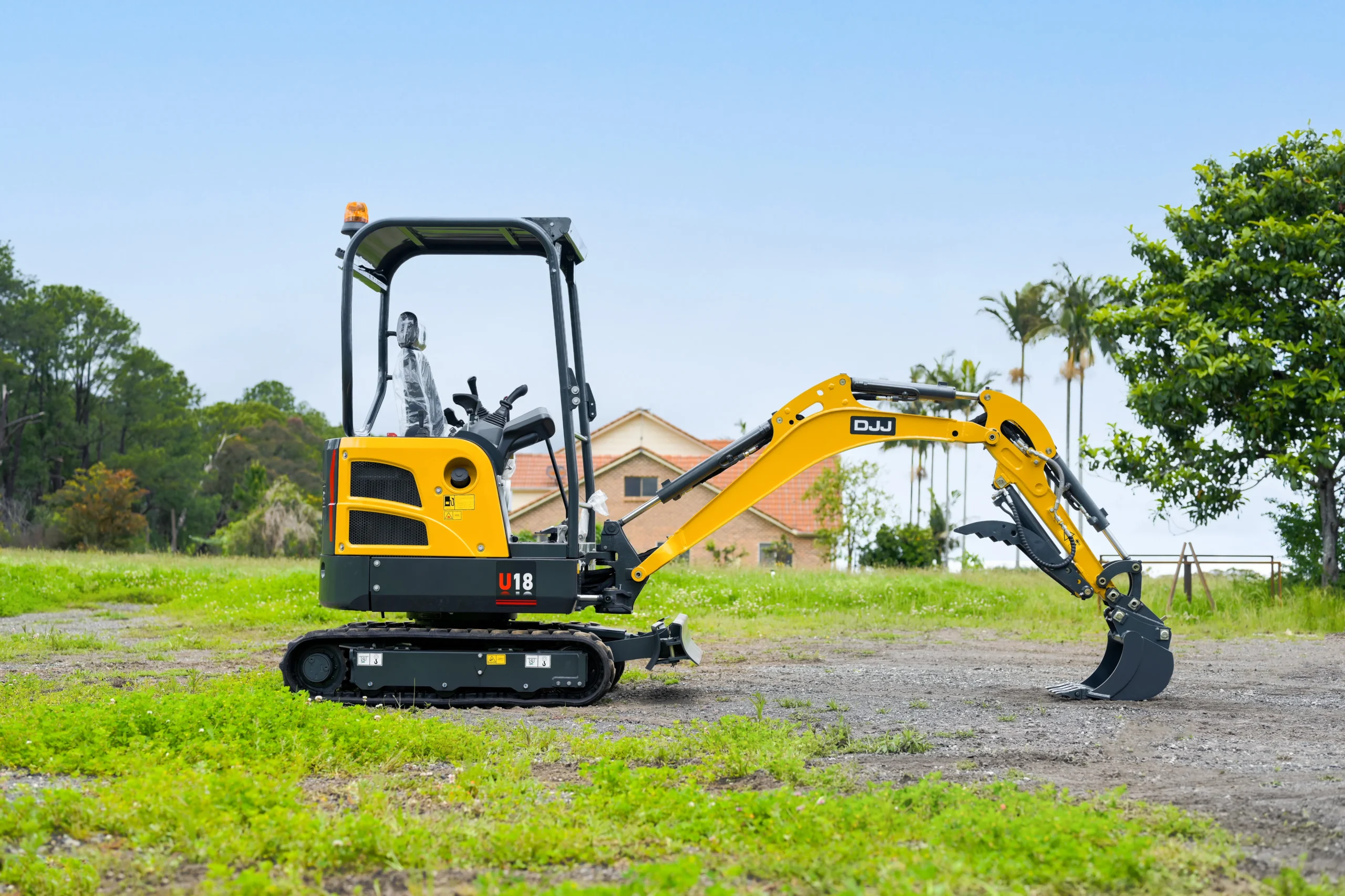
For regular deep digging, footings or work below ground level, a mini excavator does the job faster and more accurately than any skid steer attachment, with its own range of types of excavator attachments for breaking, grabbing and drilling.
Material handling attachments
With the right tool on the front, a skid steer moves almost any load that fits its rated operating capacity.
- Pallet forks: lift and carry palletised materials around building sites, yards and farms. Check the fork rating and keep loads within the machine's capacity, which drops as the load sits further out on the tines.
- Grapple bucket: a bucket with hydraulic top jaws that clamp branches, logs, rocks and demolition waste so they don't fall off.
- Bale spear: spikes for lifting and moving round or square hay bales on farms.
- Root or rock grapple: open tines that let soil fall through while holding roots, rocks and debris.
Land clearing and site preparation
Land clearing and site preparation attachments range from light tools that run on any skid steer to heavy cutting heads that need a large, high-flow machine.
A brush cutter slashes grass, scrub and saplings and comes in standard and high-flow versions. A mulcher grinds standing trees and scrub into mulch in one pass, but it needs high flow and a machine with good cooling. A stump grinder removes stumps below ground level. For finishing, a power rake breaks up and levels soil and windrows rocks before turf or seeding, and a tiller cultivates garden beds and small paddocks.
Demolition, roads and clean-up
A hydraulic breaker breaks up concrete slabs, footpaths and rock, and runs on standard flow if it's matched to the machine's size. A cold planer mills asphalt and concrete for road repairs, but it needs high flow and is usually fitted to large machines. A broom or pick-up sweeper cleans roads, car parks, sheds and site floors, and a dozer or grader blade spreads and levels road base and fill.
Standard flow vs high flow hydraulics
The auxiliary hydraulic circuit powers every attachment that moves on its own, and its flow decides which attachments a machine can run.
| Hydraulic system | Typical flow | Attachments it runs |
|---|---|---|
| Standard flow | Roughly 60-100 L/min | 4-in-1 buckets, grapples, augers, breakers, brooms, light brush cutters |
| High flow | Roughly 100-170 L/min | Mulchers, stump grinders, heavy brush cutters, large trenchers, cold planers |
| Enhanced high flow | Similar flow at higher pressure | Industrial forestry mulchers, rock saws and large cold planers |
Matching matters in both directions. A high-flow attachment on a standard-flow machine stalls under load, the oil runs through the relief valve and turns into heat, and both machine and attachment can be damaged. A standard-flow attachment on a high-flow machine can be over-pressurised and blow seals unless the flow is limited. Check the flow and pressure on the attachment's plate against the machine's specification before you buy.
Compact and electric skid steers suit the light end of the list. A machine with a 0.35 t rated operating capacity, like the Yuchai S35, is built for buckets, forks and light tools, not mulchers or cold planers.
Do all skid steer attachments fit all skid steers?
No, but most full-size skid steers share one mounting standard. Machines from most manufacturers use the universal quick attach plate set out in ISO 24410 and SAE J2513: the attachment hooks onto the top of the plate and two levers or hydraulic pins lock the bottom, so a bucket from one brand fits another brand's machine.
Mini skid steers and stand-on or walk-behind loaders are different. They use smaller plates, and the mounting style varies between manufacturers, so check the plate type and width before buying any attachment for a small machine. Adapter plates exist, but they add weight in front of the machine and reduce the load it can safely carry, which matters most on machines with a small rated operating capacity.
Fitting the plate is only the first check. Before you buy an attachment, confirm:
- Quick attach plate: universal plate or the specific mini loader mount
- Hydraulic flow and pressure: standard or high flow, within the attachment's rating
- Couplers: the hydraulic couplers match, usually flat-face types
- Case drain: a third return line if the attachment's motor needs one, common on high-speed mulchers and planers
- Electrical connector: attachments with extra functions use a 14-pin plug, and the wiring can differ between machine brands
- Weight: the attachment plus its load stays within the rated operating capacity
How to choose the right attachment
Start with the jobs you do most often, then check the machine, then decide whether to buy or hire.
If you only do a job a few times a year, such as a fence line or a one-off clearing job, hiring the attachment is usually cheaper than owning it. If you do the job every week, owning it saves hire costs and means it's ready when you need it. Most owners buy a general purpose bucket and pallet forks first, then add the one or two attachments that match their regular work. The skid steer uses in each industry show which attachments get the most hours.
| If your main work is | Start with |
|---|---|
| Landscaping and residential sites | 4-in-1 bucket, pallet forks, auger, power rake |
| Farms and livestock | General purpose bucket, bale spear, grapple bucket, pallet forks |
| Construction clean-up | General purpose bucket, grapple bucket, broom |
| Fencing | Auger with the right bit sizes |
| Land clearing | Grapple bucket and brush cutter, or a mulcher on a high-flow machine |
| Indoor and warehouse work | Light material bucket, pallet forks, broom |
Looking after skid steer attachments
Attachments take a beating, and a few habits keep them working and safe.
- Grease the pivots on grapples, 4-in-1 buckets and blades as the manufacturer recommends.
- Check hoses and couplers for leaks, cracks and damage before each use, and keep coupler faces clean.
- Relieve pressure safely: with the attachment on the ground and the machine off, move the auxiliary control back and forth to release pressure before disconnecting. Never hit a coupler to force it on, and store attachments out of direct sun, because heat builds pressure in the hoses.
- Keep coolers clean when mulching, cutting or sweeping, because dust and leaves block the radiator and oil cooler and the hydraulic oil overheats.
- Check wear parts such as bucket edges, teeth, auger tips and broom bristles, and replace them before they wear into the frame.
The right attachment can make one skid steer do the work of several machines, as long as the plate, the hydraulic flow and the rated operating capacity all match. DJJ Equipment sells the Yuchai S35 Pro and S35 Max electric skid steers for light loading, clean-up and indoor work, and you can compare both models in our range of skid steers for sale or call 1800 355 388 to talk through the attachments you plan to run.