Thinking about hiring a forklift in Australia but unsure what to look out for? This blog will guide you on how to assess forklift hire companies, avoid hidden costs in contracts, and understand key factors like wear and tear.
Assessing Forklift Hire Companies for Service and Reliability
When choosing a forklift hire supplier, price is important, but service quality and reliability should be your top priorities. A low-cost rental contract without strong backup support could lead to major project delays if the equipment breaks down, ultimately costing you much more than you saved on rental fees. Here's what to look for in a reliable forklift hire company.
Service Response Time and Geographic Coverage
How quickly a supplier responds to forklift breakdowns is a key factor in service quality. This is especially important for businesses that rely on continuous equipment operation (such as factories and distribution centres), where quick repairs and replacements are essential.
- Metro Areas: Most reliable suppliers promise to respond to equipment breakdowns within one business day.
- Rural and Regional Areas: Response times may be longer in remote areas.
Australia's geography means that services can vary depending on location. While large suppliers cover major cities on the east coast (like Brisbane, Sydney, and Melbourne), response times and availability can drop in more remote areas. So, if you're hiring a forklift for use in a rural location, make sure to check the delivery times, maintenance support, and any backup equipment policies beforehand.
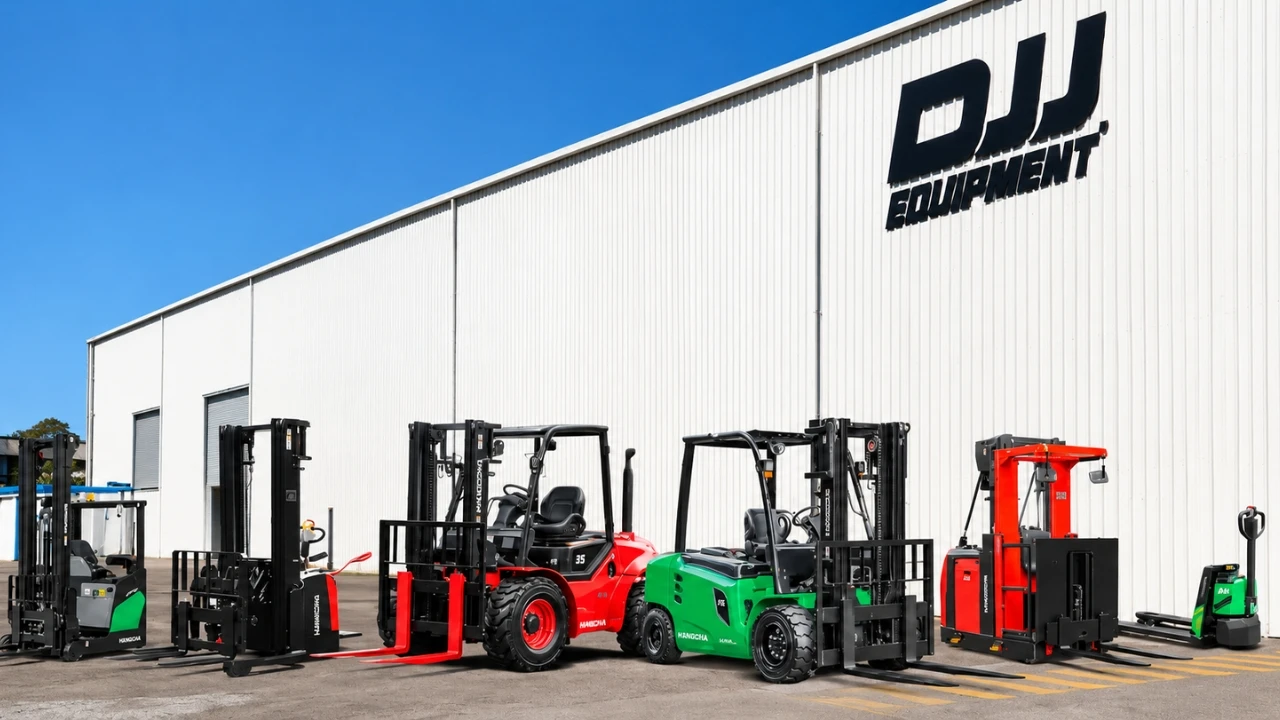
At DJJ Equipment, we pride ourselves on fast response times and local stock availability. Our large parts inventory means we can repair your forklift quickly without having to order parts or wait.
Forklift Hire: Maintenance and Evaluation Tips
In Australia, there isn't a public system to check the maintenance records of forklift hire companies. However, you can still indirectly assess their reliability through a few methods:
- Information Requests: Ask your supplier directly if maintenance costs are included in the quote and if backup forklifts are available in case of breakdowns.
- Customer Reviews: Google search for online reviews of the supplier, and ask them for contact details of local businesses currently using their equipment. Speaking with other customers can give you insights into the supplier's service quality.
By doing this due diligence, you can ensure that the supplier you choose has the necessary support and stability to keep your business running smoothly, beyond just offering a competitive price.
Check out our Google reviews and see what our customers are saying about our service!
Forklift Hire Contract Breakdown: Avoid Hidden Costs and Liability Traps
A forklift hire contract is a legally binding document, and it's essential to carefully review the fine print. Focusing only on the rental price can result in a much higher total cost of ownership (TCO) due to hidden charges and responsibilities. Here's what to look out for:
Beware of Hidden Fees
In Australia, forklift hire contracts often contain hidden costs that businesses need to be aware of:
Overtime Charges: Most contracts limit forklift use to 8 hours a day. Extra hours (like weekends or overnight) may incur additional fees, so clarify this with your supplier.
Return Notice Period: Many contracts require 1-2 weeks' notice before returning the equipment. Missing this deadline could lead to extra rental charges, even if the forklift isn't used.
Fuel and Cleaning Fees: Forklifts should be returned with a full tank or charged battery. If not, suppliers may charge fuel, charging, or cleaning fees, especially if the equipment's been used in tough conditions.
Liability and Insurance Considerations
Forklift hire contracts often outline who is responsible for damage to the equipment. Pay close attention to the following:
- Excess and Third-Party Liability: Many businesses wrongly assume that the hire company covers all risks, but in reality, the hirer often has to pay an "excess" for any damage to the forklift. If the forklift causes damage to third-party property, you could be held liable too. It's a good idea to take out specific plant and equipment insurance to fully protect your assets.
- Compliance for Long-Term Hire: If your rental exceeds three months, Australian law typically requires the hirer to ensure the forklift undergoes safety testing and tagging (Test and Tagging). This adds another compliance responsibility to your WHS (Work Health and Safety) management process.
Managing Forklift Hire Risks: Wear vs. Misuse
It's essential to distinguish between "fair wear and tear" and "misuse" in a forklift hire contract. Misuse could lead to high repair costs, so understanding these terms is crucial for managing risk.
Fair Wear and Tear
Fair wear and tear refers to the natural depreciation and wear that happens when the forklift is used correctly over time. The hire company typically covers these costs, which may include regular maintenance, lamp bulb replacements, and external wear on hydraulic hoses. However, damage to key parts like tires or forks, or wear due to excessive impact, is usually not covered and will be your responsibility.
The Financial Impact of Misuse
"Misuse" occurs when the forklift is used for purposes it wasn't designed for, often leading to damage. This can include things like:
- Overloading: Lifting loads heavier than the manufacturer's recommended capacity.
- Neglecting Equipment Issues: Continuing to operate the forklift when warning lights are on or when the forklift is already damaged.
These types of misuse typically result in significant repair costs, and you'll still be responsible for rental fees during the repair period. To avoid unnecessary costs, make sure your team adheres to proper operating procedures and reports any issues with the equipment right away.
Choosing the right forklift hire supplier and fully understanding the rental contract is crucial not only for keeping rental costs in check but also for managing your long-term expenses and operational efficiency. By focusing on service quality, response time, and the finer details of the contract, businesses can avoid hidden costs and potential risks that might derail their operations.
Need to hire a forklift? Come to DJJ Equipment for transparent pricing, reliable service, and top-notch forklift hire solutions across Australia!