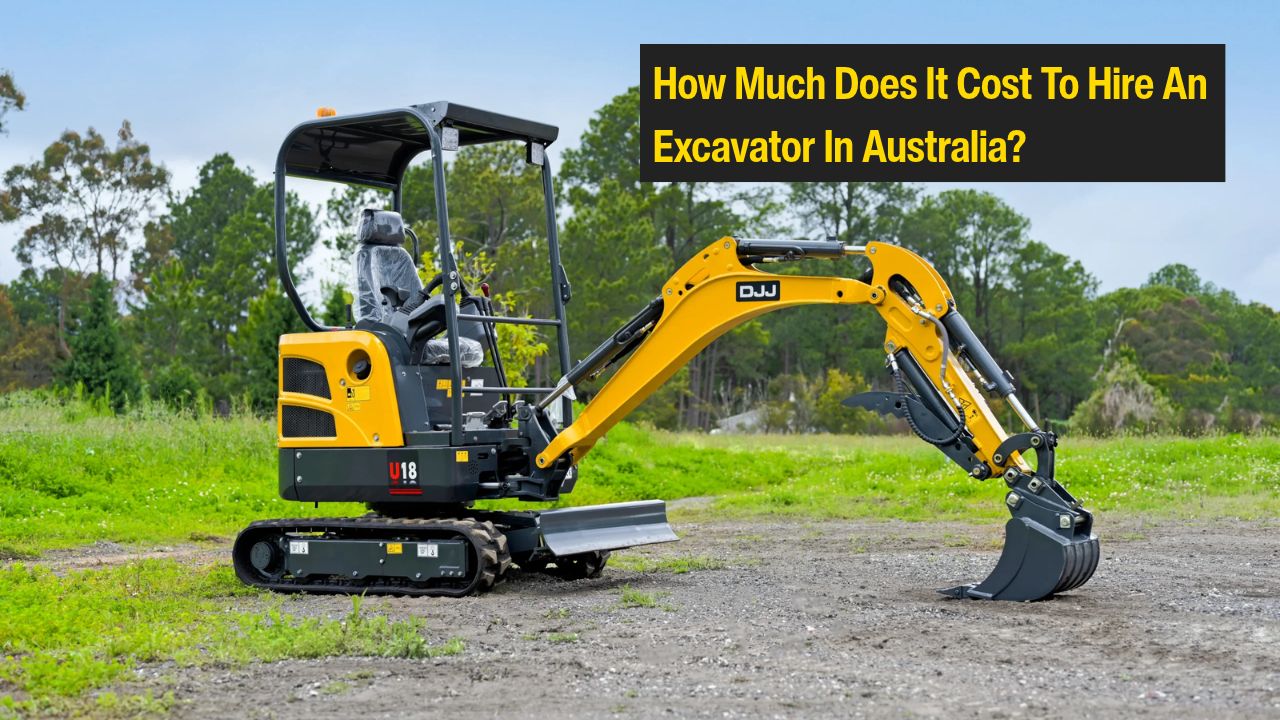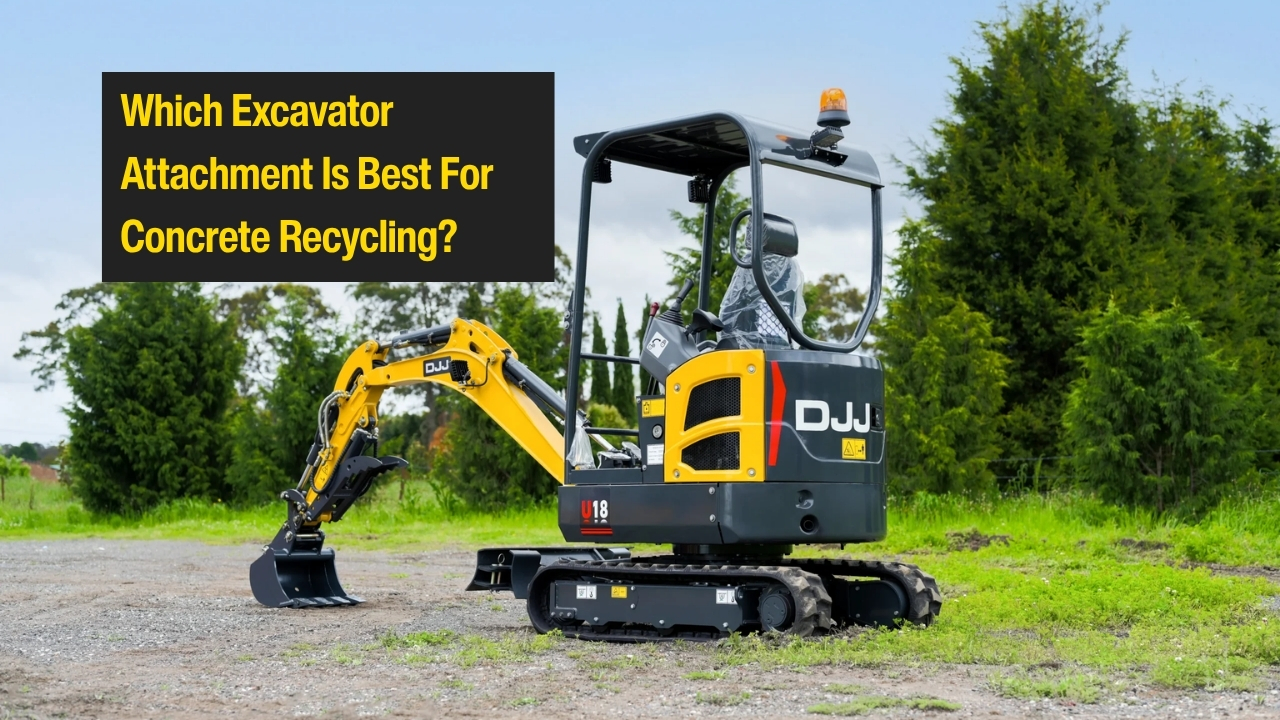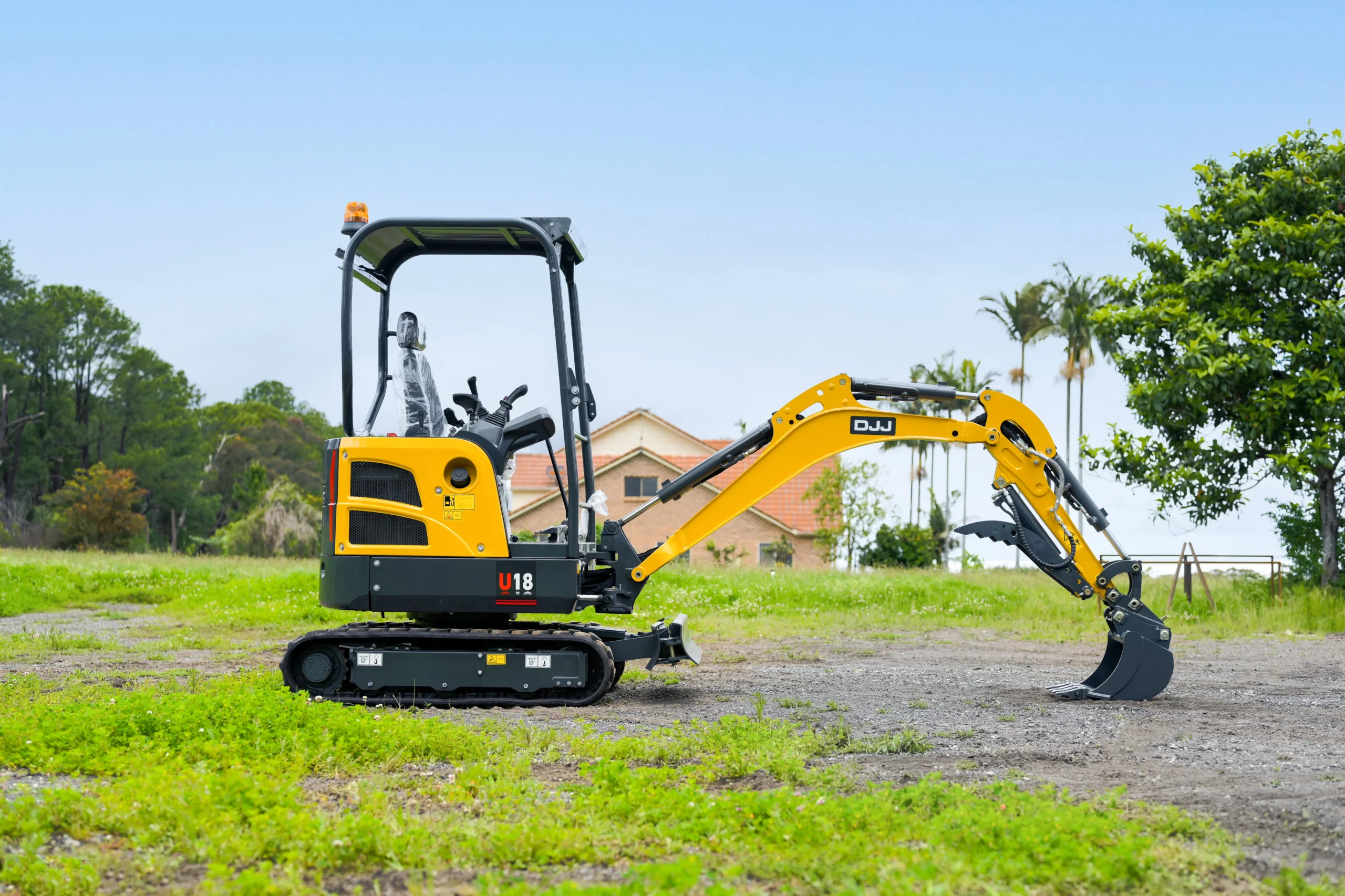

To choose an excavator, start with the deepest trench and the heaviest material on your jobs. Then check the narrowest gate on site, how you will move the machine and which attachments it needs to run. Most farms, rural blocks, landscaping jobs and house sites in Australia are well served by a mini excavator of 1 to 6 tonnes. Buying used is a sound option if you check the machine and its finance history first.
Choose the excavator size by the job
An excavator's size should come from the dig depth, reach and lifting the work needs, not from engine power. Operating weight on the spec sheet is the figure to compare, because model names don't always match the weight. A machine sold as an 18 class mini, for example, weighs 1,880 kg.
| Size class | Typical dig depth | Typical work |
|---|---|---|
| 1-2 t micro and mini | About 1.4-2.3 m | Irrigation and cable trenches, footings, post holes, landscaping, work through side gates |
| 2-6 t mini | About 2.5-3.8 m | House sites, drainage, farm dams and drains, driveways, small demolition with a hammer |
| 6-10 t midi | About 4-4.5 m | Civil and council work, larger services, loading trucks |
| Over 10 t | Over 4.5 m | Bulk earthworks, quarries, mining |
The 1.88 t Yuchai U18, for example, digs 2,295 mm deep with 4,125 mm of reach, while a 1 t machine digs about 1.4-1.5 m. A 5.7 t machine reaches about 3.7 m deep. Choose the smallest machine that reaches your deepest trench with some margin, because a bigger excavator costs more to buy, move and run.
Check site access and ground conditions
Site access often decides the excavator before the job does. Measure the narrowest gate, side path or doorway, and check overhead clearance under eaves, carports and power lines. Many 1 t machines have tracks that retract to about 800 mm, and some 1.8 t machines narrow to about 1.1 m before widening again for stability.
Ground matters too. A 1.6-1.8 t machine on rubber tracks puts about 26-31 kPa on the ground, which is gentle on lawns and pavers, although slewing on soft turf still marks it. Rubber tracks suit most small machines, while steel tracks last longer on rock and demolition rubble.
Conventional, reduced or zero tail swing
Tail swing describes how far the back of the excavator's upper body overhangs the tracks when it turns. A conventional machine overhangs and usually lifts and digs best for its size. A zero tail swing machine keeps its rear inside the track width, which suits work beside walls, fences and traffic. It often lifts less than a conventional machine of the same weight, though.
Zero tail swing only protects the back of the machine. The boom and bucket still swing outside the tracks, so keep people out of the swing area whatever the design.
Work out how you will move the excavator
Transport is the cost many first-time buyers miss. A 1-2 t excavator on a braked plant trailer can usually be towed behind a ute rated for 3,500 kg, while a 5-6 t machine needs a truck, tag trailer or float. The legal limit is the lowest of the ute's towing capacity, its gross combination mass (GCM), the towbar rating and the trailer's ATM, so check all four.
Add the buckets, attachments, fuel and chains to the machine's operating weight, then add the trailer's tare. Trailer brakes are needed over 750 kg. Over 2,000 kg, the trailer needs brakes on every wheel, controlled from the driver's seat, and a breakaway system that holds the brakes on if the trailer comes off.
A car licence covers a tow vehicle up to 4.5 t GVM. A heavier truck needs a light rigid or medium rigid licence, depending on its GVM. Chain the excavator to the trailer's tie-down points with the bucket and blade lowered, and never hook chains onto the tracks.
Attachments and auxiliary hydraulics
Attachments turn an excavator from a digger into a post hole borer, rock breaker or clean-up machine, so check the hydraulics before you buy. A hydraulic hammer needs a one-way auxiliary circuit with a return line, while a tilt bucket, thumb or auger needs a two-way circuit. The attachment's required oil flow and pressure must sit inside what the machine delivers.
Ask which auxiliary lines are fitted to the end of the arm. The 1 t Yuchai E12, for example, comes with preset hammer and rotation lines and a 24 L/min pump. Those lines decide which excavator attachments the machine can run, from a hammer to a tilt bucket.
A quick hitch saves time but has caused serious injuries when buckets have dropped. Choose a fully automatic hitch, or always fit the safety pin on a semi-automatic one, and ask the supplier for its compliance certificate. The current Australian Standard for quick couplers is AS 13031:2023.
New or used excavator
New mini excavators of 1-2.5 t were advertised at about $13,000 to $65,000 in October 2026, with value brands at the low end and Japanese brands at the top. Many listings don't say whether GST is included, so ask before you compare. A new machine brings a full warranty and known hours, while a well-kept used one can cost less and hold its value.
Before you pay for a used excavator, check:
- A cold start, with no heavy smoke or knocking
- Hours against wear on the pedals, seat, pins and tracks
- Play in the pins, bushes and slew ring
- Track tension, sprocket teeth, rollers and cuts in rubber tracks
- Leaks at the cylinders, hoses and final drives
- Cracks or welds on the boom, arm and bucket
- Service records and the quick hitch locking pin
Search the serial number on the Personal Property Securities Register (PPSR) for money owing. It costs $2 online. Then compare the asking price with excavator prices by size for the same age and hours.
Licences, tickets and digging safely
No high risk work licence is needed to dig with an excavator in any Australian state, but the operator must be trained and competent. The national training unit is RIIMPO320 (Conduct civil construction excavator operations), and contractors and landscapers on construction sites also need a White Card. A farmer digging on their own property for farm work generally falls outside construction work.
Before you dig, lodge a free enquiry with Before You Dig Australia for plans of underground cables and pipes. It is a legal requirement in NSW and strongly recommended everywhere else, and plans still need checking on the ground. In WA, using an excavator as a crane to lift a suspended load needs a licence when the machine's safe working load is over 3 t.
GST, tax and finance when buying an excavator
A GST-registered business can usually claim the GST in an excavator's price as a credit, to the extent the machine is used for business. The $20,000 instant asset write-off is permanent from 1 July 2026 for businesses with turnover under $10 million, but most excavators cost more and go into the small business pool instead. Diesel burned off-road can also earn fuel tax credits.
Most small buyers pay cash or use a chattel mortgage. Get a written quote that shows the comparison rate and fees, and ask your accountant how the purchase fits your tax position.
Importing an excavator yourself
Excavators are free of customs duty from any country, so a free trade agreement doesn't change the price. GST of 10% still applies to the import value plus shipping and insurance. Used machines must arrive free of soil, seeds and plant material, and a dirty machine is cleaned again or sent back at the importer's cost. Australia also bans any goods containing asbestos, so ask for a test report on gaskets and parts from an accredited laboratory.
Warranty, parts and service after you buy
Compare the warranty in both years and hours, and ask where parts and service come from. On the Yuchai range, the E12 carries 1 year or 1,000 hours, and the YC10, U18 and YC60 carry 2 years or 2,000 hours. Ask whether the warranty covers travel to your site, because some suppliers charge call-out fees even under warranty.
DJJ Equipment sells Yuchai mini excavators from 1 to 5.7 tonnes, with branches and workshops at Silverwater NSW, Meadowbrook QLD and Bayswater WA. DJJ also supplies buckets, hydraulic breakers and augers for the excavators it sells, matched to the machine.
I live 3 hours north of Sydney and they had a mechanic to me the next day when I had a small fault on the machine.
Dru S., Sydney branch customer
That story comes from a public Google review, where you can read the full Google reviews of the Sydney branch.
Spare parts for the range are kept at the branches, so common wear items such as filters, bucket teeth and track parts don't have to come from overseas.
Choose the smallest excavator that reaches your deepest trench, fits through your gate and suits the vehicle you will move it with, then check the hydraulics for the attachments you plan to run. DJJ sells Yuchai mini excavators from 1 t to 5.7 t. Call 1800 355 388 with the jobs you do and how you will move the machine.