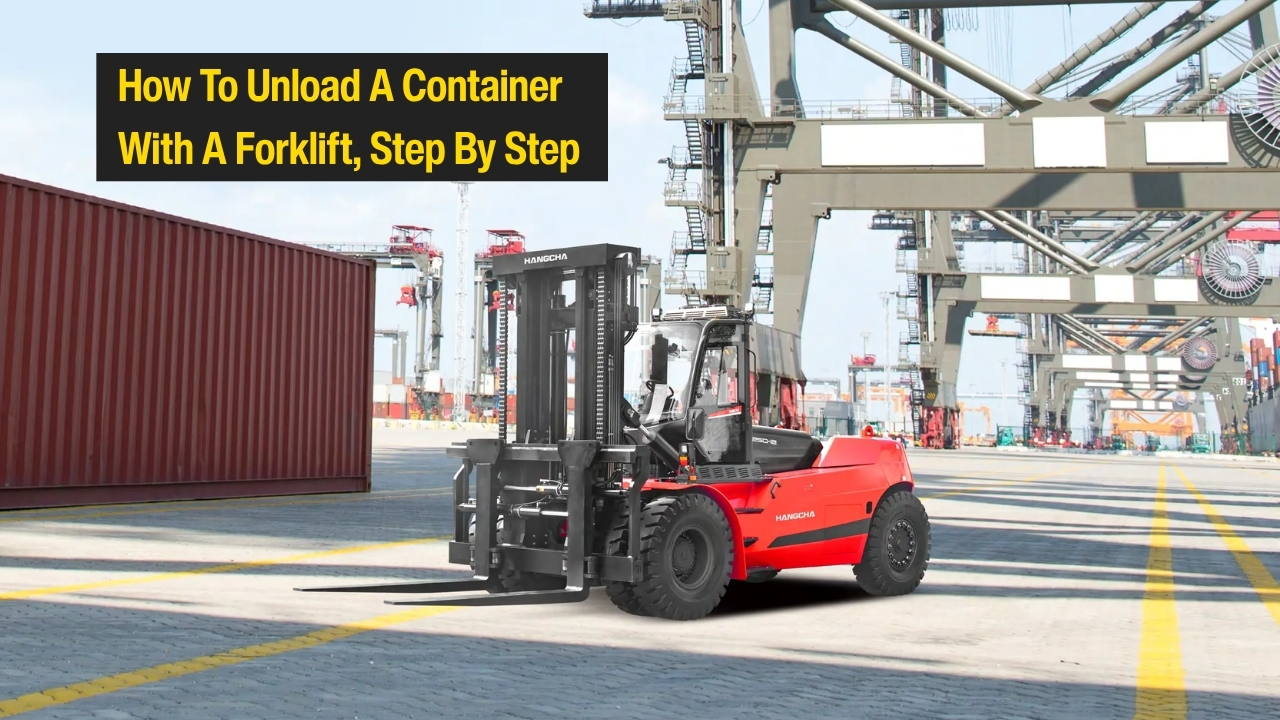
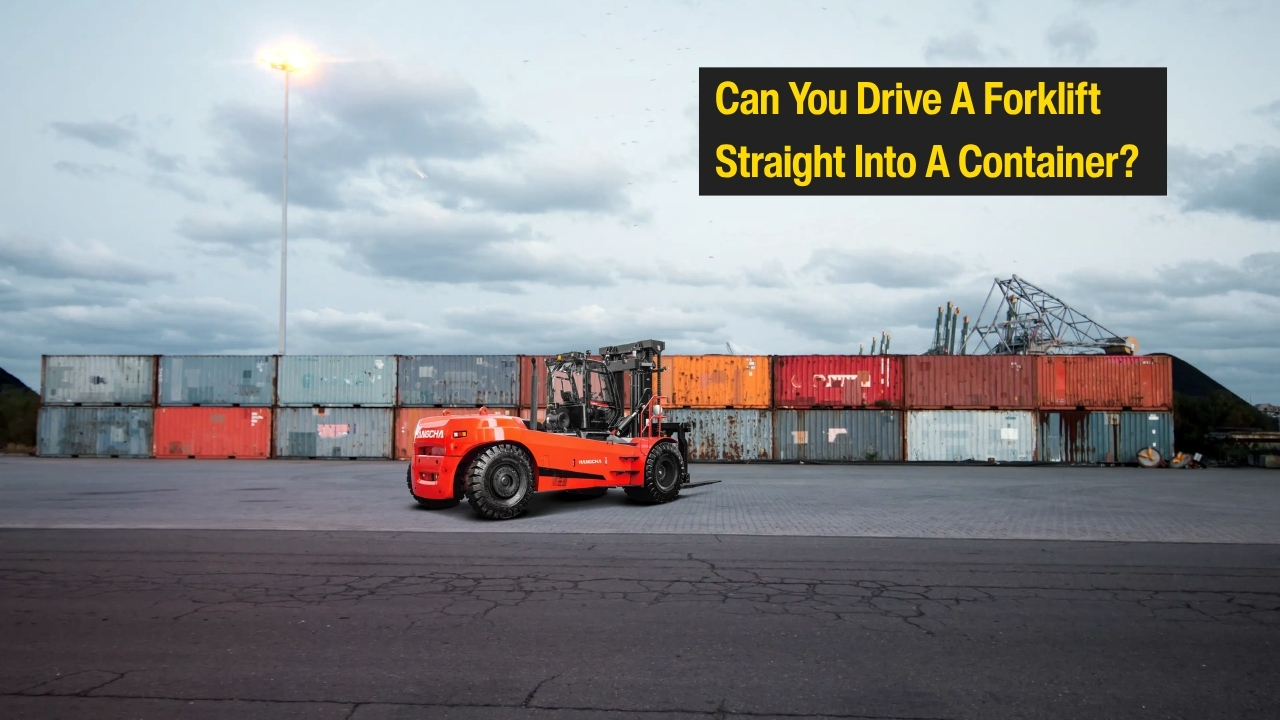
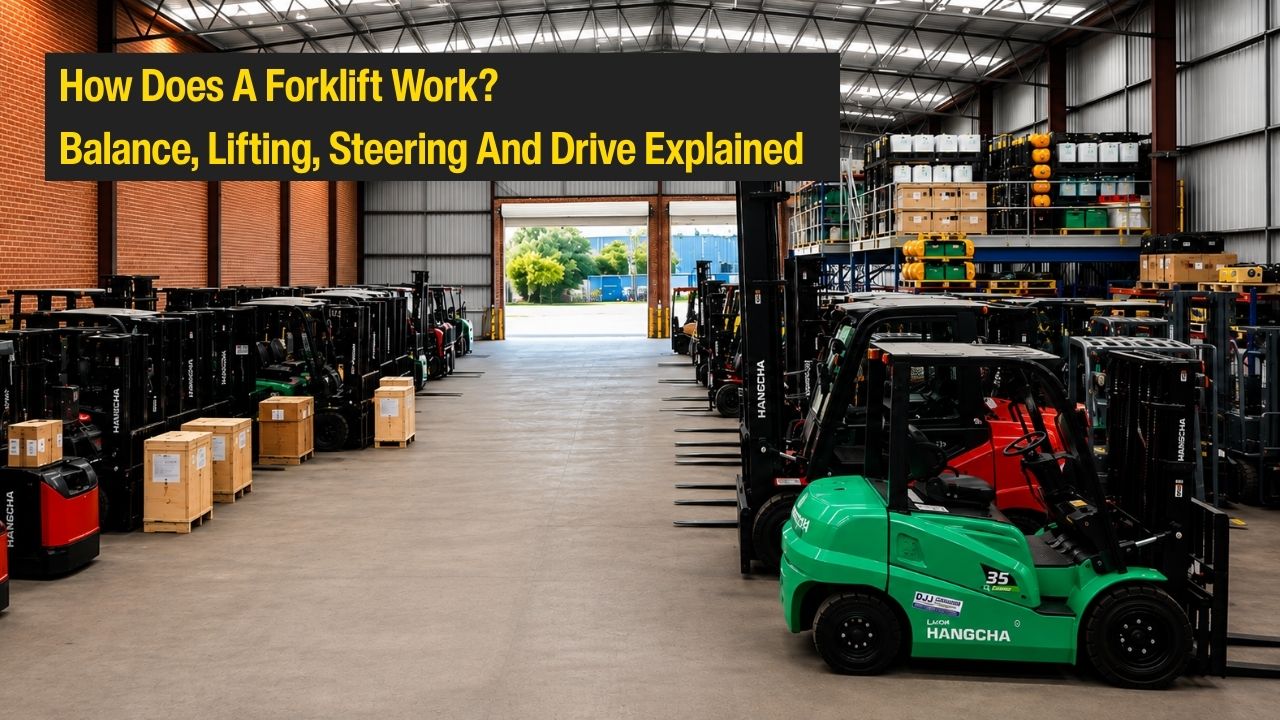
To unload a container with a forklift, secure the box first, open the doors behind a restraint, vent and check the air, then lift the pallets out from the doors inwards while people stay clear of the forklift. Most of the safety work happens before anyone touches the controls: knowing what's inside, where the container sits and who does what. Floor-loaded cartons carry the biggest manual handling risk, so they need their own plan.
Plan the unload before the container arrives
Container unloading starts with a plan made before the box reaches your site, because the equipment, the people and the order of work all depend on what's inside. SafeWork NSW puts setting that plan ahead of everything else when unpacking containers.
Ask your supplier for a packing plan. It lists each item, its weight, where it sits in the container and how it's restrained. Ask for goods on pallets or slip sheets too, so a forklift can take them out instead of a team lifting by hand.
- Weights: compare the heaviest item with the forklift's rated capacity on its data plate, at your real load centre. Attachments and higher lifts reduce that capacity.
- Fumigation and dangerous goods: ask whether the container was fumigated and whether any goods carry dangerous goods labels.
- Equipment: forklift, pallet truck, ramp or dock leveller, a conveyor if cartons are loose, and PPE such as gloves, hard hats, safety glasses and high-visibility clothing.
- People and space: enough workers that nobody works alone inside, and a clear set-down area for goods once they're out.
The load type decides the equipment more than anything else. This table matches common load types to the equipment regulators suggest for them.
| Load type | What usually unloads it | Watch for |
|---|---|---|
| Pallets | Forklift or electric pallet truck | Pallet condition and weight against capacity |
| Slip sheets | Forklift with a push-pull attachment | The attachment must be listed on the data plate |
| Bulk bags | Forklift with a bulk bag attachment | Lifting points and the attachment's rating |
| Loose cartons (floor-loaded) | Adjustable conveyor, pallet jack, trolley, team handling | Manual handling, covered below |
| Crates, sheet material, long items | Crane or forklift with grabs, spikes or slippers | The fall zone of each item; no dragging out with a chain |
Palletised freight is the easy case. If a load is awkward, such as stone slabs or long steel, and your site lacks the equipment or experience, SafeWork NSW's advice is to ask for help and bring in specialists to unpack it.
Where should the container sit for unloading?
A container should sit on level, undamaged ground or at a dock, with room to open both doors, set loads down and drive plant around it. Keep it away from overhead power lines and other traffic, and light the inside and the area around it well enough to unload safely. Heat, rain and poor ventilation also change how long people can work in and around the box.
At a loading dock
At a dock, the truck goes into position before the forklift moves onto the dock area, and the dock leveller is set in place first. Docks need raised edges or barriers where a forklift could run off the edge. They also need a control that stops the truck leaving too soon, such as a procedure that holds the driver until unloading is finished.
On the ground with a container ramp
A container on the ground still has its floor about 170 mm up, so a forklift or pallet truck needs a container ramp to reach it. WorkSafe Queensland sets out what a ramp for forklifts needs:
- enough width and strength for the forklift plus its load
- side rails so wheels can't slip off, and good traction in the wet
- a smooth change of weight on and off the ramp
- a gradient within what the forklift maker allows
- a lock or fixing so it can't come adrift from the container
On the ramp itself, a loaded forklift keeps its load facing up the slope and doesn't turn. Check the ramp's rating against your heaviest forklift and its load combined, not the forklift alone.
On a trailer
When the container stays on a trailer, put the park brake on and chock the wheels before any forklift drives on. WorkSafe Queensland prefers the trailer to stay coupled to the prime mover, because the landing legs, or the ground under them, may not be stable enough to carry a forklift and its load. If the trailer sits at dock height, lower and support the landing legs.
Then make sure the truck can't be driven away until unloading is finished. Give the driver a safe place to wait, well outside the area the forklift uses.
Opening the container doors safely
Container doors are opened slowly behind a restraint, because goods that shifted in transit can be resting on the doors and fall out as they swing open. Never assume the load is still secure.
- Walk around the container first. Dents or bulges in the walls or doors can mean the load has moved.
- Read every label and notice on the doors, including fumigation warnings and dangerous goods labels. Check the seal number against your paperwork and note its condition before you cut it.
- Fit a short rope, net or barrier across the doors so they can only open a little.
- Open the right-hand door cautiously first, and only open the left once you're sure it's safe.
- Look through the gap. If goods have shifted, are leaning on the doors or look unstable, don't go in.
When the load has moved, stop and work out a safe method with the people doing the job, written up in a safe work method statement. Keep everyone out of the fall zone of anything that could topple, and don't try to hold back an item that starts to fall. WorkSafe Victoria issued that warning in 2020 after a worker was crushed by stone slabs inside a container.
Is the air inside the container safe to enter?
The air inside an imported container isn't safe to enter until it has been vented or tested, because fumigants and chemicals given off by the goods can stay inside long after shipping. The usual culprits are fumigants such as methyl bromide and phosphine, and solvents such as formaldehyde released by the goods themselves. Not every fumigated container is labelled or comes with a certificate.
Ask the supplier or importer whether the container was fumigated, and look for a fumigation warning notice and a clearance certificate. If you're unsure, treat the box as fumigated, as the WorkSafe Victoria guidance on fumigated containers advises. Put barriers and signs at the doors, and keep smoking and naked flames away.
Safe Work Australia's guidance is to vent with fans, blowing or extracting, for at least 30 minutes before anyone goes in. Absorbent goods such as timber, nuts and seeds, or tightly packed loads, need longer. Without fans, allow natural ventilation for at least 12 hours or test the air. Test the air with suitable equipment before entry, and with a tightly packed load, unpack part of it and vent again in stages.
The forklift adds its own fumes. LPG, diesel and petrol engines produce carbon monoxide, and it builds up inside containers, which is why electric forklifts suit work inside the box better.
The unloading sequence, from the doors inwards
Unloading a container works from the doors inwards: you take out the pallets you can reach first, so the rest of the load stays stable as space opens up.
Take the doorway pallets first
The forklift works from outside, picking the pallets at the doorway. Release only the restraints holding the item you're about to take, and brace anything that could fall with props, braces or frames rated for the job. Keep reassessing as you go: if the load changes, stop and replan before carrying on.
Bring deeper pallets to the doors
One common method for the rest of the load is to bring pallets from deep inside to the doorway with a pallet truck, where the forklift picks them up. SafeWork NSW names an electric pallet truck alongside a forklift for palletised loads, and WorkSafe Victoria limits hand pallet jacks to light loads on level ground. The Hangcha range of electric pallet trucks runs from 0.5 to 3.63 tonnes.
The order matters. The pallet truck operator sets the pallet down at the doorway and moves back to a safe spot before the forklift approaches, and nobody else is inside on foot. A pallet truck doesn't need an LF high risk work licence, but its operator still needs training, and it should only go up or down a ramp within its maker's limits.
When a forklift goes inside the container
A forklift should only drive into the container when it clears the door header with its mast lowered, has enough free lift to raise a pallet without touching the roof, the floor can carry its laden front axle, and the air has been checked. While it works inside, nobody else goes in.
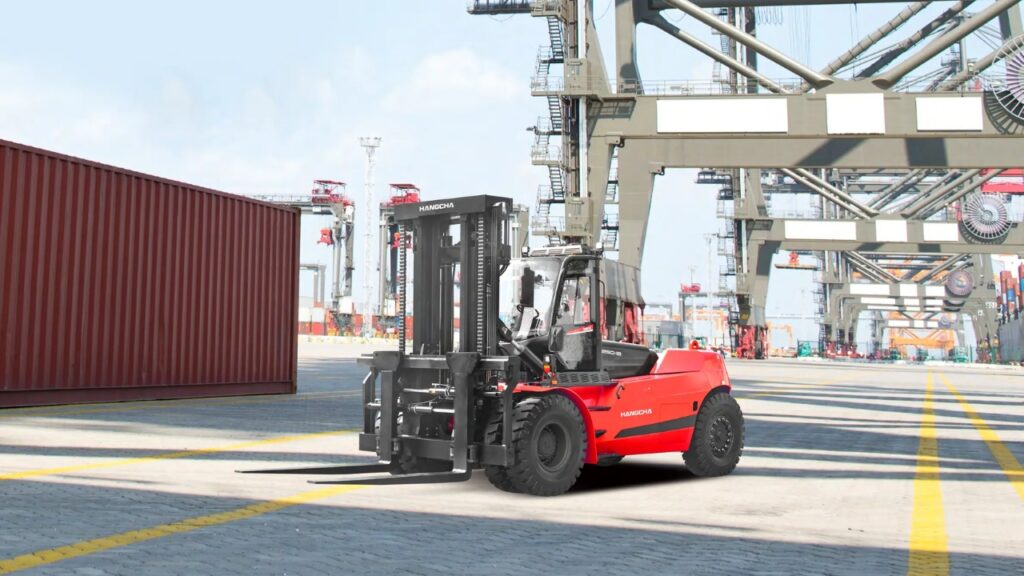
Door height, free lift and floor rating are also what to weigh up when you choose a container forklift for this work.
Crates, long items and anything you'd be tempted to drag
Don't drag goods out with a chain or strap tied to the forklift. SafeWork NSW lists using a forklift that isn't designed to tow to drag items out as an unsafe way to unpack. WorkSafe Victoria warns that pulling beyond a forklift's capacity can break parts and put people nearby at risk of being struck. Use a purpose-designed attachment instead, and know its rating so the forklift isn't overloaded.
Take crates out whole and break them down outside the container, where people can stay out of the fall zone. Sheet material such as glass, stone or panels should have a separate strap on each sheet, so only the sheet being removed is released.
How do you unload a floor-loaded container safely?
A floor-loaded container, with cartons stacked straight on the floor, is unloaded by hand or with handling aids, so the main risk moves from the forklift to the people doing the lifting. Australian work health and safety laws require the business to eliminate that manual handling risk where it reasonably can, and reduce it where it can't. The best fix starts upstream: ask suppliers to ship on pallets or slip sheets.
When cartons do arrive loose, set the job up so people lift less and lift between knee and shoulder height:
- Run a height-adjustable, extendable conveyor into the container so cartons travel out instead of being carried.
- Use pallet jacks and trolleys to move goods, and platform ladders to reach the top layers.
- Keep people off the cartons unless the supplier confirms they'll take a person's weight.
- Rotate jobs so nobody does the lifting for the whole container.
- Build and wrap pallets between knee and shoulder height, and secure them before they're moved.
- In hot weather, add fans, drinking water and extra lighting.
Build the pallets at the doorway or just outside it. The forklift only comes in to take a finished pallet once the workers have stepped out of its path.
Who stands around the container?
Around the container, people on foot stay out of the forklift's working area, and people and a forklift never work inside the box at the same time. SafeWork NSW counted 31 serious injuries and 3 deaths from unpacking containers in a five-year period from 2011.
Mark out pedestrian areas and a driver and pedestrian exclusion zone before unloading starts. WorkSafe Victoria's guidance suggests keeping pedestrians at least 3 metres outside the forklift's operating area, with physical barriers such as bollards if you unpack more than one container a day. A traffic management plan that keeps people and plant apart sits at the centre of the SafeWork NSW guide for unpacking shipping containers.
Truck drivers need a safe place too. In July 2024 a driver waiting for his truck to be loaded in a Victorian loading area was struck by a forklift, and WorkSafe Victoria alleged the site had no traffic management plan. A marked driver safety zone away from the forklift's path helps prevent that.
A spotter helps when the operator can't see well, for example when a bulky load blocks the view on a ramp. The spotter stands in a safe position, and if the operator loses sight of anyone, the forklift stops.
Finishing up: check, sweep and return the empty container
When the container is empty, check the goods against the packing plan, clear out dunnage and straps, sweep the floor and record any damage before the box goes back. Photos of damaged goods and of the empty container help if there's a claim later. Check the doors and floor for damage from the unloading itself.
Return the empty within the time your transport company allows, as late returns can attract extra charges. When the container is lifted onto a trailer or taken away, set up the driver and pedestrian exclusion zone again.
Container unloading checklist
This checklist follows the order of the job, so it can be printed and used at the doors.
| Stage | Check | Done |
|---|---|---|
| Before arrival | Packing plan with item weights received | |
| Before arrival | Fumigation status and dangerous goods asked | |
| Before arrival | Equipment, people and set-down area organised | |
| Placement | Level ground or dock, good lighting, no power lines overhead | |
| Trailer | Park brake on, wheels chocked, coupled or landing legs supported | |
| Ramp or leveller | Rated for forklift and load, in position and locked | |
| Doors | Outside checked, seal recorded, restraint on, right door first | |
| Air | Vented or tested, barriers and signs up | |
| Unloading | Doorway pallets first, one restraint released at a time | |
| People | Exclusion zone marked, nobody inside with the forklift | |
| Finish | Goods checked against the plan, damage recorded, floor swept | |
| Removal | Exclusion zone in place when the container is lifted or towed away |
A checklist doesn't replace a risk assessment or a safe work method statement for your own site and loads.
Most of a safe container unload is decided before the doors open: the plan, the placement and who stands where. If containers arrive regularly, the right forklift and an electric pallet truck cut down the lifting your team does by hand. DJJ Equipment sells Hangcha forklifts and pallet trucks, and offers forklift and pallet jack hire on selected models, with minimum hire terms that depend on the machine and branch. Call 1800 355 388 and tell us which containers you receive and how often.