Hiring an excavator in Australia usually costs about $200 to $350 a day for a 1 to 2 tonne mini excavator on dry hire, where you supply the operator. A 13 to 15 t machine costs about $490 to $620 a day. Wet hire, where the hire company sends an operator with the machine, is charged by the hour: roughly $90 to $170 an hour for a mini excavator, usually with a four hour minimum. Delivery, attachments and travel time are charged on top, so the machine rate is rarely the whole bill. These rates include GST and reflect the Australian market as at October 2026.
How much does excavator hire cost per day?
Daily dry hire rates for an excavator rise with machine size, from around $200 for a 1 tonne mini to $600 or more for a 13 to 15 t machine. The table shows the typical spread across Australian hire companies.
| Excavator size | Typical jobs | Dry hire per day (inc. GST) |
|---|---|---|
| 1 to 2 t | Trenches, backyards, access through side gates | $200 to $350 |
| 2.5 to 4 t | Footings, driveways, small house sites | $280 to $570 |
| 5 to 6 t | House slabs, longer trenches, site clean-up | $350 to $500 |
| 8 to 10 t | Bulk earthworks on larger sites | $450 to $575 |
| 13 to 15 t | Road and civil work, deep cuts | $490 to $620 and up |
The ranges are wide because rates change with the city, the brand of machine and how long you keep it. A single day costs the most per day, and weekend or weekly hire usually brings the daily figure down. Excavators of 20 tonnes and above are normally quoted job by job.
The cheapest machine is the smallest one that reaches your depth and fits through your access. A 1 tonne mini digs to about 1.5 metres and can be under 900 mm wide, while a 5.7 t excavator reaches about 3.7 metres but needs open access. Those two numbers, dig depth and access width, are the core of how to choose an excavator, whether you hire or buy.
How much does wet excavator hire cost per hour?
Wet hire of an excavator with an operator runs from the mini excavator rates above to about $155 to $160 an hour for a 12 to 15 tonne machine. The operator alone accounts for roughly $50 to $120 of each hour.
| Excavator size | Wet hire per hour (inc. GST) |
|---|---|
| 1 to 2 t | $90 to $170 |
| 2 to 4 t | $110 to $145 |
| 5 to 6 t | About $135 to $140 |
| 7 to 10 t | About $145 to $150 |
| 12 to 15 t | About $155 to $160 |
Hourly rates climb far more slowly than machine size because much of each hour is the operator's time. That time costs the same in a 2 tonne machine as in a 13 t one. The spread is widest for minis, where some companies charge almost as much per hour as they do for a 4 t machine.
Most wet hire carries a minimum charge of four hours, and some companies set eight. Travel time between the depot and your site is often billed too. A two hour job can therefore cost the same as a four hour one, so grouping small tasks into a single booking saves money.
What is the difference between wet and dry excavator hire?
Dry hire of an excavator means you hire the machine only and supply the operator, while wet hire means the hire company sends the machine with its own operator. The choice changes who carries the risk, and that's the bigger difference.
| Dry hire | Wet hire | |
|---|---|---|
| Who operates | You or your worker | The hire company's operator |
| How it is charged | By the day or week | By the hour, usually with a 4 hour minimum |
| Damage from use | Usually your responsibility | More of it sits with the hire company |
| Operator training | Your duty | The hire company's duty |
| Underground services | You check before digging | You still provide the plans for your site |
On dry hire, the agreement usually makes you responsible for loss, damage and misuse while the excavator is in your care, because you control how it is used. On wet hire, the operator controls the machine, so more of the risk of a mistake moves to the hire company. That is why a homeowner digging near a house, a pool or a hot water system often pays the higher hourly rate. An operator error on wet hire isn't the homeowner's repair bill.
What costs sit on top of the excavator hire rate?
Delivery, attachments and minimum hire periods can add most of the excavator's day rate again on a short job. These are the lines to ask for in every quote:
- Delivery and pick-up. A float truck carries the excavator to site and back, priced by distance.
- Attachments. A rock breaker for a 1.7 to 1.8 tonne mini costs about $150 to $220 a day, an auger drive about $145 to $190, and a sieve bucket from about $50 to $80, on top of the machine rate.
- Minimum hire. Dry hire is usually charged by the full day, and only some companies offer half days.
- Fuel and cleaning. Ask whether the machine must come back with a full tank and a clean undercarriage, and what each is charged if not.
- Damage cover. Ask what the damage waiver or insurance costs and what it excludes.
The right attachment can also save a day of hire. A breaker clears a concrete footing in hours where a bucket barely scratches it, and the types of excavator attachments that fit a mini differ from those on a 5 tonne machine because of the carrier weight and hydraulic flow.
As a worked example, one day of dry hire for a 1.7 tonne mini at about $250, with an auger drive at about $190, comes to about $440 before delivery. The auger alone adds three quarters of the machine rate, and the float is still to come.
Do you need a licence to operate a hired excavator?
No licence is needed to dig with an excavator in Australia, but whoever runs the work must make sure the operator is trained and competent. WorkSafe Queensland states that a certificate is no longer required for excavators under the Work Health and Safety Act 2011, and that the business with control of the plant must give operators adequate information, training, instruction and supervision.
On dry hire, that duty sits with you as the hirer running the site. On wet hire, it sits with the hire company that employs the operator. A registered training organisation can train and assess an operator against the national excavator unit of competency, which is the clearest record that someone is competent. Lifting and slewing suspended loads with an excavator is a separate question, so check your state regulator's rules before using one as a crane.
What should you check before digging with a hired excavator?
Check Before You Dig Australia for underground services before the excavator breaks ground, and treat any trench deeper than 1.5 metres as high risk work. Safe Work Australia lists contacting Before You Dig Australia as a step that must happen before excavation work starts, and the plans are free online or through the app.
A trench deeper than 1.5 metres is high risk construction work under the Model Code of Practice for excavation work, so a Safe Work Method Statement must be prepared before digging starts. Hired minis easily reach that depth, and it's easy to miss: a 1.88 tonne excavator digs to about 2.3 metres. Trench walls can collapse quickly, which makes it hard for anyone inside to get out.
At delivery, walk around the excavator with the hire company before you sign. Check the tracks, look for hydraulic leaks and test that the quick hitch locks the bucket. Photos taken at delivery and at return settle most disputes about damage.
Is it cheaper to hire or buy a mini excavator?
Hiring a mini excavator is cheaper when you need it a few days a year, and buying starts to make sense once it works most weeks. At about $250 a day, 40 days of dry hire is around $10,000 a year before delivery and attachments, and 80 days is around $20,000.
That yearly hire figure is the number to set against how much an excavator costs to buy new or used.
Ownership brings its own costs: a trailer or float to move the machine, servicing, storage and insurance. It also brings resale value, which hiring never builds, and the machine is on site the day you need it rather than the day it is free.
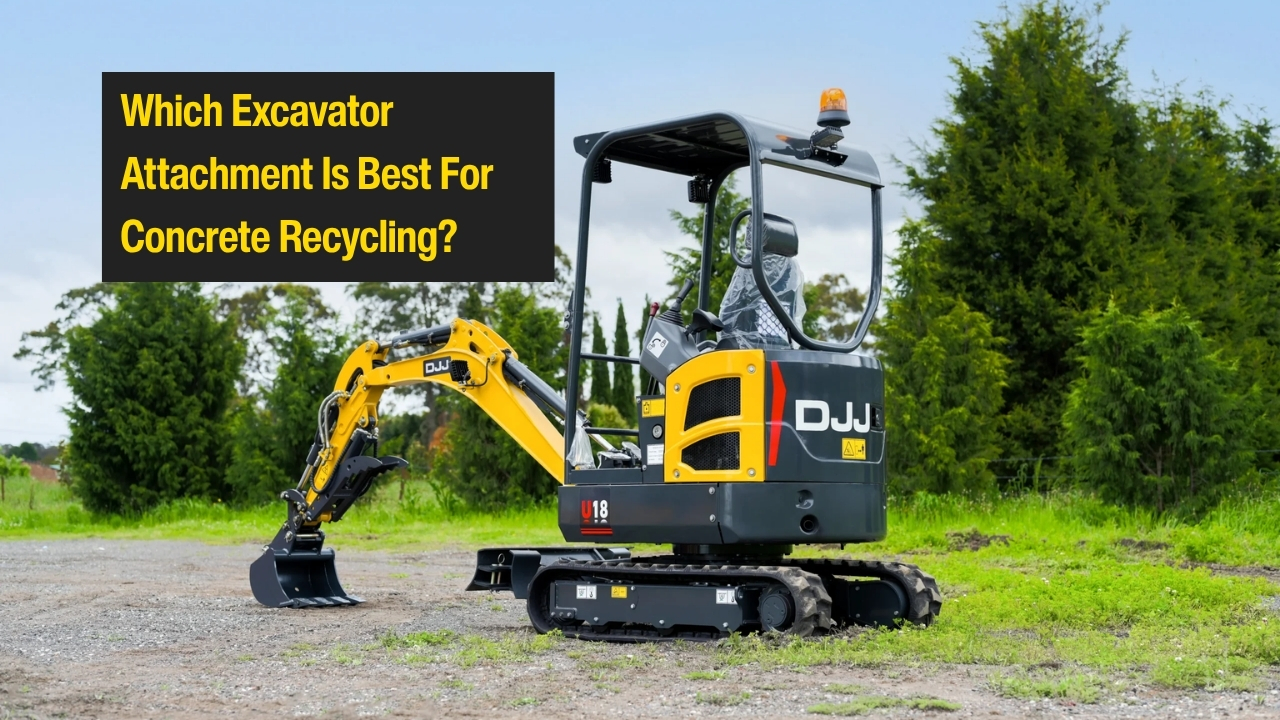
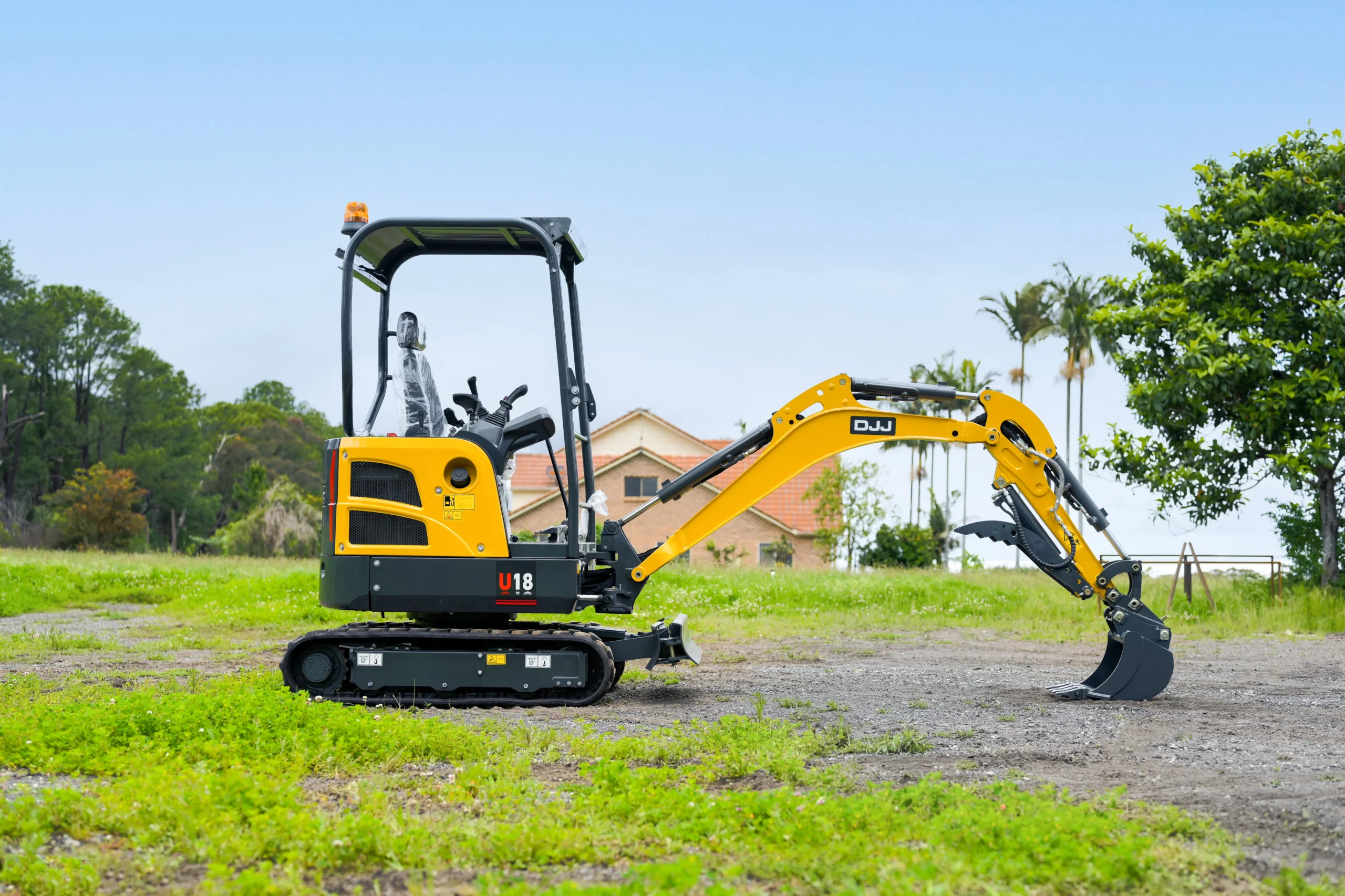
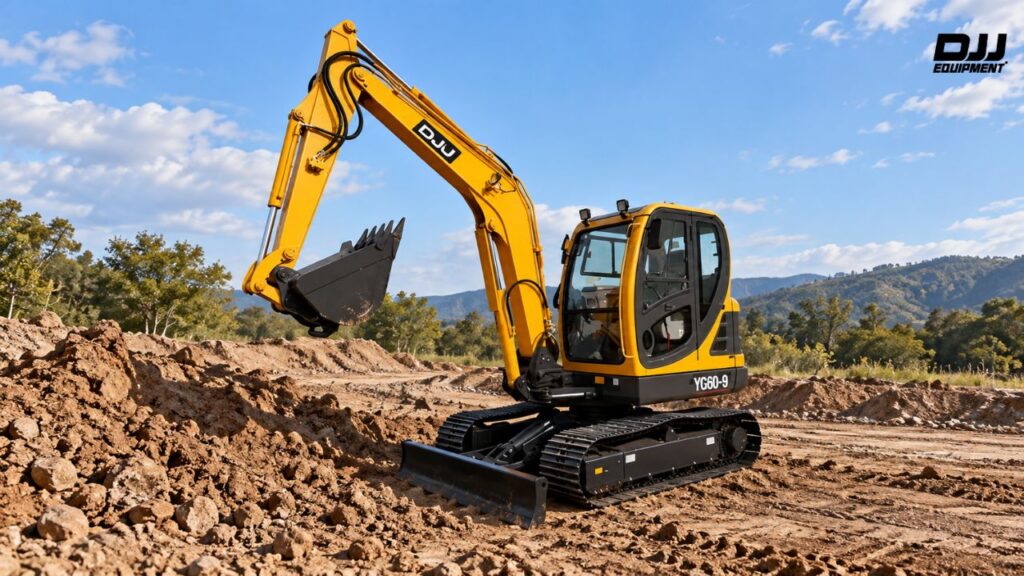
DJJ Equipment sells Yuchai mini excavators from 1 to 5.7 tonnes. The 1 t E12 is 840 mm wide and digs to 1,475 mm, with a 1 year or 1,000 hour warranty. The U18 weighs 1,880 kg and its tracks extend from 1,080 to 1,400 mm, and the YC60 weighs 5,700 kg and digs to 3,720 mm, both with a 2 year or 2,000 hour warranty.
When you compare hire quotes, ask each company for the same lines: the machine rate, delivery both ways, attachments, the minimum hire and whether GST is included. Two quotes that look $50 apart on the day rate can end up much further apart once every line is filled in.