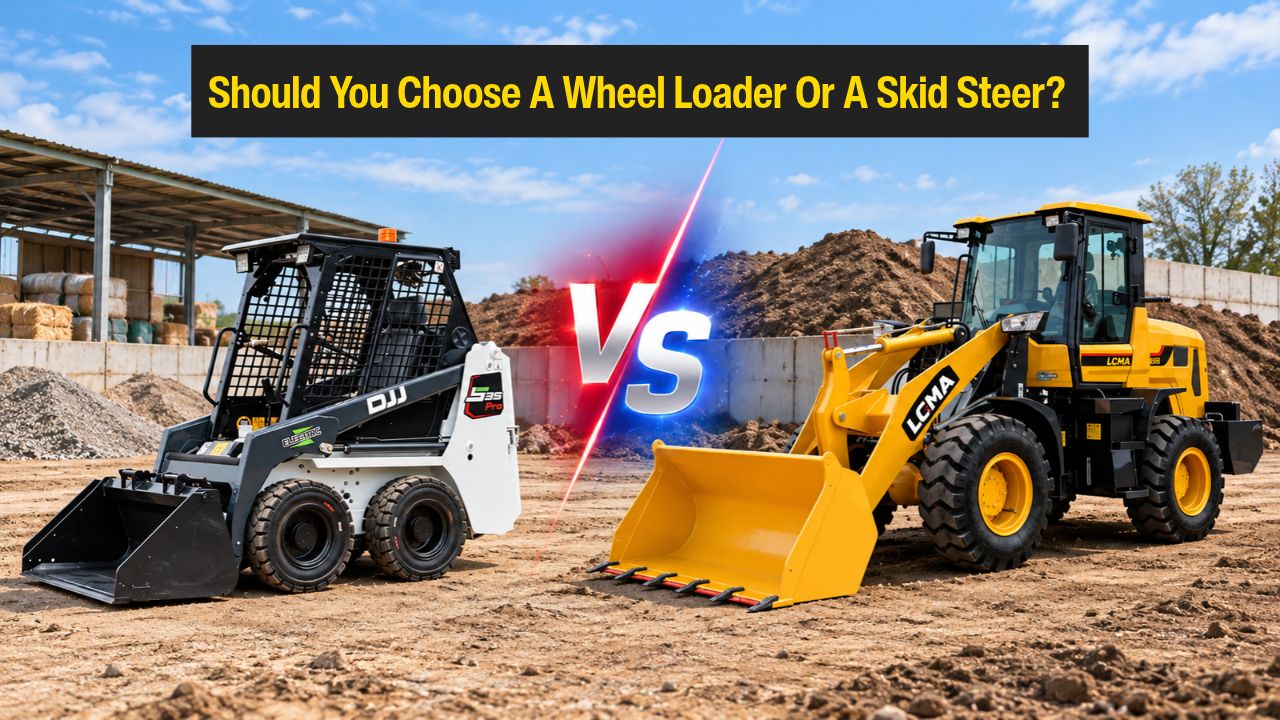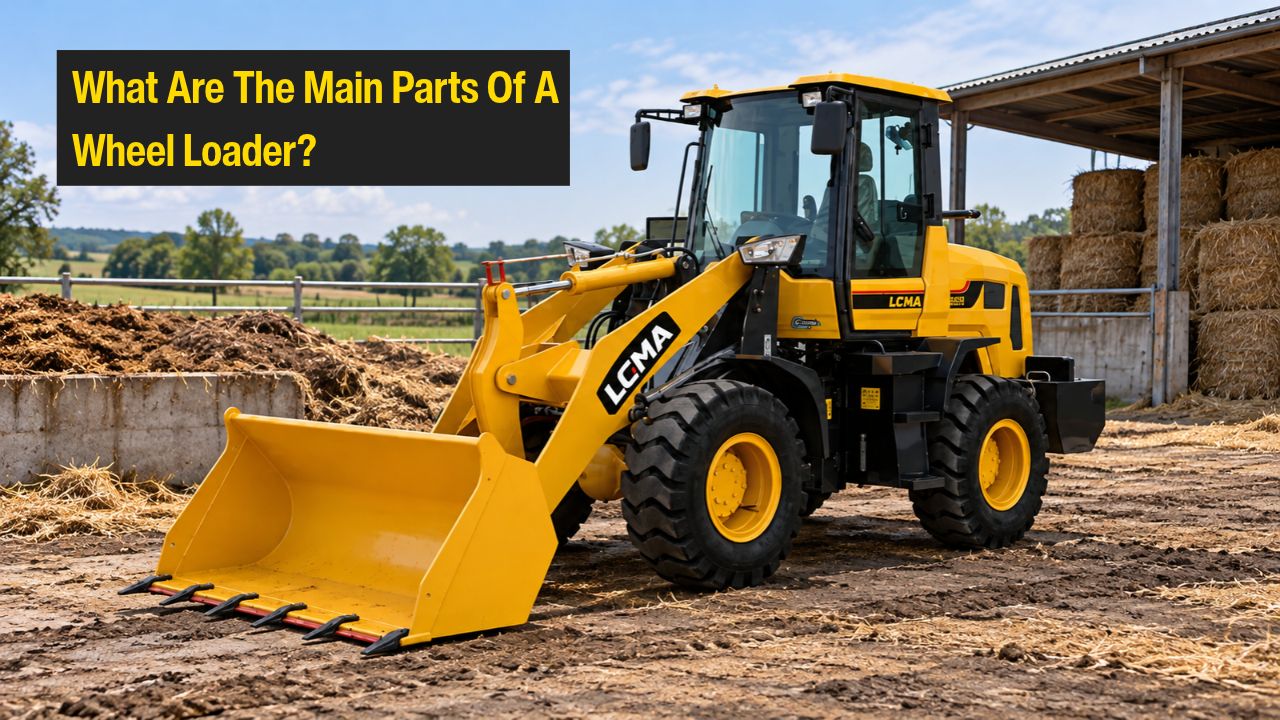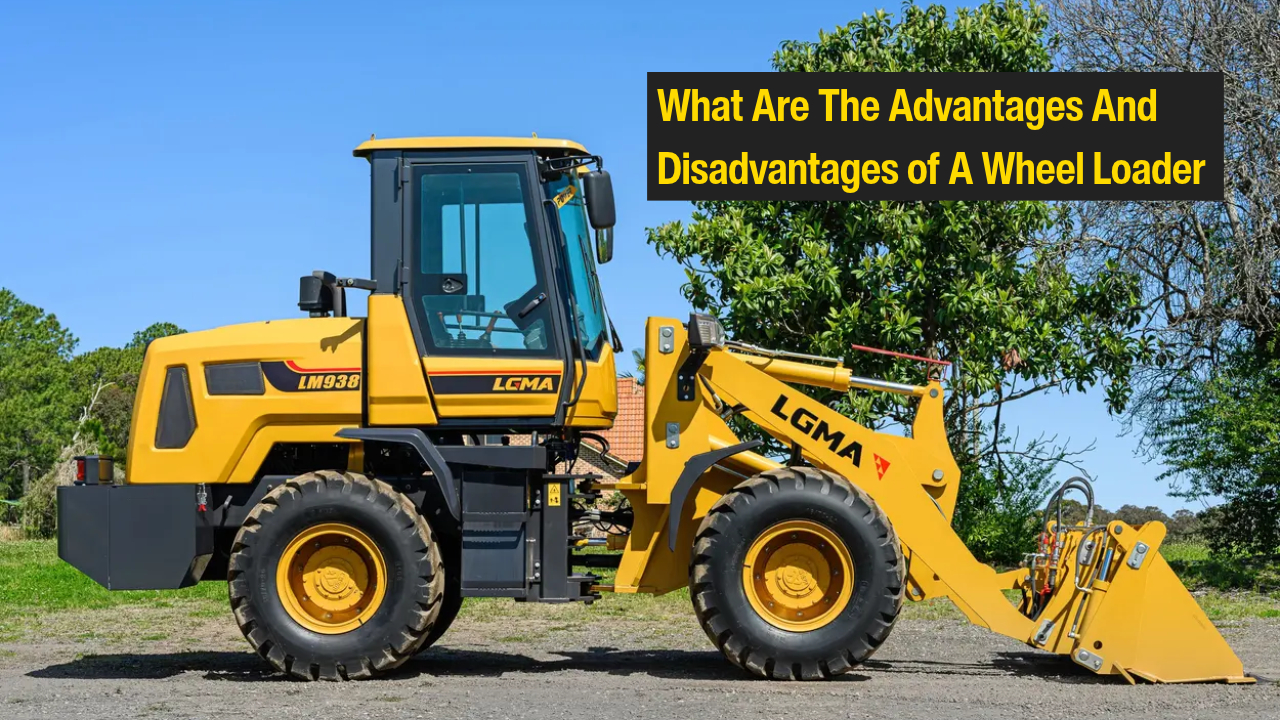
Safe wheel loader work rests on four habits: an operator trained on that make and model, the seatbelt on every time, the bucket carried low, and people kept out of the machine's path. SafeWork NSW names the three biggest risks with earthmoving plant as hitting underground or overhead services, plant hitting people and plant overturning. Each control below answers one of those risks, and each applies to the five LGMA LM wheel loaders sold by DJJ Equipment, rated from 1.6 to 2.8 tonnes.
Who is allowed to operate a wheel loader in Australia?
No high risk work licence class covers a wheel loader, so the duty falls on the business running the work. Front end loaders, excavators and bulldozers dropped out of the licence system, and SafeWork NSW puts the onus on the business to make sure the operator is competent on the specific plant and attachments in use.
Competency can be shown in several ways. The SafeWork NSW earthmoving plant checklist lists competency-based training, familiarisation on the machine, a verification of competency (VOC) from a registered training organisation, references and an on-site assessment. The national training unit for this machine is RIIMPO321, Conduct civil construction wheeled front end loader operations.
Training also has to match the machine. WorkSafe Queensland says operators must be trained on the specific make and model they will use, and inexperienced workers should not operate plant on unfamiliar terrain or tasks. Workers involved in earthworks on a construction site also need a general construction induction card, and a loader registered for road use needs a driver with the right class of licence.
What should you check before starting a wheel loader?
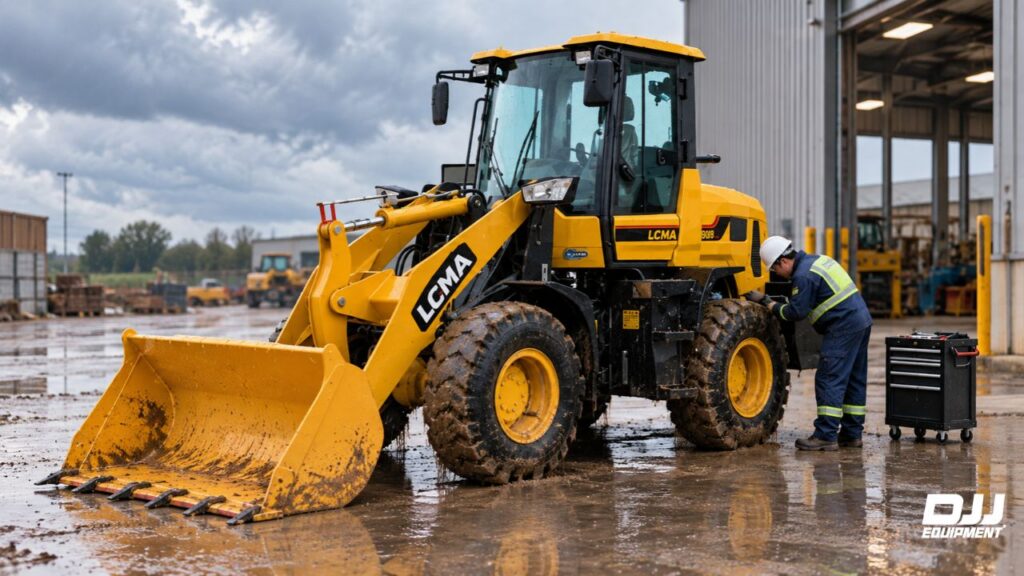
Walk around the wheel loader and test its safety devices before every shift, and leave it parked if one of them fails. SafeWork NSW lists the devices a site should confirm are fitted and working: rollover protection, falling object protection, quick hitch pins, warning lights and sounds, the seatbelt and emergency stops.
The compliance plate should be legible, and maintenance should be recorded as the manufacturer specifies. Test the brakes on every start. The LM930 has dual independent brake lines with an air booster, so a leak in one line still leaves the other able to stop the machine.
Check the rear camera too: it only helps if the lens is clean and the screen works. Fluid levels, tyre pressures and greasing points are part of the daily wheel loader maintenance checks that keep these devices working.
Why does a wheel loader tip over?
A wheel loader is most likely to tip when the bucket is raised, the machine is turned hard and the ground is sloping or uneven. Each of those shrinks the margin that keeps the machine upright, and together they remove most of it.
Articulation is the part many operators underestimate, because articulated steering is what lets the loader turn so tightly. When the frame bends, the front and rear axles stop lining up, so the load sits closer to the line the machine would tip over. The LM940, for example, articulates 37°, and a raised bucket lifts the centre of gravity and moves it forward at the same time.
The rated load builds a margin in. WorkSafe Queensland states that an articulated wheel loader used to lift suspended loads must be rated at no more than 50 percent of its tipping load, and the LM range is rated from 1,600 to 2,800 kg. That margin only holds if you carry the bucket low, finish lifting before you turn and lower the bucket before you get off.
How do you keep people safe around a wheel loader?
Keep people away from a working wheel loader with an exclusion zone and a plan that separates plant from pedestrians. SafeWork NSW expects an exclusion zone around plant and a vehicle movement plan while earthmoving plant is working. WorkSafe Queensland adds that the size of the zone must be based on a written risk assessment.
A spotter helps only if they do nothing else. SafeWork NSW says a spotter should not supervise other work while spotting, must be able to talk to the operator and the site supervisor, and should stand outside the exclusion zone. Two-way radios and agreed hand signals give that link.
Reversing is when the operator sees least. The LM930 and the larger LM models have an HD rear camera as standard, and it is an option on the LM920, but a camera does not replace the exclusion zone. Never walk or stand under a raised bucket.
Why must the wheel loader seatbelt be worn every time?
Rollover protection only works if the operator stays inside it, and the seatbelt is what keeps them there. In a rollover, an unbelted operator can be thrown from the cab and crushed by the machine.
WorkSafe Queensland reported that in November 2022 a worker operating a front end loader on a farm was ejected from the cabin and run over by the machine, with the cause still under investigation. Its controls for mobile plant include wearing the seatbelt and running with the cab doors closed. It also asks for the air conditioning to be kept working, so the operator is not tempted to drive with a door open.
Leaving the machine safely matters as much. Lower the bucket to the ground, apply the park brake, turn the engine off and take the key. The product page for the LM920 lists rollover and falling object protection, and both structures depend on a belted operator.
Can a wheel loader be used to lift loads like a crane?
Only if the loader and its lifting point are designed and rated for it, and never with a person in the bucket. WorkSafe Queensland says plant used to lift or suspend loads must be designed for that purpose and no load may pass over a person. Where it is reasonably practicable, a mobile crane should do the lift instead.
The rules are strict because the failures are sudden. In July 2022, two Queensland road workers were struck when a loader bucket detached while it was being used with chains to position an aggregate spreader. WorkSafe Queensland's controls include a closed, load-rated lifting eye rather than a lug welded to the bucket, and deducting the weight of the bucket and quick hitch from the allowable load.
The quick coupler is the weak point. It should be a type that cannot release the bucket if hydraulic pressure is lost or a control is bumped, and the pin holes should be clear of dirt before the bucket goes on. The person slinging the load needs a dogger's high risk work licence when the job calls for judgement on slinging, or when the load is out of the operator's view.
Every swap between bucket, forks and grapple repeats that coupler check, which is one reason to use only wheel loader attachments rated for the machine.
How do you unload hay bales safely with a wheel loader?
Use an attachment made for bales, work on level ground and keep everyone clear of the trailer while the wheel loader works. Large round or rectangular bales can weigh up to 800 kg. WorkSafe Queensland reported that in July 2019 a farm worker unloading bales with a front end loader and forks was killed by a bale of about 720 kg.
In that case the worker had left the loader to remove a strap when an unstable bale fell from the trailer. WorkSafe Queensland's controls include purpose-built bale clamps, grabs or spikes, a self-levelling loader attachment and a backboard so a bale cannot fall back onto the operator. Bales should never be strapped or unstrapped while the trailer is being loaded or unloaded.
Anyone helping should stand clear of the trailer, where the operator can see them. A hay fork is among the attachments listed for the LM920, LM930 and LM946.
What changes for a wheel loader on slopes, soft ground and near power lines?
Check the route before you drive a wheel loader along it. WorkSafe Queensland lists sloping or soggy ground among the problems to look for in the travel path, because a loader that slides sideways on a slope can tip.
On a slope, travel straight up and down rather than across, keep the bucket low, and keep the heavy end of the machine uphill. With a full bucket that is the front, and with an empty bucket it is the rear. Follow the operator's manual for the slope limits of your model.
Wet weather makes all of this worse, because soft ground gives way under the front tyres first when the bucket is full. Mud brings its own techniques, collected in these wheel loader wet weather tips.
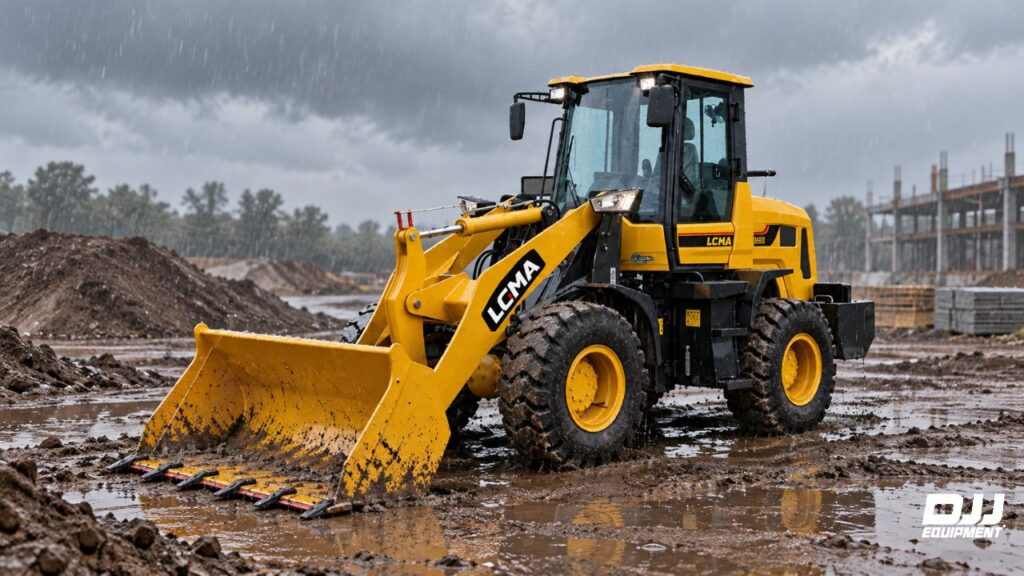
Overhead power lines are one of the biggest workplace killers for mobile plant, and electricity can arc across a gap, so the bucket does not have to touch a line. SafeWork NSW advises moving the work away from the lines where possible, asking the electricity supply authority to isolate them for a short job and consulting the authority for a longer one. Other controls on its checklist include tiger tails, an exclusion zone and a safety observer.
When you buy or hire a wheel loader, ask which safety features the model carries and which attachments are rated for it. Across the five wheel loaders in the LM range, the rear camera is standard from the LM930 up and optional on the LM920. To compare models or ask about hire, phone 1800 355 388.