In NSW, a forklift is regulated as powered mobile plant under the Work Health and Safety Regulation 2025, and SafeWork NSW enforces the rules. Three sets of duties apply at once. The operator needs a high risk work licence (class LF, or LO for an order picker whose controls rise with the load), the business must control five named risks such as tip-over and collision, and the truck's overhead guard and seatbelt must be maintained and used. Forklifts are one of SafeWork NSW's regulatory priorities for 2026-2027, so inspectors look at them first when they visit a workplace.
Which laws cover forklifts in NSW?
Forklifts in NSW are covered by three layers of law, and a business has to meet all of them. The Work Health and Safety Act 2011 (NSW) sets the general duty to keep workers and other people safe. The Work Health and Safety Regulation 2025 adds sections written for powered mobile plant and industrial lift trucks, plus the licence rules. Below those sits the SafeWork NSW code of practice, Managing the risks of plant in the workplace.
The code is more than advice. Under section 26A of the Act, a business must follow it or use another method that gives an equal or higher standard of safety. SafeWork NSW names the AS 2359 series of Australian Standards as the relevant standard for forklift design, manufacture, operation and maintenance.
What does the WHS Regulation require for every forklift?
Section 214 of the regulation names five risks that the person managing or controlling a forklift must manage: the truck overturning, things falling on the operator, the operator being thrown out, the truck hitting a person or object, and pressurised parts failing and releasing fluid. The list follows how forklift injuries happen. SafeWork NSW says NSW workers are most often killed or seriously injured by being hit by a forklift, being hit by its load, or being crushed in a tip-over.
Section 215 turns two of those risks into hardware. The business must make sure a suitable combination of operator protective devices, such as an overhead guard and seatbelt, is provided, maintained and used. It must also make sure the forklift does not collide with pedestrians or other mobile plant, and fit a warning device wherever a collision is possible.
The seatbelt rule exists because of what operators do in a tip-over. The instinct is to jump clear, and that is how operators end up crushed by the overhead guard. Belted in, the operator stays inside the frame built to protect them.
Section 218 adds two rules for forklifts in particular. The truck needs lifting attachments that suit the load, and it must not carry a passenger unless it is designed for a seated passenger with a seatbelt. An unattended forklift must also be left so it cannot move or be driven by someone unauthorised. In 2026-27, each breach of sections 215 and 218 carries a court maximum of $9,370 for an individual and $46,723 for a company.
Which forklift licence does an operator need in NSW?
A forklift operator in NSW needs a high risk work licence in the class that matches the truck. Class LF covers counterbalance forklifts, reach trucks and side-loading forklifts. Class LO is for order pickers, where the operator rides a platform and the controls rise with the load. SafeWork NSW issues both, and a licence lasts five years.
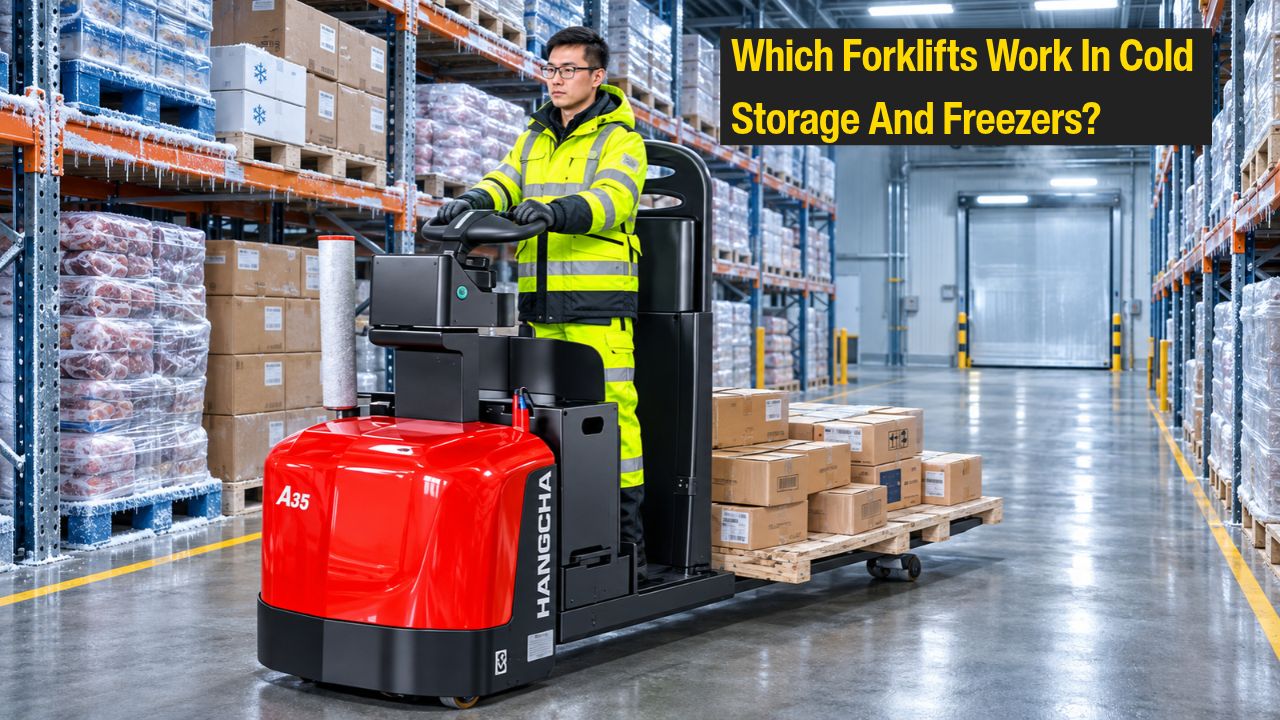
Pedestrian-operated trucks sit outside the licence system. Pallet trucks and walk-behind stackers need site-specific training instead. The A Series walkie reach stacker from DJJ Equipment lifts 1,400 kg with the operator walking behind, so it needs no LF licence, but the operator still has to be trained on the site's rules.
Telehandlers with forks or a bucket also need training rather than a licence. Fitted with a crane jib and hook or a work box, a telehandler can need a different licence class.
Only two exceptions let a person without a licence operate a forklift. A trainee enrolled with a registered training organisation can drive under the supervision of a licence holder. A person who has passed the course can work for 60 days after the certificate is issued, and for longer if they apply for the licence within those 60 days. Outside those cases, it is an offence to drive a forklift without a licence, and the business that allows it commits a separate offence.
What must a NSW business check before anyone drives a forklift?
Before a worker drives a forklift, the business must see written evidence that the worker holds the right licence class. That is section 85 of the regulation, with a court maximum of $5,519 for an individual and $27,854 for a company. SafeWork NSW also expects a workplace high risk work licence register, with regular checks that each licence is current and covers the right class.
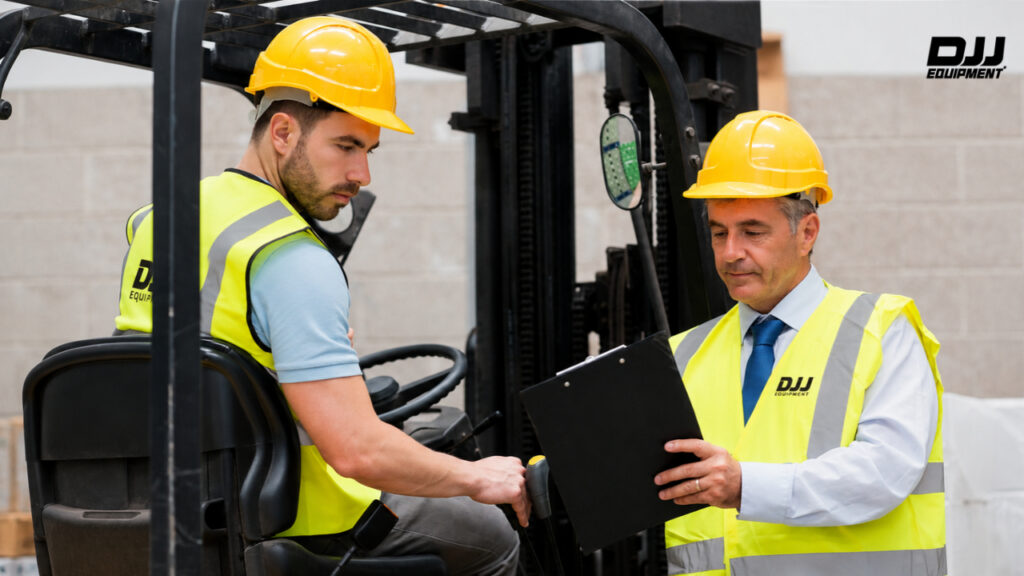
For a trainee, the business must see evidence that the person is enrolled in the course. Section 84 then requires direct supervision by the licensed supervisor: directing, demonstrating, monitoring and checking the trainee's work, and being able to respond in an emergency. Less supervision is allowed only where direct supervision is impracticable or unnecessary and nobody is put at risk.
The checks continue once the operator is licensed. SafeWork NSW wants a recorded check every shift, and another each time an operator moves to a different truck. Skipping forklift pre-start checks is how a worn fork, a broken seatbelt or an unreadable load-rating plate reaches the floor. A fault that could affect safe operation takes the truck out of service until it is repaired.
Hire does not move these duties. Our forklift hire is dry hire, with no operator supplied, so the hiring business provides licensed, trained operators and public liability insurance.
What do SafeWork NSW inspectors find at forklift sites?
Most forklift operators that SafeWork NSW inspectors check hold a valid licence. The failures sit in the business's systems. In the forklift compliance campaign of 2021-2022, inspectors made 669 inspections across the Sydney metropolitan area, and 64% of the businesses inspected employed 1 to 20 people. This is the share of inspections that failed each check:
| What inspectors checked | Inspections that failed |
|---|---|
| Controls so operators use the right attachment | 31% |
| Controls to separate forklifts from pedestrians | 21% |
| Controls so operators always wear a seatbelt | 13% |
| A system to manage operators' licences | 13% |
| Forklift maintained in a safe condition | 12% |
| Operator holds a current LF licence | 7% |
The licence card is the easiest of these checks to pass. Attachments top the list because an attachment or a higher lift changes what the truck can safely carry. The A Series walkie reach stacker is rated at 1,400 kg, but only 1,000 kg at its full 5.5 m lift height. SafeWork NSW requires the load capacity plate to be updated when an attachment reduces capacity, so the operator reads the real limit, not the badge figure.
The pattern held in the latest statewide blitz. Over three days in October 2026, inspectors visited 597 workplaces and issued 417 compliance notices, 111 of them for mobile plant and vehicle safety. Almost half the businesses inspected had safety issues that needed regulatory action.
How must forklifts and pedestrians be kept apart in NSW?
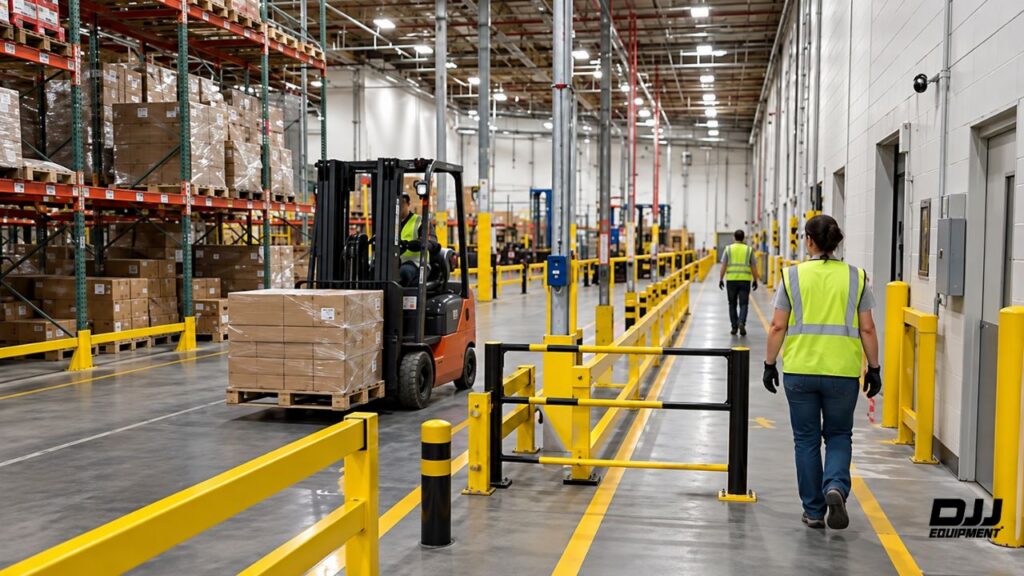
Section 215 puts the duty plainly: the business must make sure a forklift does not collide with pedestrians. SafeWork NSW ranks physical separation, such as guardrails or overhead walkways, as the safest way to meet it. Where people and forklifts must share space, the controls are layered: separate times for forklift work and foot traffic, marked walkways and crossings, exclusion zones for delivery drivers, dome mirrors at blind corners and a walking-pace speed limit near people.
Loading areas hold two of the five situations SafeWork NSW lists as most dangerous for people on foot: walking between a forklift and a delivery vehicle, and helping with loading or unloading. Trailers must be secured against movement before loading starts. An operator whose view is blocked by the load drives in reverse, or uses a trained spotter where reversing is not practical.
A forklift traffic management plan puts these rules into one site document. Visitors, contractors and delivery drivers get the rules at induction, before they enter a forklift area.
What are the fines for breaking forklift rules in NSW?
SafeWork NSW inspectors can issue an on-the-spot penalty notice without going to court. For doing high risk work without a licence, or for a business directing or allowing it, the notice is $4,000 for an individual and $20,000 for a company. The worker and the business commit separate offences, so one unlicensed shift can bring two notices.
Court penalties rise with the harm risked. A Category 2 offence, failing a safety duty in a way that exposes someone to the risk of death or serious injury, carries a maximum of $2,326,910 for a company in 2026-27. Steel-Line Garage Doors Australia was fined $450,000 in the Industrial Court of NSW for a Category 2 offence after a worker was struck by a forklift and seriously injured in October 2022.
The maximums are set in penalty units, and a penalty unit is worth $128.36 in 2026-27. The unit is indexed every financial year, so the dollar figures go up each 1 July.
Do forklift rules change when a forklift leaves the site in NSW?
Forklift road rules start at the edge of the site. Once a forklift moves onto a road or a road-related area, it needs conditional registration with Transport for NSW. Road-related areas include footpaths, nature strips, service station driveways and public and private car parks.
The CTP insurance that comes with conditional registration covers the forklift on roads and road-related areas only, not on private property. A forklift that crosses a footpath to unload a truck at the kerb is on a road-related area, so you need to register a forklift to drive it on the road, even for those few metres.
Before buying or hiring, work out the heaviest load, the lift height and any attachment the job needs, because those three set the rating the truck has to carry under section 218. Send us those details and we'll match a forklift whose capacity plate covers the job. Call 1800 355 388 for sales and hire.