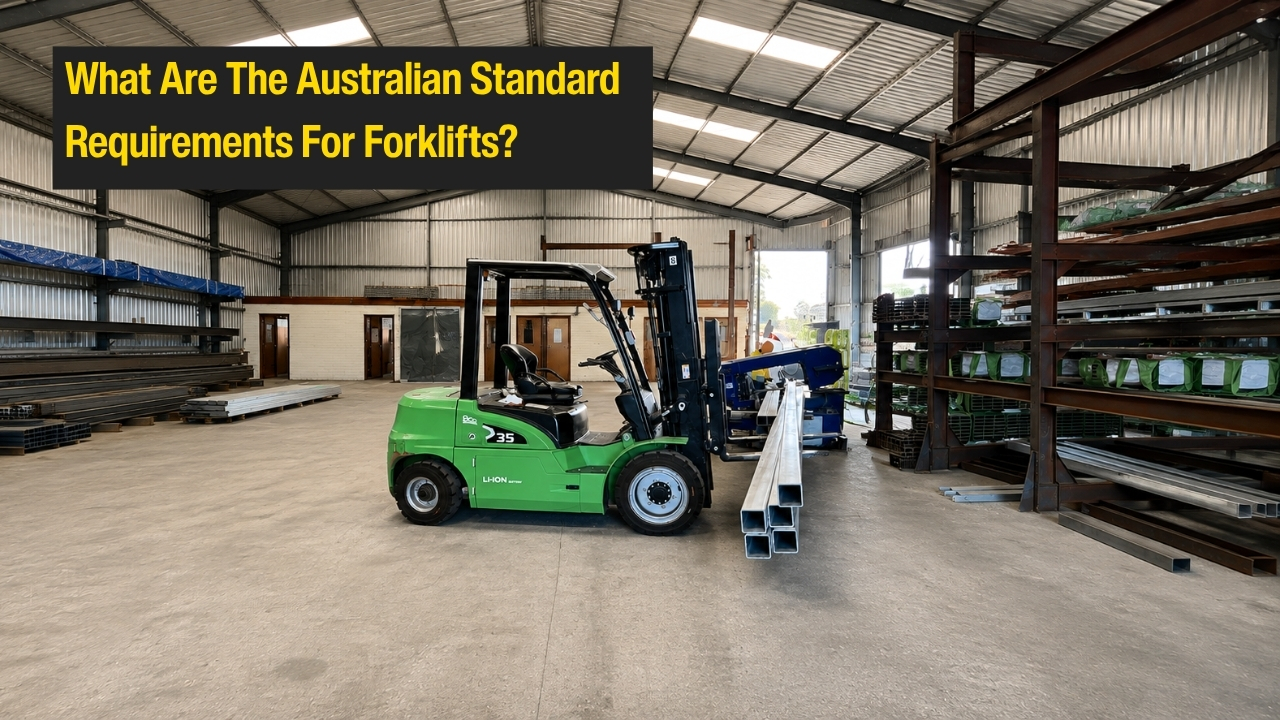
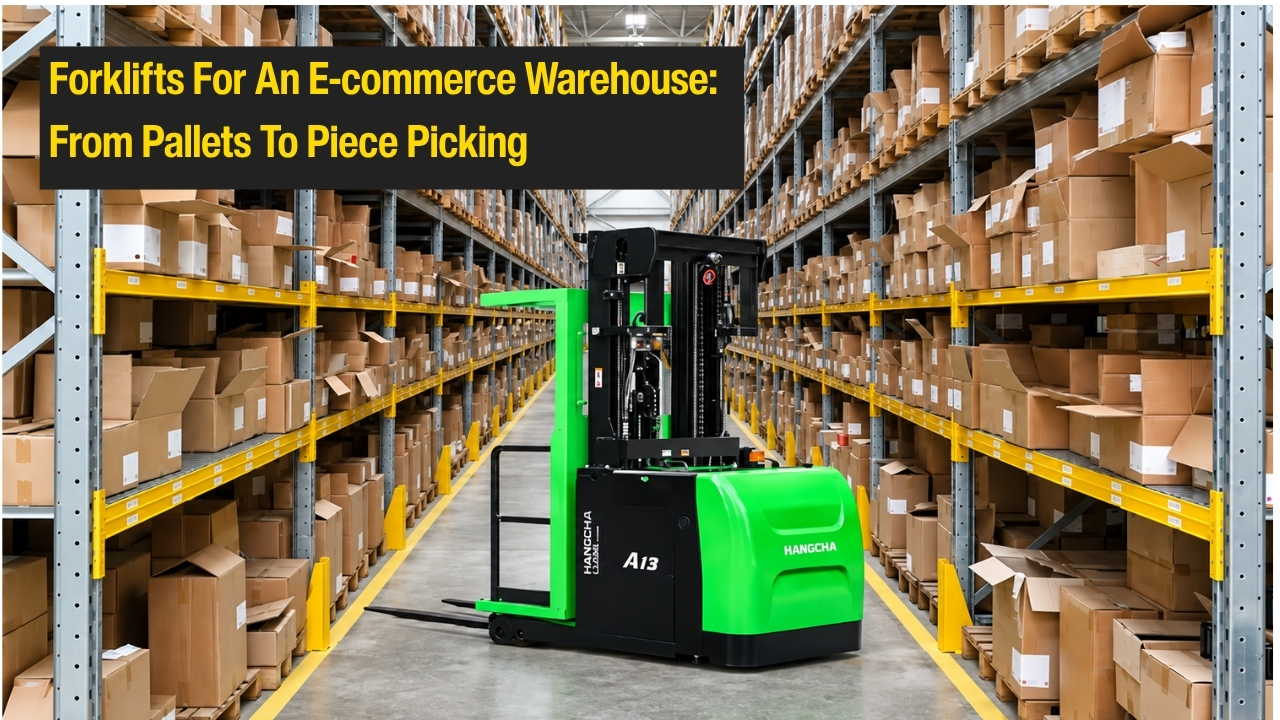
A forklift pre-start check has two parts: a walk-around with the forklift switched off, then a set of tests with it running, before any load is lifted. It's done at the start of each shift and whenever an operator changes to a different forklift. Start from the manufacturer's checklist for your model, because electric, LPG and diesel forklifts and different attachments need different checks. If a check finds a fault that could affect safe operation, the forklift comes out of service until it's repaired.
When must a forklift pre-start check be done?
SafeWork NSW says to complete and record a pre-start check at the start of each shift, and whenever an operator changes to a different forklift. Safe Work Australia and WorkSafe WA give the same timing. A site that runs two shifts needs two checks, and an operator who moves from one forklift to another checks the second one too. WorkSafe Victoria also lists a change of operator as a trigger.
Work health and safety law requires the business to keep plant safe and properly maintained, and regulators expect a pre-start check as part of doing that.
The check belongs to the operator who will drive the forklift, and the business is responsible for having a system that makes sure it happens.
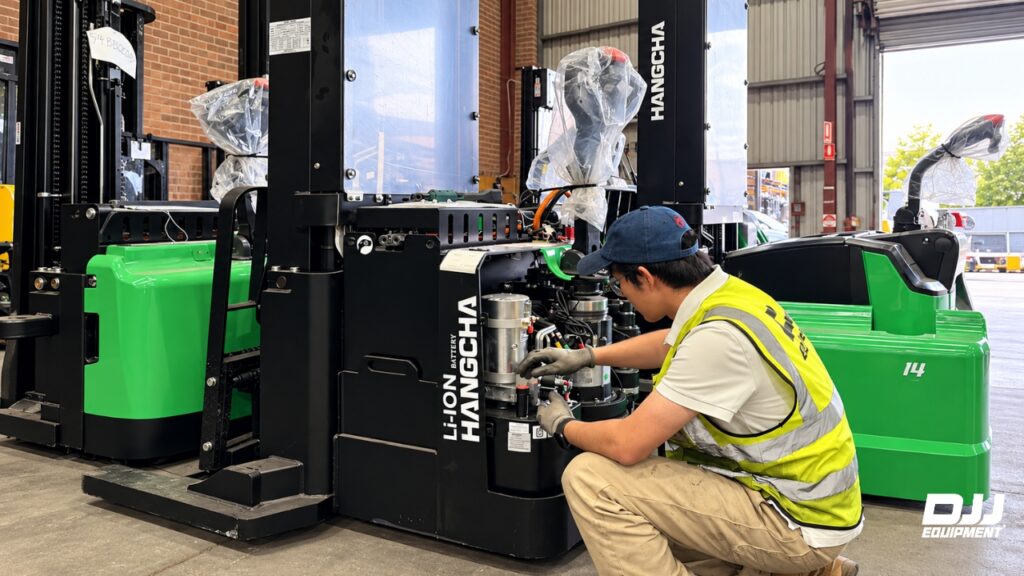
Checks with the forklift switched off
Walk around the forklift before you get on and look at:
- the floor under the forklift, hoses and fittings, for leaks of oil, coolant or brake fluid
- forks and fork pins, for cracks, bends, heel wear and pins that don't lock
- the mast, lift chains and rollers, for damage and loose or unevenly tensioned chains
- tyres and wheels, for cuts, missing chunks, low pressure on pneumatic tyres and loose wheel nuts
- fluid levels such as engine oil, coolant and hydraulic oil, where the manual says the operator checks them
- the battery, its case and its connectors on an electric forklift, or the LPG cylinder, bracket and hose
- the overhead guard, load backrest, guards and covers
- the seat, its mounting and the seatbelt
- the data plate or load chart, which must be readable and match any attachment fitted
- the attachment itself, if one is fitted: its mounting, hoses and wear on parts such as clamp pads or side shift slides
Checks with the forklift running
Then start the forklift and test it before you lift a load:
- the seatbelt, to make sure it latches and releases reliably
- service brake and parking brake
- steering, with no excess play or stiffness
- lift, lower, tilt and attachment functions through their full range
- horn, lights, reversing alarm and any warning beacon
- dashboard gauges and warning lights, including battery charge or fuel level
- unusual noises, vibration or smells
Some forklifts also have operator presence and seatbelt systems to check. On Hangcha's XE electric forklifts, for example, the manual describes a seat switch that cuts drive and hydraulics when the operator leaves the seat, and a seatbelt warning light, so both are part of the start-up check on that model.
Restraints need attention on dusty and wet sites. At Kimbriki Environmental Enterprises, dust affected the seat harness connection on a Hangcha high-voltage lithium rough terrain forklift, and DJJ Equipment fitted a dedicated harness connection socket at no charge.
Extra checks for electric, LPG and diesel forklifts
The power source adds its own items to the check:
| Forklift | Extra checks |
|---|---|
| Electric, lithium-ion | Charger unplugged before moving, battery case locked, cables and connectors undamaged, battery display and warning lights normal |
| Electric, lead-acid | As above, plus electrolyte level checked after charging, as the manual directs, and no corrosion on terminals |
| LPG | Cylinder secure in its bracket and fitted the right way up, hose and fittings undamaged, no smell of gas, cylinder within its test date |
| Diesel | Fuel level, leaks around the engine and fuel lines, unusual exhaust smoke once running |
Battery warnings differ by model. Hangcha's manual for its XE lithium forklifts, for example, shows a low battery light below 20%, reduces lift speed at 10% and recommends charging at around 30%. Use the figures in your own forklift's manual.
What a failed check looks like
A list of items is only useful if the operator knows what a fault looks like. The table below is an example to adapt to your manufacturer's checklist. It isn't a complete or compliant list for every forklift.
| Item | What to look for | Take out of service if |
|---|---|---|
| Forks | Cracks, bends, worn heels, pins locking | Any crack or bend, or a pin that won't lock |
| Mast and chains | Damage, loose or uneven chains, jerky movement | A damaged chain or mast, or uneven lifting |
| Hydraulics | Leaks at hoses, fittings and cylinders | A leaking hose or cylinder, or forks drifting down |
| Tyres and wheels | Cuts, chunking, pressure, wheel nuts | A damaged tyre or a loose wheel |
| Brakes and steering | Firm pedal, parking brake holds, steering responds | A soft pedal, a slipping parking brake, or stiff or loose steering |
| Safety devices | Seatbelt, horn, lights, reversing alarm, overhead guard | A seatbelt that won't latch, a dead horn or alarm, or a damaged guard |
| Battery or LPG | Charge, cables, connectors, cylinder bracket, hose, valve | A damaged cable or connector, a gas leak or a loose cylinder |
| Data plate | Readable and right for the attachment fitted | Missing, unreadable or wrong for the attachment |
Some wear limits need measuring rather than a look. SafeWork NSW says a fork worn more than 10% at the heel must be replaced, and Hangcha's XE manual sets a 3% limit for lift chain stretch. Measuring these is a technician's job at a scheduled service, so in the daily check the operator looks for visible damage and reports anything doubtful.
What to do when a forklift fails a check
A forklift with a fault that affects safety shouldn't be used until it's repaired. Report the fault straight away, remove the key, tag the forklift out of service and record what you found.
Only a competent person should repair the forklift and remove the tag. Operators shouldn't attempt repairs, and WorkSafe Queensland warns that a general motor mechanic may not be competent to maintain a forklift. DJJ's technicians carry out forklift servicing and repairs on all brands, with on-site service within 50 km of the Sydney, Brisbane and Perth branches. Forks, chains, seatbelts and tyres are common replacement parts after a failed check.
Recording pre-start checks
A record for each shift shows the check was done, and it helps a technician spot a fault that keeps coming back. It also gives you a history to show a regulator or an insurer if something goes wrong.
SafeWork NSW's forklift guidance says to complete and record pre-start checks, and to record and report faults. A simple form covering the date, the forklift, the hour meter reading, the operator, each item checked and any fault found is enough for most sites. Keep the records with the forklift's service history.
Who does the pre-start check?
The operator does it, and checking the forklift before use is part of the training and assessment for a forklift licence. The business makes sure there's a checklist, a way to report faults and a competent person to fix them. Pedestrian trucks such as walkie stackers and pallet jacks don't need a forklift licence, but they still need a check before use.
On a hired forklift, the hire agreement sets who does what. Under DJJ's standard hire terms, the hirer does the daily checks and reports faults and accidents straight away, and only DJJ's authorised staff repair the machine. Misuse damage, tyres and hours over the agreed limit are also the hirer's cost, which is worth knowing when you compare what forklift hire includes between companies.
Pre-start check vs scheduled service
A pre-start check is a short look-and-test routine that takes minutes and finds obvious faults before they hurt someone. A scheduled service is a technician's job at the hour-meter intervals in the manufacturer's manual. Safe Work Australia recommends servicing at least once every 12 months, even for a forklift that does few hours.
The two work together. Daily checks catch faults between services, and services measure the wear a daily check can't see. Our forklift maintenance checklist covers service intervals, wear limits and maintenance by power type.
Found a fault during a pre-start check? Call our service team on 1300 646 747, and tell us the forklift model, serial number and what you found.