Yes, electric forklifts have hydraulic fluid. The forks, the mast tilt and, on counterbalance trucks, the steering all work on oil under pressure. What changes is the power source: a battery-driven electric motor turns the hydraulic pump, where an engine does that job on an LPG or diesel forklift. On Hangcha's XH Series 2-3.8 t, the system takes 35-40 litres of L-HM32 hydraulic oil, and the manual has it changed every 6-12 months.
Why does an electric forklift still need hydraulic fluid?
An electric forklift needs hydraulic fluid because oil under pressure is how a compact truck lifts tonnes. A pump pushes oil into a cylinder, and the cylinder pushes the mast up. Hangcha's service manual for the XH Series 4-Wheel Electric Forklift 2-3.8 t traces the path. The main pump feeds a multi-way valve, which sends oil to the lift cylinders or the tilt cylinders. A second line runs to the steering gear, and steering always gets priority.
The pump has its own motor, separate from the drive motor. On that XH truck it's a 24 kW AC motor, liquid-cooled and sealed to IP67, running from a 309V lithium battery. Lowering needs no pump at all. The weight of the load and the mast pushes oil back to the tank, and a check valve slows the flow so the forks come down at a controlled speed.
Which fluids does an electric forklift have besides hydraulic oil?
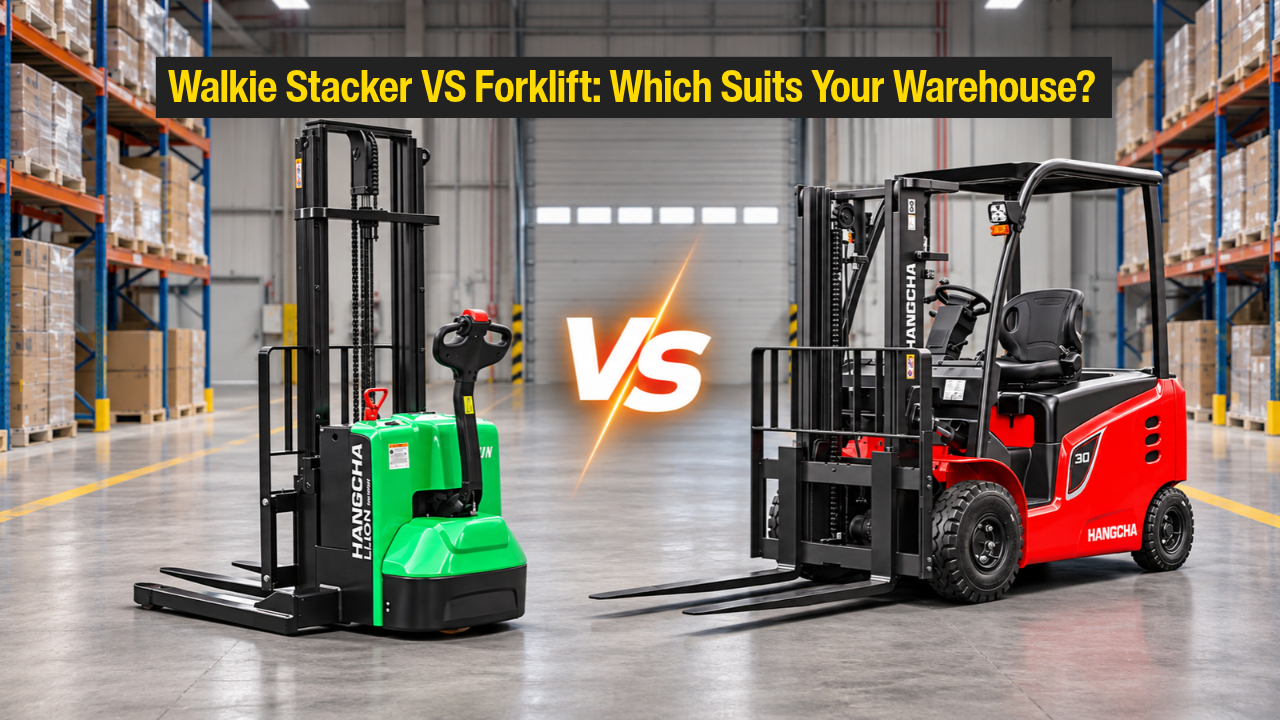
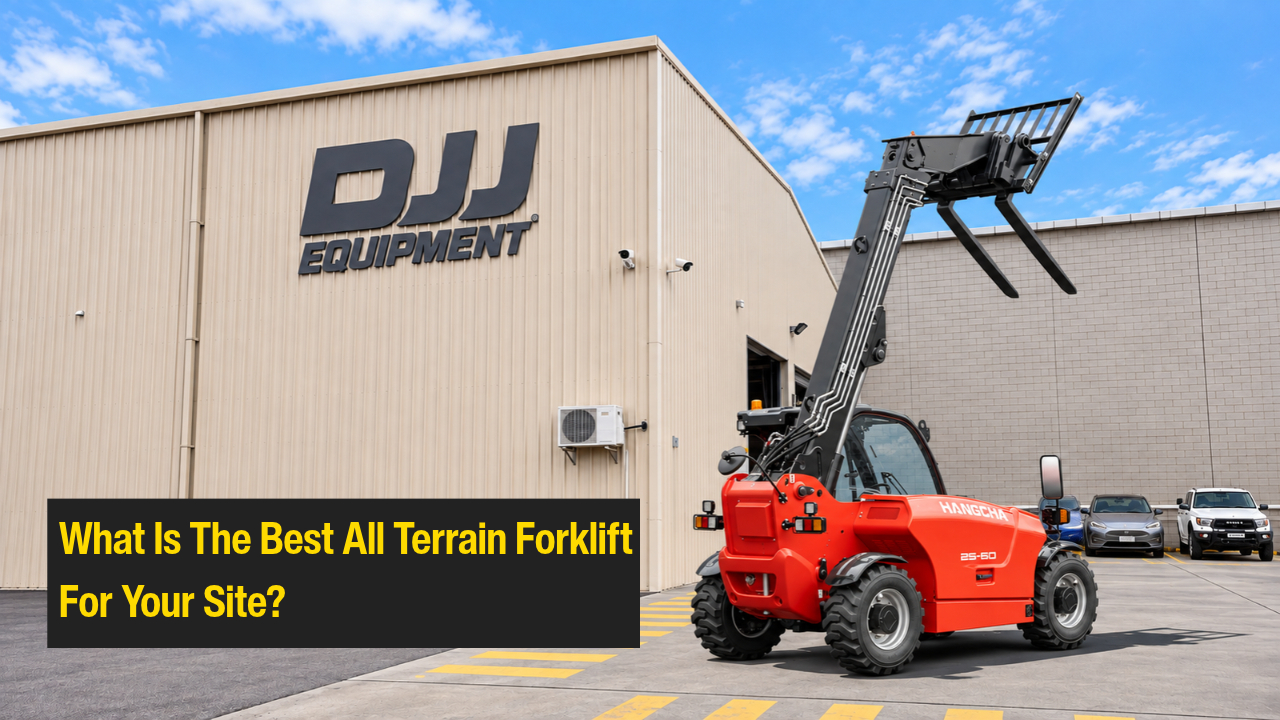
An electric forklift drops engine oil and fuel, but it keeps brake fluid, gear oil, grease and, on some models, coolant. The mix depends on the truck. DJJ Equipment sells Hangcha electric forklifts and stackers, and these are the oil lists in the manuals for three of them:
| Fluid | XH Series 2-3.8 t | X Series 3-Wheel 0.6-1 t | WS Pallet Stacker 1.2-1.5 t |
|---|---|---|---|
| Hydraulic oil | L-HM32, 35-40 L | L-HM32, 9 L | L-HM32 |
| Hydraulic oil for cold conditions | L-HV32 | L-HV32 | L-HV32 |
| Brake fluid | HZY3 or DOT3, about 1 L | DOT3, 1.2 L | None (electromagnetic brake) |
| Drive axle or transmission oil | 85W/90 GL-5 gear oil, about 4-8 L | Transmission oil, filled to the level port | Gearbox lubricant as the manual lists |
| Coolant | 50/50 water and ethylene glycol, 5-6 L | None listed | None listed |
The table shows two things the usual answer misses. Coolant isn't only an engine fluid: the XH carries 5-6 litres in its own water tank, and the manual for the XH 4-5 t adds coolant for the battery's thermal management unit. The smallest machines can skip brake fluid completely, because the WS stacker stops on a spring-applied electromagnetic brake on its drive motor.
Lead-acid trucks add battery water. The X Series 3-Wheel Electric Forklift 0.6-1 t comes with a lead-acid battery or, on the I models, a lithium one, and its manual's leak check covers hydraulic oil, battery electrolyte and brake fluid.
What hydraulic oil does an electric forklift use?
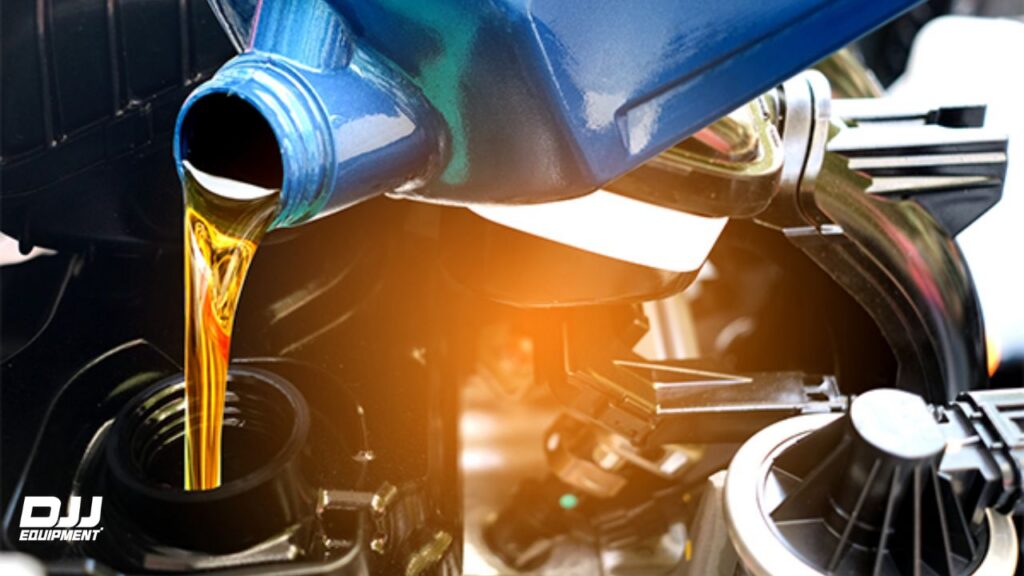
Hangcha's electric forklifts and stackers use L-HM32 hydraulic oil in normal conditions and L-HV32 in cold stores and severe cold. Both are viscosity grade 32. The XH service manual calls L-HV32 its low-temperature oil and splits the choice by season: L-HM32 or a similar viscosity in summer, L-HV32 in winter.
Thickness matters because the pump draws oil through a strainer. Oil that's too thick for the temperature starves the pump, and the XH manual lists it as a cause of a noisy pump, fixed by changing to oil of the right viscosity. Search results often say electric forklifts take 46 or 68 grade oil. Those grades exist, but they aren't what these manuals specify, so go by the oil list for your model. SafeWork NSW makes the same point in its safety alert on hydraulic equipment and systems: use the fluid the manufacturer recommends so the system works within its design limits.
How often should electric forklift hydraulic oil be changed?
Change electric forklift hydraulic oil every 6-12 months on Hangcha's electric trucks, as the manual for each model sets out. The XH Series 2-3.8 t manual says once a year, or every six months if the truck works in dust or runs heavily. Its maintenance table goes further and marks the change at the six-monthly, 1,000-hour service. The X Series 3-wheel manual says every six months. These are calendar intervals, so a truck that does few hours still gets fresh oil. Where a manual gives two figures, the six-monthly one is the safe choice for a busy truck.
Search results quote 1,000, 2,000 or 4,000 hours for the same job. They come from different makers and trucks, which is why they don't agree. An electric truck has no engine soot getting into its oil, but the oil still collects dirt and water over time.
The rest of the hydraulic system runs on its own clock. The same XH table cleans the suction filter at that 1,000-hour service and replaces hydraulic pipes every 1-2 years. Hangcha's XH 4-5 t manual lists lifting hoses at 1-2 years and high-pressure hoses and seals at 2 years. The table checks for hydraulic leaks at every step from 8 hours to 1,000 hours, so the hydraulic jobs ride along with the visits you plan when you work out how often forklifts should be serviced.
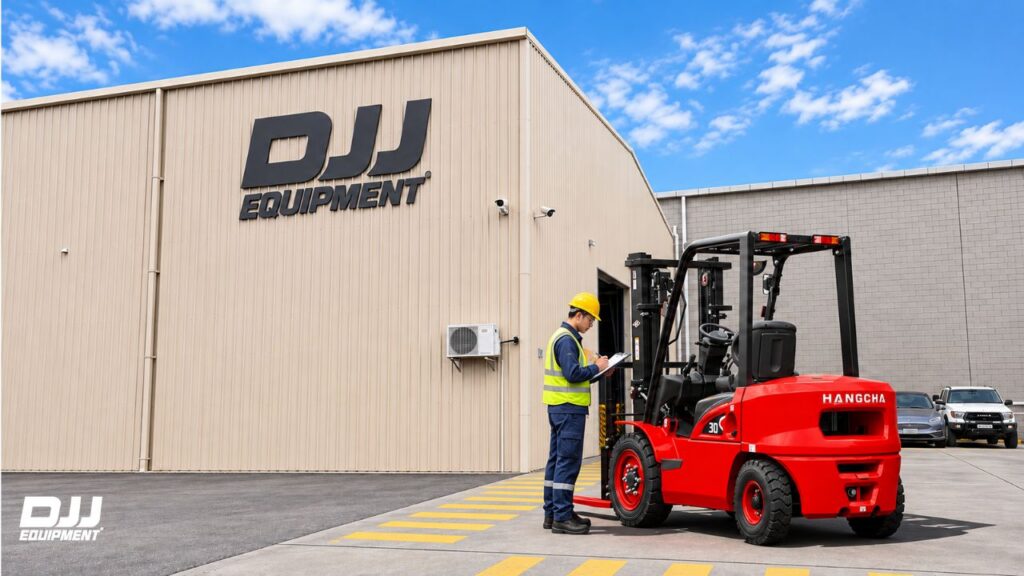
Where is the hydraulic fluid on an electric forklift, and how do you check it?
The hydraulic fluid on an electric forklift sits in a tank with a filler cap and dipstick under a cover. On the XH Series 2-3.8 t you open the rear bottom cover and find the filler at the right rear. On the X Series 3-wheel it's under the hood, also at the right rear.
To check it, park on level ground with the forks lowered, pull the dipstick and read the level between the marks. The XH dipstick has a mark for each mast height: 30 for lift heights up to 3.0 m, then 40, 50, 60 and 65 for masts up to 6.5 m. A taller mast has longer cylinders, and they need more oil in the system. A 6 m truck that reads at the 30 mark is short of oil.
Don't confuse this with topping up the battery. On a lead-acid truck the water goes into the battery cells, never the hydraulic tank. On a lithium truck, Hangcha's XH manual says not to open the battery case for maintenance at all. The dipstick and a walk-around for leaks belong in your daily forklift pre-start checks.
What happens when an electric forklift runs low on hydraulic fluid?
An electric forklift low on hydraulic fluid can lose lift, the pump gets noisy and the steering can turn heavy. The XH service manual traces all three to the oil supply. Low oil lets the pump draw air, and air in the oil makes the steering cylinder stop and start while the wheel turns. A blocked suction strainer or a crushed suction hose starves the pump in the same way, which the manual calls cavitation.
Dirty oil causes a different problem. SafeWork NSW warns that foreign particles and poor filtration can make valves stick, so the mast or forks move when nobody asked them to. It also warns that too much oil can cause failure, not only too little, so fill to the mark and no higher. If you see a leak, slow lifting or forks that creep down under load, park the truck and have it checked.
Does lowering the forks recharge an electric forklift?
On most electric forklifts, lowering the forks doesn't recharge the battery. The oil flows back to the tank through a valve, and the energy in the raised load turns into heat. Some machines recover part of it. The XA Series Mini Pallet Stacker - Energy Recovery 1.2-1.5 t runs a 48V system that recovers energy as the forks come down, which extends its runtime between charges.
How much it saves depends on the work. A stacker lifting full pallets to a 3.5 m beam all shift has more energy to win back than one that lifts a few pallets a day.
Who should work on an electric forklift's hydraulic system?
Operators check the electric forklift's oil level and look for leaks. Refills, oil changes, hose replacement and relief valve checks are work for someone competent in hydraulics, which is what SafeWork NSW recommends for hydraulic inspection and servicing. Its alert names the hazards: fluid injected through the skin at high pressure, hoses that whip when they fail, and hydraulic oil that can catch fire. It also says not to rely on hydraulics to hold machine parts up while people work near them.
A high-voltage truck adds an electrical step. Hangcha's XH manual has the technician remove the manual service disconnect (MSD) before maintenance and wait 15 minutes after removing it before any high-voltage work. Old oil goes for disposal under local environmental rules, not tipped out on site.
We service forklifts at our Sydney, Brisbane and Perth branches, including hydraulic repairs. Give us the model and its hours, and we'll check the oil change against its manual. Call 1300 646 747 or send an enquiry to your nearest branch.