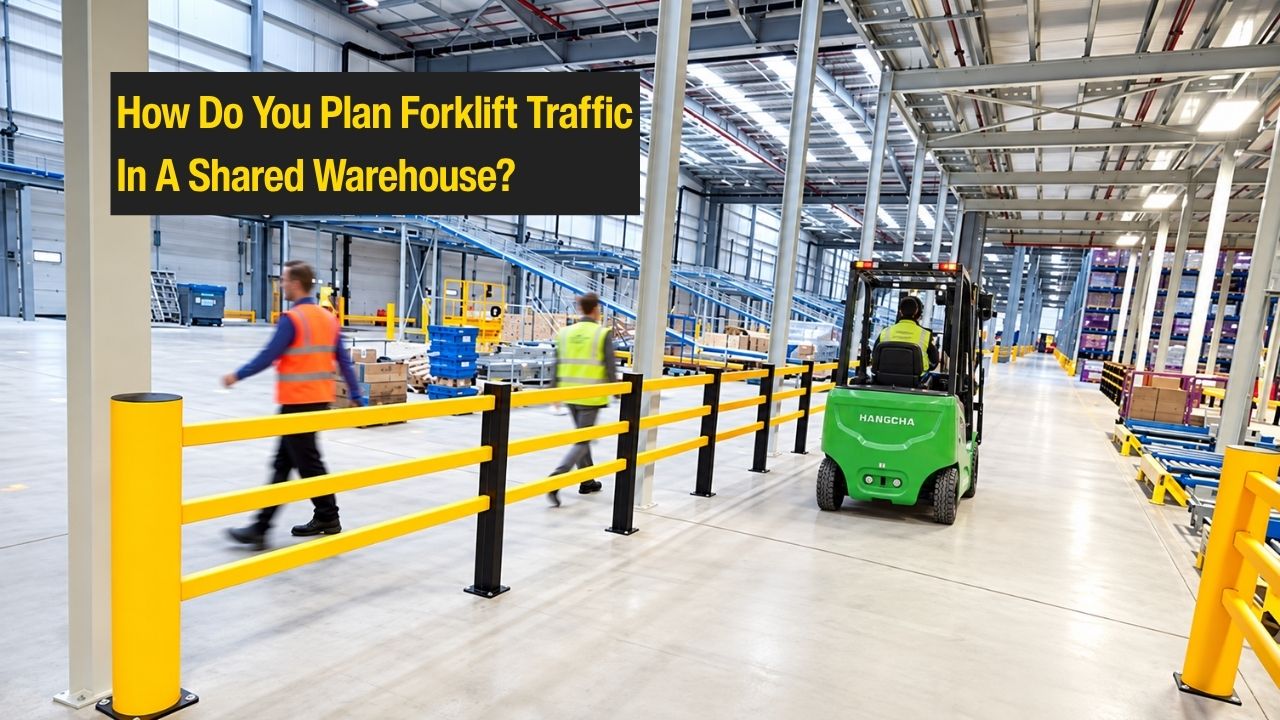
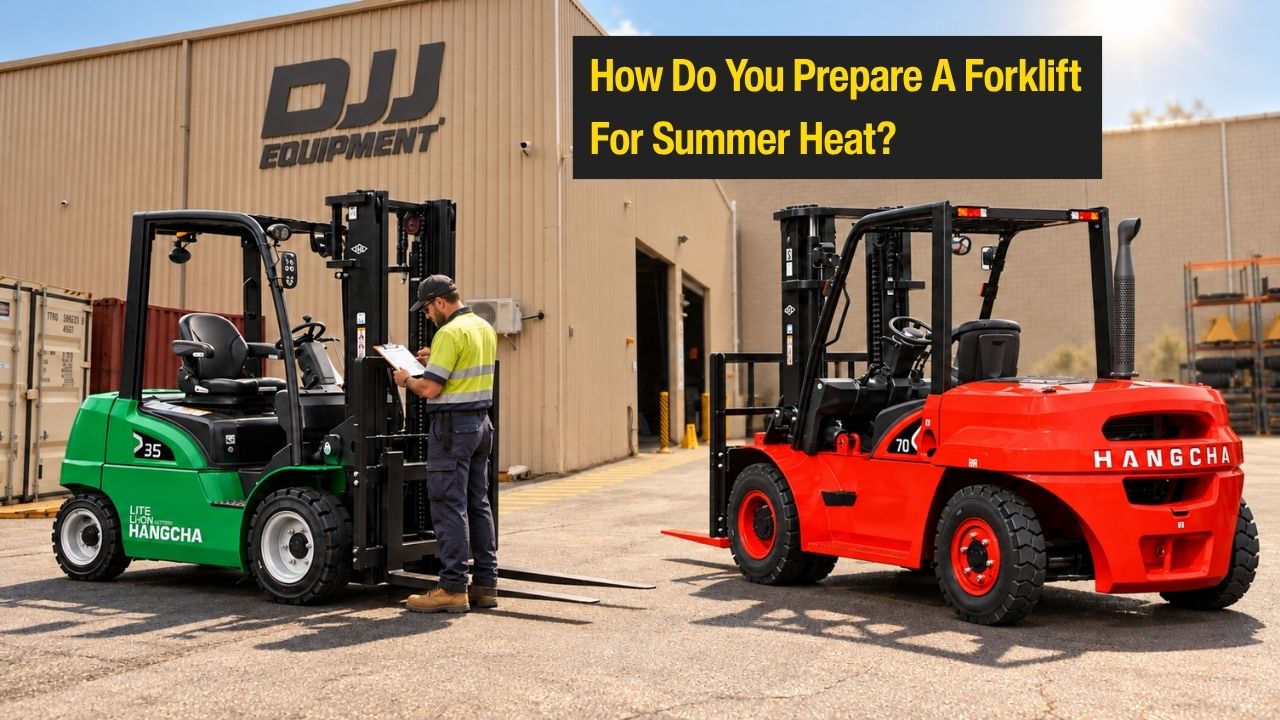
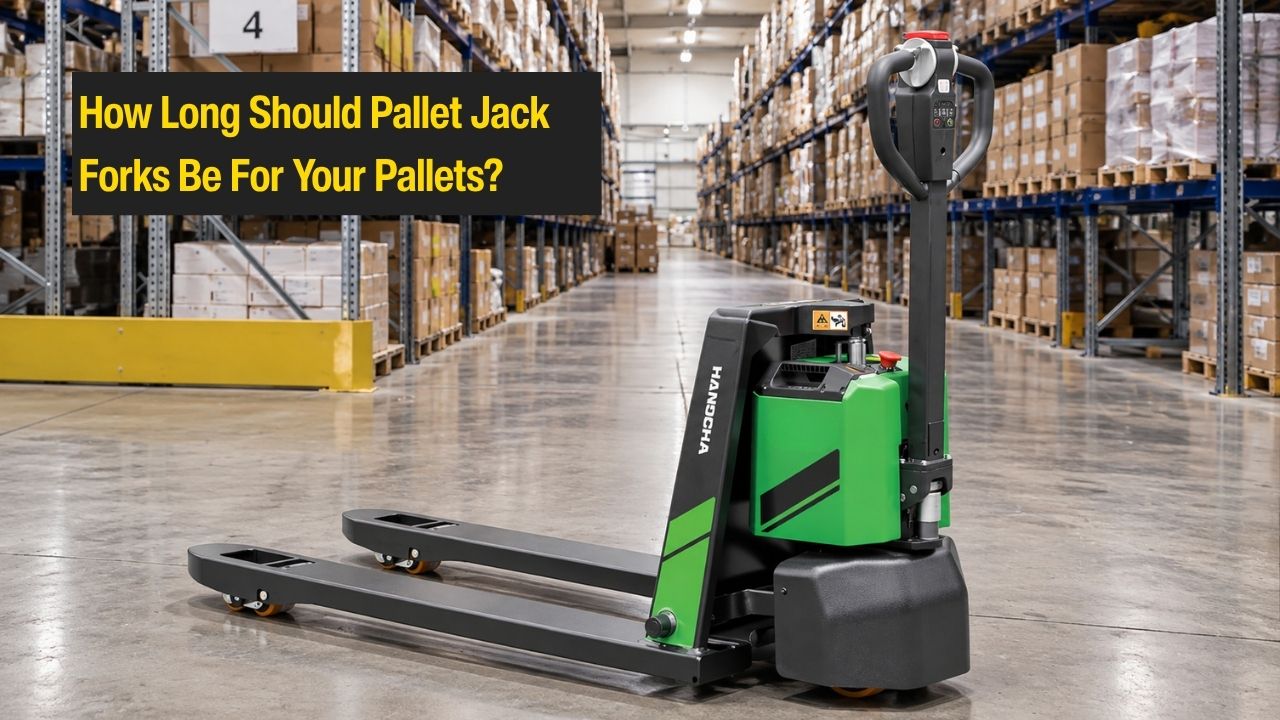
The forklift safety features worth adding are the ones that match the risks where the truck works. A seatbelt interlock and an operator presence system are the first features to check on any sit-down truck. Where people walk nearby, a reversing camera, a blue spot light and an alarm that suits the noise level warn them the truck is coming. Automatic speed control covers corners and lifting at height: Hangcha's A Series stand-up forklift slows itself in corners, and the low-mast version of its WS Series pallet stacker 1.2-1.5 t drops to 2 km/h once the forks pass 500 mm. None of this replaces keeping people and forklifts apart, and the same feature can be standard on one model and an option on the next.
Which forklift risks should safety features target first?
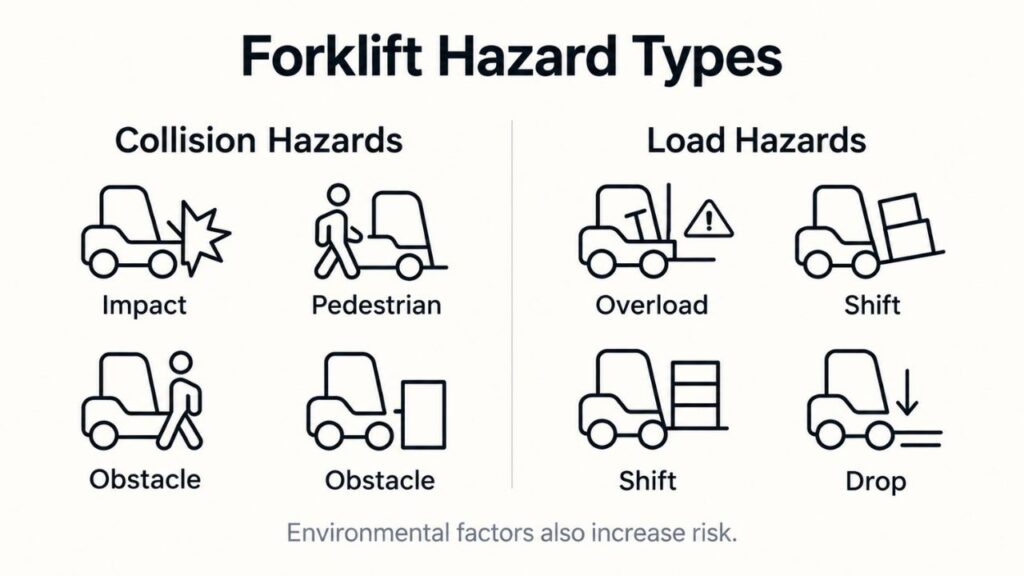
Safety features should target the ways forklifts most often kill or seriously injure workers. SafeWork NSW says the three main reasons workers are killed or seriously injured in forklift incidents in NSW are being hit or crushed by a forklift, being hit or crushed by its load, and being crushed in a tip-over. Forklifts are also one of its regulatory priorities for 2026-2027.
The regulator's first advice is to separate people from moving forklifts with barriers, walkways and exclusion zones wherever possible. Features on the truck come after that, as an extra layer for the places where people and forklifts still meet. Its list of features to consider includes proximity sensors, reverse lights and sensors, flashing lights, beepers, speed-limiting devices, reverse cameras and additional mirrors.
Choose features from the main risk in each area, rather than fitting the same kit to every truck.
| Work area | Main risk | Features to consider |
|---|---|---|
| Busy warehouse with pedestrians | People crossing aisles, blind corners | Reversing camera, blue spot, proximity sensors, site speed limit |
| High racking and narrow aisles | Poor view of the forks at height, aisle exits | Fork or mast camera, speed reduction at height |
| Loading docks | People near the dock edge, reversing out of trailers | Reversing camera, red zone lights, reversing alarm |
| Outdoor yards | Bright sunlight, dust, uneven ground | Rotating beacon or strobe, reversing camera, cornering speed control |
| Noisy sites | Alarms lost in machinery noise | Warning lights, broadband reversing alarm |
A reversing camera appears in three of the five rows: the areas where people walk behind a reversing truck. The others depend on the area: warning lights where machinery noise drowns out alarms, and speed control at height and on rough ground.
Seatbelt interlocks and operator presence systems on forklifts
On a sit-down counterbalance forklift, a fastened seatbelt keeps the operator inside the truck in a tip-over, and SafeWork NSW's forklift safety fact sheet says it should be worn at all times. SafeWork NSW also suggests a seatbelt interlock, which the Australian Standard requires, so the truck can't be driven until the belt is fastened.
An operator presence system adds another layer. On Hangcha's XF Series diesel and LPG forklift 1-3.5 t it locks lifting, tilting and travel when the operator leaves the seat, and it is standard on the X Series 4-wheel electric forklift 1.4-2.9 t. Stand-up trucks work differently: on the A Series stand-up 3-wheel forklift, pedal sensing applies the brakes when the operator's foot leaves the pedal.
SafeWork NSW also says a damaged seat must be replaced. These features protect the operator but don't make a truck harder to tip. Load, speed, ground and turns still decide that, and the habits that prevent a forklift tipping over matter more than any device.
Does your forklift need a reversing or fork camera?
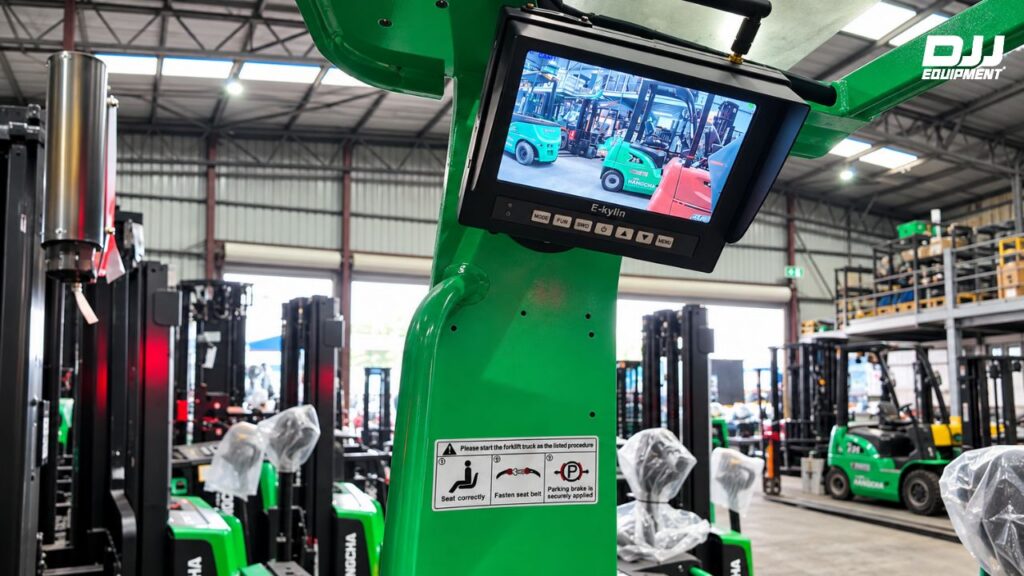
A forklift that reverses near people needs a reversing camera, and one that lifts to high racking benefits from a fork camera. A reversing camera shows the operator what is behind the counterweight, the area that is hard to see even when they turn round. A plain camera only helps when the operator is looking at the screen, so mount it where the eyes naturally go when reversing and keep the lens clean, because a dirty or sun-glared lens shows very little.
On the Hangcha electric counterbalance trucks that list one, a reversing camera is an option rather than standard. The XC Series 4-wheel electric forklift 1.8-3.1 t, for example, offers a backup camera and blue lights as options, as do the XC cushion tyre 3.5-5.5 t and XH 4-5 t models.
For high racking and narrow aisles, a camera at the forks or on the mast shows the pallet and beam that the operator can't see clearly from the seat. Some cameras do more than show a picture: they detect people and warn the operator, which helps in busy areas where nobody can watch a screen all the time.
Some very narrow aisle trucks have cameras built in. The A Series man-down turret truck comes with cameras for driving and pallet handling as standard.
Forklift blue spot lights, red zone lights and strobes compared
Warning lights tell people nearby that a forklift is coming before they can hear or see it. A blue spot projects a bright dot onto the floor ahead of or behind the truck, red zone lights mark a line on the floor along each side to show where the counterweight swings in a turn, and a strobe or rotating beacon signals that the truck is moving.
Each has limits. Projected spots are hard to see in bright sunlight, so outdoor yards may need a beacon instead. Strobes shouldn't sit at eye level, where they dazzle people nearby. And lights only work if everyone on site knows what they mean, so include them in inductions and site rules.
On the Hangcha range, blue lights are options on the XC Series 4-wheel electric forklift 1.8-3.1 t and the XH Series 4-wheel electric forklift 4-5 t, and the XF Series paper roll forklift has a strobe light as standard.
Are forklift reversing alarms still worth having indoors?
Forklift reversing alarms are still worth having indoors, as long as people still notice them. A reversing alarm is standard on some engine trucks, including the A Series diesel forklift 1.5-3.8 t, which has a reverse buzzer. The risk is that people stop noticing alarms that sound all day, especially indoors where beeping echoes off walls and racking. Where that happens, a broadband alarm, which is easier to locate, or a light-based warning can work better. Never remove or switch off an alarm to quieten a site without first checking the change against your risk assessment.
How forklift proximity sensors detect pedestrians
Proximity systems warn the operator, and sometimes the pedestrian, when a person comes within a set distance of the truck. Some rely on tags worn by workers, which work well with a known workforce but miss a visitor or delivery driver without a tag. Others use sensors on the truck that need no tags but may not tell a person from a pallet or a racking upright.
SafeWork NSW includes proximity sensors in its list of forklift features to consider, as an extra layer on top of keeping people and forklifts apart. False alarms are their main weakness. A system that beeps at every rack upright soon gets ignored, so trial it in your own aisles before committing. Where a system can act on the truck, gradual slowing is gentler than hard braking, because a sudden stop with a raised load can unsettle the truck and its load.
Forklift speed limiters and automatic cornering control
Speed limiters and cornering control slow the truck in turns and when the load or platform is raised, where a tip-over is more likely. Automatic cornering deceleration slows the truck as it turns: the A Series stand-up 3-wheel forklift tops out at 12.4 km/h laden and slows automatically in corners, and cornering deceleration is standard on Hangcha's XC Series electric cushion tyre forklift 1.8-3.5 t. A lower speed can also be set to suit a site, and speed-limiting devices are on SafeWork NSW's list of features to consider.
Warehouse trucks limit speed by height as well. Hangcha's A Series order picker 1.2 t travels at up to 10 km/h, slows as the platform rises and stops travelling above 6 m. That kind of control matters most on order pickers, where the operator rises with the load.
Which forklift safety features to confirm on the quote
Ask which features are standard and which are options on the exact model quoted, and whether options are fitted at the factory or added afterwards.
Across the electric forklifts DJJ Equipment sells, the line between standard and optional moves from model to model. On the XC Series 4-wheel electric forklift 1.8-3.1 t, the operator presence system is standard but the backup camera is an option, so a quote for the base truck won't include one.
Load guards count as safety equipment too. SafeWork NSW says an extension fitted for two-pallet lifts must support two-thirds of the top load. Any device added to a forklift needs looking after as well. WorkSafe Queensland says added control and warning devices must be maintained and serviced along with the truck.
Build the features into site rules and training, so operators know how the cameras and alarms work and pedestrians know what the lights mean. SafeWork NSW lists the horn, flashing light, reversing beeper and blue light among the items to check at the start of each day, so make them part of the daily forklift pre-start checks.
Tell the DJJ team where the forklift will work, how many people walk nearby, how high it lifts and whether it works indoors or outside, and ask about a live video walk-around to see the lights and cameras on a machine. Call 1800 355 388 or send an enquiry to your nearest branch.