For most people who finish a forklift licence course, the test is not hard to pass, but it is strict. The assessment has three parts: knowledge, calculations and a practical drive on a real forklift. Under SafeWork NSW rules, an assessor can only mark you competent when you answer the required questions correctly and carry out every practical task to the required standard, so there is no percentage pass mark to aim for. If you are found not yet competent in one part, you can be reassessed on that part alone within 60 days.
What is in a forklift licence test?
A forklift licence test is the national assessment instrument for the LF class, the mandated assessment for every forklift high risk work licence in Australia. Safe Work Australia publishes the instrument, and an assessor accredited by the state regulator runs it at the end of your course. When you pass, you receive a statement of attainment and have 60 days to apply to the regulator for the licence.
These are the three parts of the forklift test and how each one is run:
| Forklift test part | What it checks | How it is run |
|---|---|---|
| Knowledge | Safety rules, data plates, stability, hazards, refuelling and charging, attachments, shutdown | Written questions, supervised, no notes or reference material |
| Calculations | Load weight checked against the data plate | Written, with the formula and the kg unit shown, no formula sheet |
| Practical | Pre-start and operational checks, driving and stacking loads of at least 250 kg, parking and shutdown | One candidate at a time on a real forklift, never a simulator |
Two of the three parts are on paper, and neither lets you bring notes or formulas. People who already drive a forklift at work are often surprised by that, because the written side is closed book even for an experienced operator.
The person who tests you is usually not the trainer who taught you. In NSW, an assessor may not assess a candidate they trained for the same class without a written exemption from SafeWork NSW. You book the test through the RTO with the course, and what it costs to get a forklift licence depends mostly on that course fee rather than the regulator's card fee.
Is there a pass mark for the forklift test?
No. You are marked competent on each written paper only if every required question is answered correctly, and on the practical when you perform every task to the standard set in the instrument. The assessor marks everything on the day.
The 70% or 80% pass marks quoted for overseas forklift tests don't apply to the Australian licence. Your knowledge answers don't have to match a script word for word: an answer counts when it is comparable to the acceptable answers. Once everyone has finished, the assessor can ask you to explain a borderline answer out loud, though not one that is clearly wrong.
What do you do in the forklift practical test?
The forklift practical test covers the whole job, from checking the truck before you start to parking it with the key out. TLILIC0003, the national unit behind the LF licence, sets out what the assessor must see.
Checks before you drive the forklift
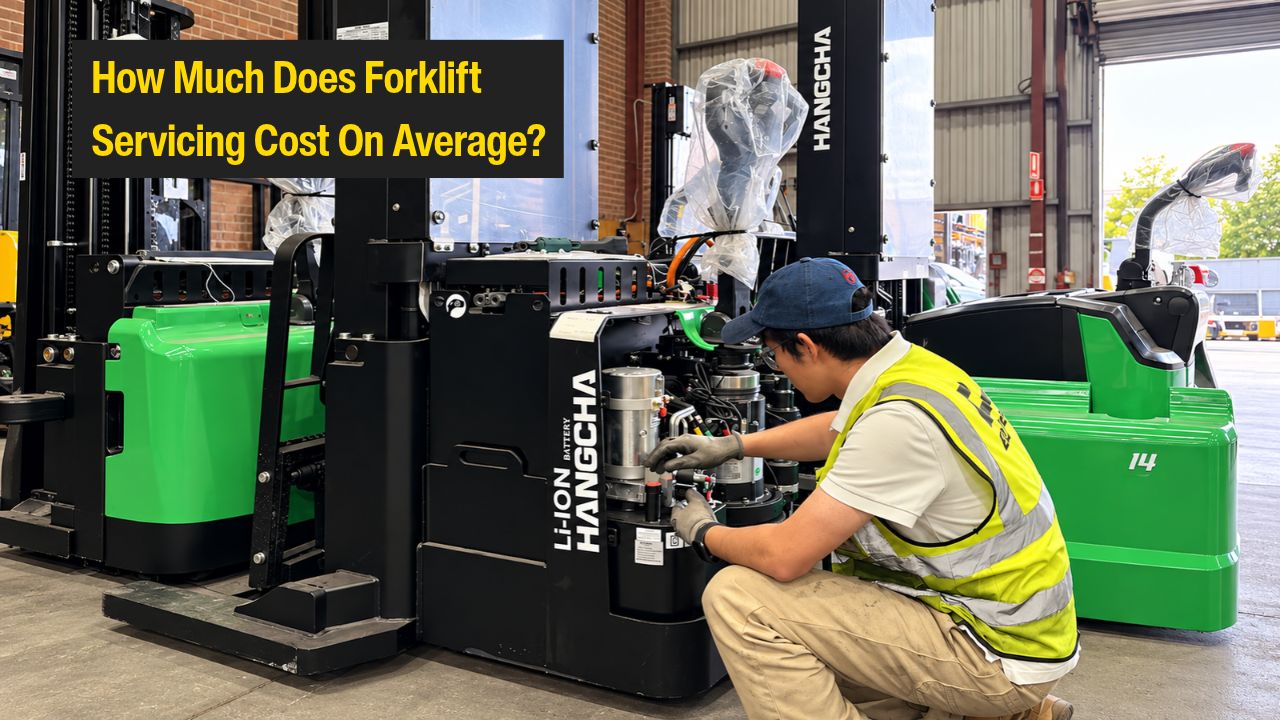
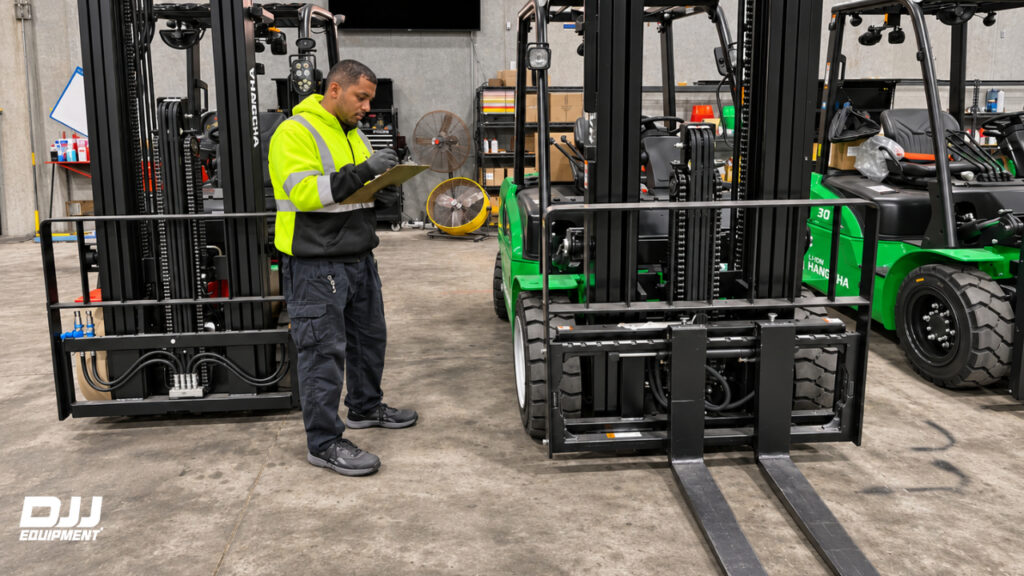
The pre-start check includes the data plate, signs of paint separation and stressed welds, fluid and fuel levels or battery charge, tyres, lights, mirrors, seat belt and the logbook. The operational check follows with the engine running: every control, all hydraulic functions to full extension, the horn and reversing beeper, steering and brakes. These are the same forklift pre-start checks a site expects at the start of every shift.
Driving and stacking loads
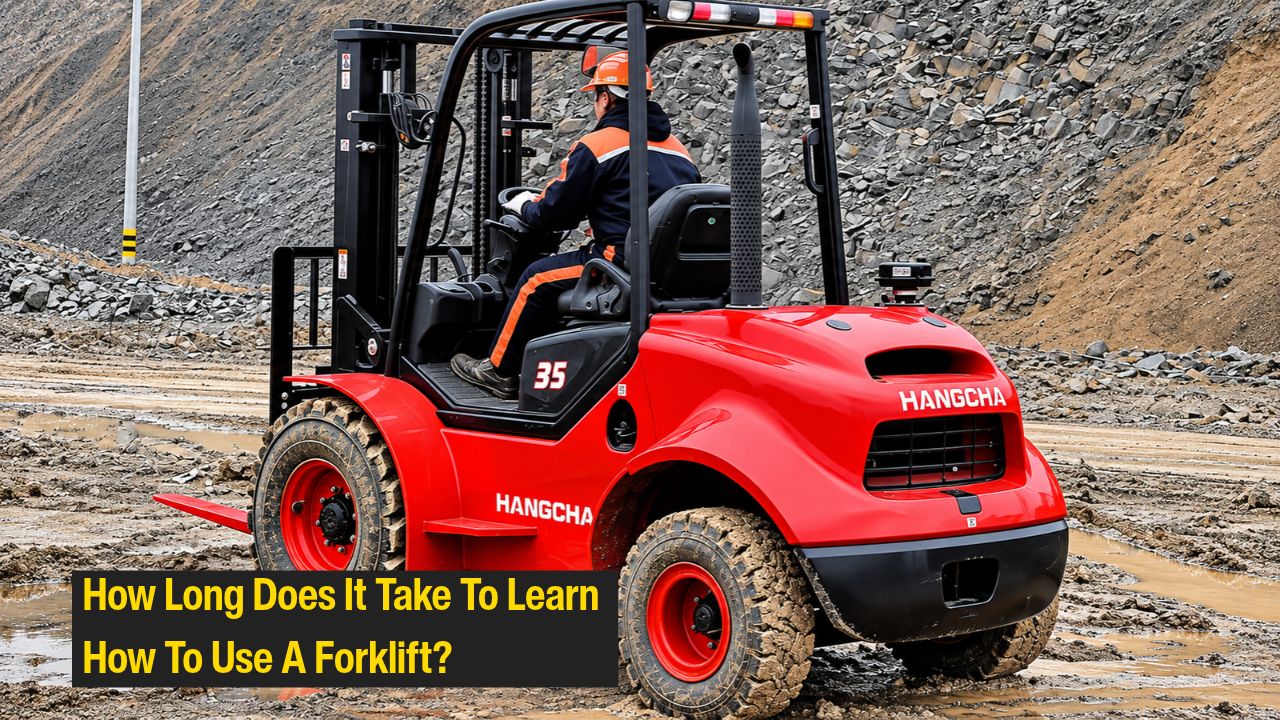
The driving tasks use dynamic and non-dynamic loads of at least 250 kg. You carry out a trial lift, then a lift to 75% of the forklift's maximum height. On the standard 3,000 mm mast of a Hangcha X Series diesel or LPG forklift, that is 2,250 mm.
You drive an obstacle course with an S bend of at least 90 degrees left and right, forward and in reverse, with the load lowered for travel. You place loads in a compliant racking system and onto a raised flat area, use tilt and side shift to position them, and use the horn and mirrors. If the load blocks your view, you set up and use an observer.
Parking and shutdown
You finish by parking the forklift with the forks lowered and the park brake on, switching off, isolating the fuel or power and removing the key. Getting on and off, you keep three points of contact the whole time.
How do the forklift test calculations work?
The forklift test calculations ask you to work out the weight of a load and check it against the forklift's data plate. The weight can come from labels or markings on the load, a consignment note or weighbridge docket, or from weighing one carton and multiplying.
Say a pallet holds 40 cartons of 22 kg each and the pallet weighs 30 kg. The working is 40 x 22 kg = 880 kg, plus 30 kg for the pallet, which gives 910 kg. Write down the formula and the kg unit, because an answer with the right number and no unit is not marked correct straight away.
The data plate then tells you whether that weight is safe at your load centre and lift height. The Hangcha X Series 2.5 t is rated for 2,500 kg at a 500 mm load centre with its standard 3,000 mm mast. Lift higher, tilt forward or carry a longer load, and the safe figure falls. On the Hangcha 3.5 t rough terrain forklift, the load chart drops from 2,900 kg at 3.2 m with the mast vertical to 1,320 kg at 4.5 m tilted forward.
Why do people fail the forklift test?
People usually fail the forklift test on a missed safety step, not on tight steering. The practical is marked task by task, so one task below standard leaves the whole practical not yet competent. The misses that cost candidates the practical are the everyday habits the assessor is watching for:
- skipping part of the pre-start check, such as the data plate or the welds;
- travelling with the forks or load higher than the surface and visibility allow;
- reversing without looking in the direction of travel, or not using the horn at blind corners;
- moving a load without a trial lift, or without tilting the mast back to balance it;
- leaving the forklift with the forks up, the park brake off or the key in.
Raised forks lift the combined centre of gravity of the truck and load, so the forklift tips more easily in a turn. Keeping the load low is the first habit taught to prevent a forklift from tipping over, which is why the assessor watches fork height on every leg of the course.
Language catches some candidates on the written parts. In NSW the assessment is done in English, and an assessor can't use a language interpreter, only a certified interpreter for a candidate with a hearing impairment. If English is your second language, ask the RTO for practice questions before the test day. You also need to be 18 or older to be assessed.
What happens if you fail the forklift test?
If you fail part of the forklift test, you are reassessed only on that part. Under SafeWork NSW rules, the reassessment must take place within 60 days of the first assessment, and parts you already passed are not repeated.
After 60 days a reassessment is no longer allowed, so book the retest while the course is fresh. Ask the RTO how it handles a retest before you enrol, because the arrangements differ between training organisations.
The test can come back later in your working life too. Safe Work Australia sets a five-year licence, and if you don't renew within 12 months after it expires, you have to do the training and assessment again before you can apply.
Does passing the forklift test cover every forklift?
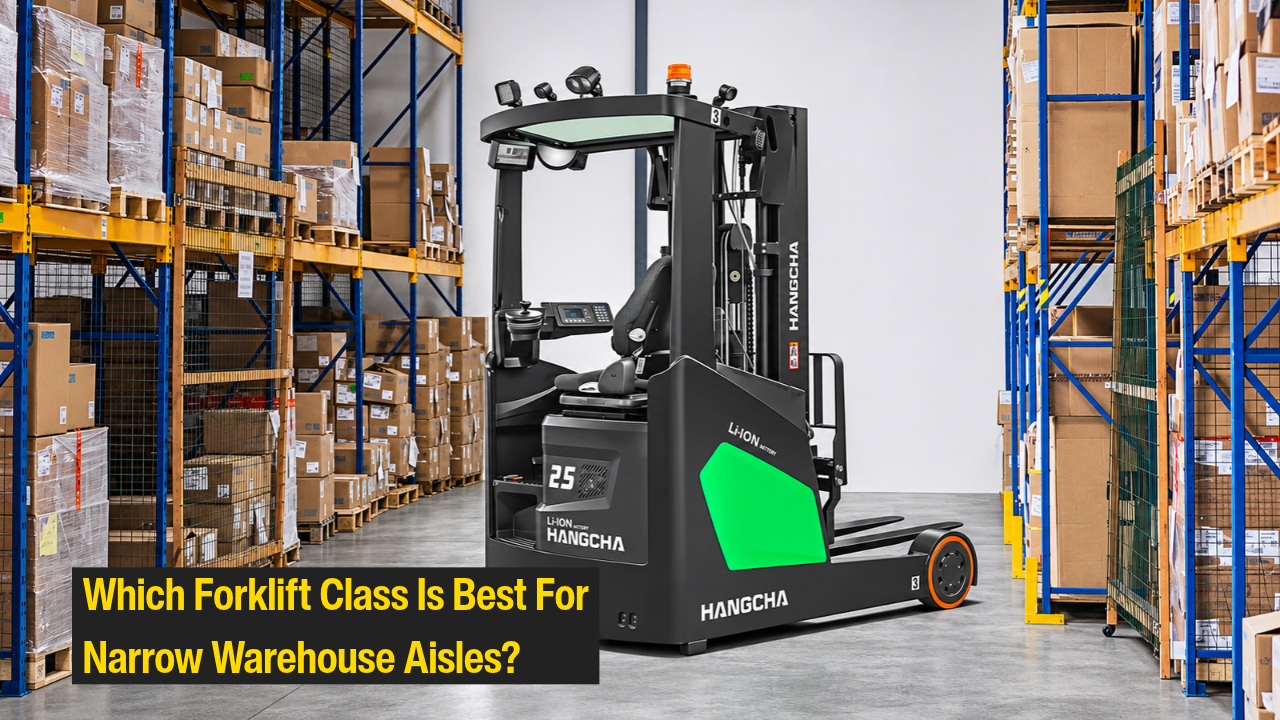
Passing the forklift test gives you the LF class, which covers counterbalance forklifts, reach trucks and ride-on stackers. It does not cover order pickers, where the operator's controls rise with the load: they need the LO class.
Your test is done on one forklift, and the truck at work may handle differently. A reach truck steers and balances its load in a different way from the counterbalance truck you trained on, and LPG forklift trucks have a gas bottle to change that an electric truck doesn't. Your employer still has to give you information, training and instruction on the machine and the site before you work alone.
If your business takes a forklift on hire from DJJ Equipment, it comes as dry hire, so your business supplies the licensed operator. DJJ doesn't run licence courses or assessments, so book those with an RTO before the machine arrives.
The forklift test is passable for anyone who does the course and treats every check as part of the score, because that is how it is marked. Once your team is licensed, call 1800 355 388 with your load weights, lift heights and aisle widths, and we'll match a forklift to the licence class your operators hold.