Most beginners learn enough to pass the forklift licence assessment in two days, the usual length of a beginner LF course at registered training organisations (RTOs) in Sydney, Brisbane and Perth in November 2026. Some beginner courses run three days, and an operator who already drives a forklift can be assessed in one. Passing makes you legal to drive. Handling real loads, tight aisles and your own site's truck with confidence comes from regular driving under supervision after the course.
How long is a forklift licence course in Australia?
A beginner forklift course takes 2-3 days, with each day running a full shift of about 8 hours. The course length depends on what you already know, so RTOs sell separate courses for new and experienced operators.
These are the course lengths RTOs advertised in the three cities:
| Course | Typical length | Who it suits |
|---|---|---|
| Beginner LF forklift course | 2-3 days | No forklift experience |
| Experienced operator LF course | 1 day | People who already drive a forklift regularly |
| Order picker LO course | 1-2 days | Order picker operators, beginner or experienced |
| Reach truck (high reach) training | 2-4 hours | Current LF holders who are new to reach trucks |
The table shows that a full licence is a matter of days, while moving to a new type of truck can take a single morning. Course days typically start between 7am and 8am and finish around 3pm or 4pm, so a two-day course is roughly 16 hours of training and assessment. The price follows the same split, and what it costs to get a forklift licence depends mostly on which of these courses you book.
What happens on each day of a forklift course?
The first part of a forklift course is theory and the rest is driving, and you sit the assessment at the end of the last day. On a two-day beginner course in Sydney, the assessment falls on the second day, and in Perth each course day runs from about 7:30am to 4pm.
A typical course covers WHS law and the licence, hazards and controls, assessing a load, pre-start and start-up checks, driving and lifting, shutting down, and load calculations. You sit a written assessment and a calculations assessment before the practical one, and at one Perth RTO the theory papers are closed-book with no multiple-choice questions. Fail the knowledge papers and you don't get to the practical test.
The practical part starts with familiarisation, where you learn the controls and drive the training forklift under the trainer's eye. The practical assessment then checks the same tasks: the pre-start check, lifting and placing loads, driving with a load, and shutting the forklift down.
Can you get a forklift licence in one day?
Yes, but only if you can already drive a forklift. One-day courses are sold for experienced operators only, and RTOs check that before you sit the assessment.
In Perth, one-day students sign a statutory declaration confirming their practical forklift experience, and one RTO sets a workbook to finish before the day. That one-day course includes no practical training, so your first drive on the day is part of the assessment. If you have only driven a forklift a few times, book the two-day course: failing on the day means rebooking and paying again.
An LF holder whose licence has lapsed can also do a shorter refresher course. In Brisbane, one RTO runs a 2-day course for expired licence holders instead of the full beginner course of up to 3 days.
How long after the forklift course can you start work?
You can start driving a forklift at work once you pass the assessment and apply for the licence. In NSW, Queensland and WA, a person who applies within 60 days of receiving the statement of attainment can operate while the application is being processed.
The RTO assesses you, but the licence comes from your state regulator, such as SafeWork NSW, WorkSafe Queensland or WorkSafe WA. Lodge the application soon after you pass. Once the 60 days run out without an application, the assessment no longer covers you.
Before you pass, you can only drive while you are enrolled with an RTO and directly supervised by an appropriately licensed, experienced person. Those two situations are the only times you can drive a forklift without a licence at work. You must be 18 to hold the licence, and it lasts five years before it needs renewing.
How long until you're confident driving a forklift at work?
Expect to keep learning for a while after you pass, because the course and your workplace are different jobs. You train on the RTO's truck in a clear yard with standard loads, then start work on your site's forklift, with its racking, dock plates, pedestrians and odd-shaped loads.
There is no set number of hours after the licence. Your employer decides when you work without close supervision, and SafeWork NSW expects businesses to supervise forklift operators, give feedback, and run refresher training regularly and after any incident or near miss. How fast you settle in depends mostly on how many hours you drive each shift and how close the work truck is to the one you trained on.
A few habits shorten the learning curve:
- Do the pre-start check on every shift, so you learn where the controls, gauges and warning lights sit on that model.
- Practise the site's hardest lifts, such as top-level racking or trucks at the dock, at a quiet time with an experienced operator watching.
- Read the operator manual for the exact model, because control layouts and lift limits differ between trucks of the same capacity.
- Ask about the load chart before lifting anything tall, heavy or long, not after.
Does the type of forklift change how long it takes to learn?
Yes. A counterbalance forklift is the machine most LF courses train on, and every other truck adds its own skills, a separate licence or a separate course.
Reach trucks
A reach truck is covered by the LF licence, but most operators need extra time on one before they work in racking. RTOs in Brisbane and Perth run reach truck training of 2-4 hours for people who already hold an LF licence.
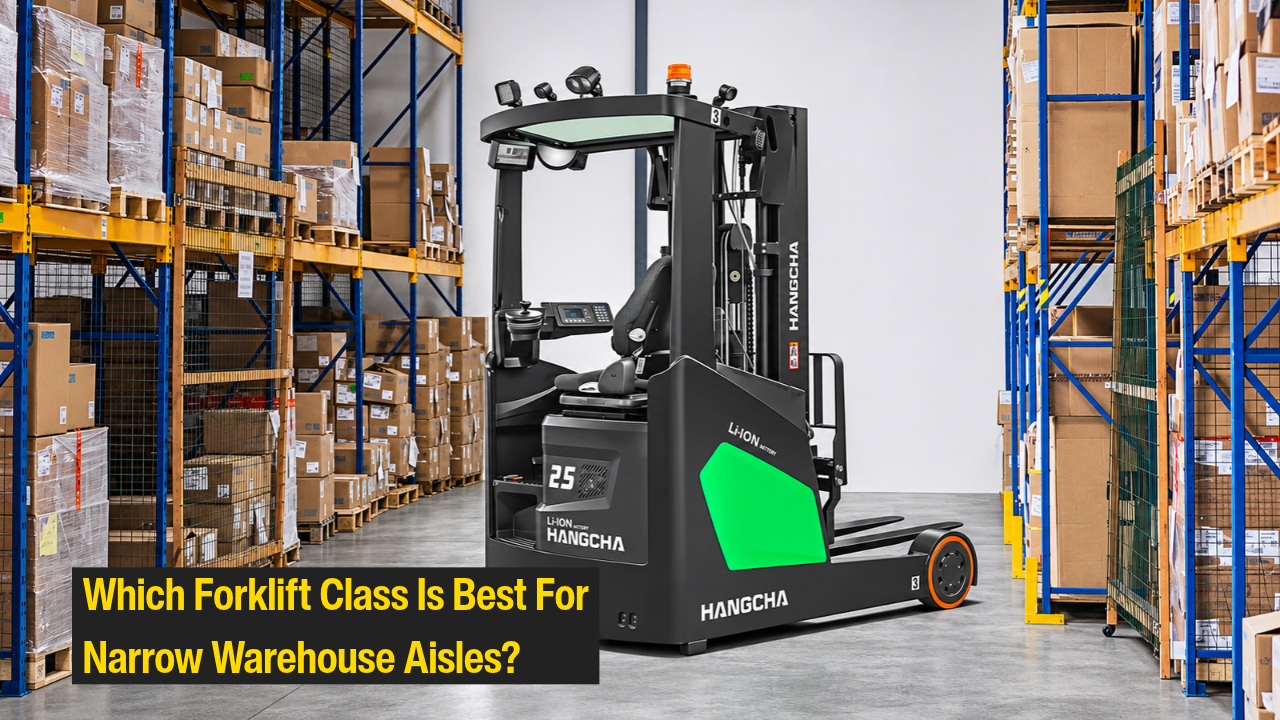
The extra skill is working at height in a narrow aisle. The Hangcha A Series reach truck lifts up to 12.5 m in an aisle of about 2.8-2.9 m, and the 2-tonne model carries only 550 kg at that full height. Placing pallets 12 m up, where the truck carries about a quarter of its rated load, is what takes practice.
Order pickers
An order picker needs its own licence, class LO, because the operator's controls rise with the load. The LO course follows the same pattern as LF: one day for experienced operators and two for beginners.
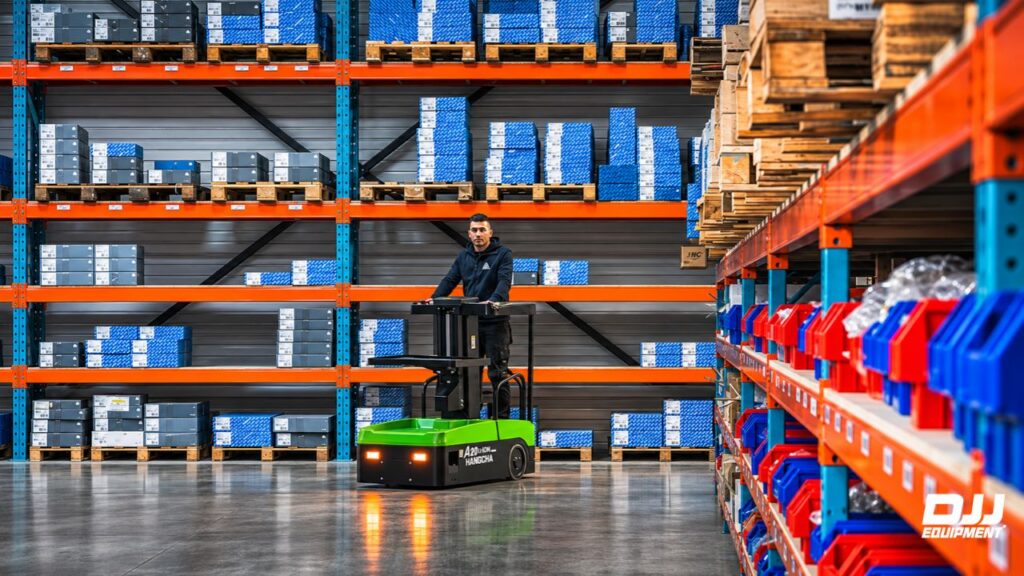
The learning is about working at height while standing on the machine. The Hangcha A Series stock picker raises the platform floor to 4,000 mm, and its 500 kg total capacity includes 150 kg for the operator, so the person counts as part of the load. Operators also learn to use the fall restraint the manufacturer and site require, which is part of why taller order picker forklifts need more practice before you pick at the top level.
Walkie stackers
A walk-behind stacker needs no forklift licence, so operators learn it through site-specific training rather than a licence course. The law treats a pedestrian-operated stacker differently from a forklift, but the business must still train every operator.
The Hangcha X Series pedestrian stacker travels at 6 km/h and works in a 2,200 mm aisle, so most of the learning is steering in tight stores and keeping your feet clear. The stand-on version travels at 8-9 km/h laden, and a stacker you ride on with forks that lift 900 mm or more needs an LF licence. For walk-behind stackers, the training is short and specific to the model.
Telehandlers
A telehandler with forks or a bucket needs no high risk work licence in NSW, Queensland or WA, only site-specific training. In NSW, the licence applies only when a telehandler lifts over 3 tonnes with a hook and crane jib, or has a slewing function or work box with a boom longer than 11 m.
Learning a telehandler mostly means learning its load chart. The Hangcha X Series telehandler lifts 2,500 kg at its full 17.7 m height but only 850 kg at its full 13.02 m reach. With the stabilisers up, its limit drops to 12.72 m of height and 400 kg at full reach, so an operator has to read the chart before every lift.
DJJ Equipment doesn't run licence courses, so the course itself is booked with an RTO. When you buy a machine at one of our branches, our staff can explain its controls and basic operation to the people who will drive it, which helps most when it differs from the truck they trained on. To match a forklift to the licences your team already holds, call DJJ on 1800 355 388 or send an enquiry.