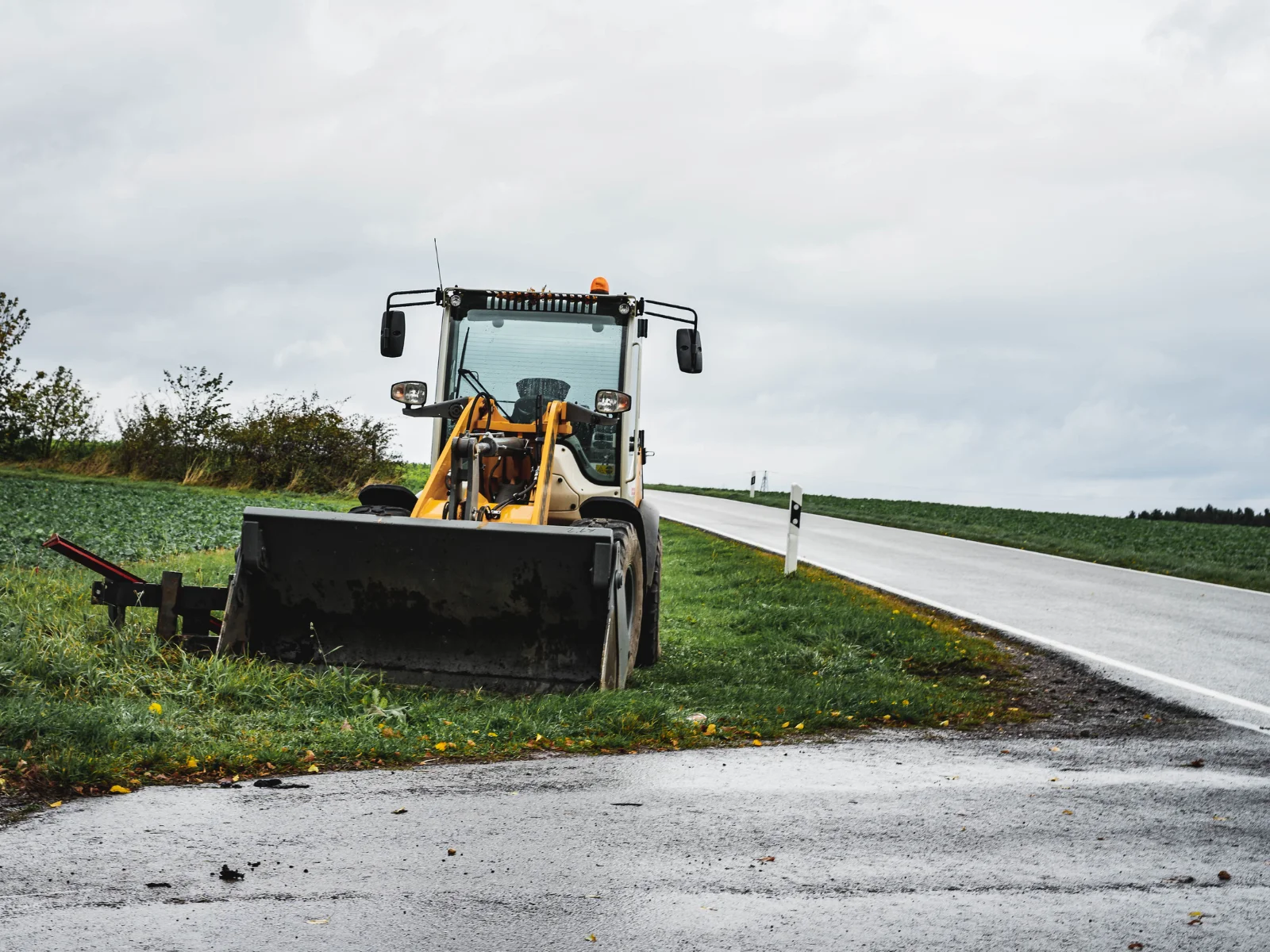

Buying a wheel loader in New South Wales (NSW) means choosing the right size for your heaviest material, checking the price against current NSW listings, and sorting conditional registration if the machine will drive on public roads. Compact loaders under 8 t suit most farms, rural properties and Sydney landscaping yards. In October 2026, most used mid-size loaders listed in NSW from 2016 to 2022 sell for $95,000 to $165,000 ex GST.
Match the loader to the work
Choose the smallest loader that lifts your heaviest bucket and reaches the side of your trucks or bins. A wheel loader's rated operating load is 50% of its tipping load at full articulation under ISO 14397-1, so compare rated loads rather than operating weights. A compact machine such as the 8.2 t LGMA LM946, with a 2.8 t rated load and a 1.5 m³ bucket, covers most farm and yard work.
| Size class | Operating weight | Typical NSW work |
|---|---|---|
| Compact | Under 8 t | Farms, rural properties, Sydney landscaping and trades yards, tight-access sites |
| Mid-size | 8-15 t | Civil and council work, sand and soil yards, recycling, loading road trucks |
| Large | Over 15 t | Quarries, ports and bulk stockpiles, high-volume loading |
On Sydney sites, measure the gate width, height clearances and turning space before you choose, because a loader that's one size too big can't work where it's needed. Add the attachments you'll use most: a general purpose or 4-in-1 bucket for soil and levelling, a light-material bucket for mulch or feed, and pallet forks for hay, fencing and pallets.
What wheel loaders cost in NSW
Used wheel loader prices in NSW depend mostly on size, age and hours. The table shows ranges from used listings located in NSW in October 2026, mostly ex GST.
| Size class | Typical used price in NSW (ex GST, Oct 2026) |
|---|---|
| Compact, under 8 t | About $25,000-$45,000 for older machines; $105,000-$117,500 for 2023-24 machines |
| Mid-size, 8-15 t | Mostly $95,000-$165,000 for 2016-2022 machines |
| Large, over 15 t | About $49,000-$310,000, with near-new machines above $420,000 |
Established brands sit at the top of each band of wheel loader prices by size, and new compact loaders from value brands can cost less than a late-model used machine of the same size.
Buying a used loader in NSW
Conditional registration doesn't transfer with the machine in NSW. The seller cancels it and returns the plates, and you apply for your own, so don't count a seller's registration as part of the deal. Ask for the service history, compare it with the hour meter, and run the loader under load.
Check that the ROPS or FOPS compliance plate is legible and matches the machine, search the serial number on the PPSR for money owing, and work through a full used wheel loader inspection before you agree on a price.
Conditional registration for wheel loaders in NSW
A wheel loader that drives on public roads in New South Wales needs conditional registration. The Transport for NSW wheel loader sheet requires an amber rotating beacon, brake and indicator lights, red rear reflectors, a rear-view mirror and a horn, plus headlights and tail lights if it will run at night. The driver needs a car (Class C) licence. A loader used only to cross a road to or from land used for primary production is exempt.
Apply in person at a Service NSW centre with the application form (Form 1246), a Vehicle Suitable for Safe Use Declaration (Form 1245, valid for 42 days), proof of identity and proof you're entitled to register the machine. The fee includes CTP insurance, but it only covers roads and road-related areas such as footpaths and car parks, not private property or a closed worksite, so arrange separate cover for on-site work.
Your Certificate of Approved Operations lists condition codes that must be carried in the machine. Typical codes limit a loader to daylight use unless it has headlights, cap hydraulic-steer machines at 45 km/h, and set the routes or areas it can use. Read the current wheel loader vehicle sheet before you apply.
Operator and safety rules in NSW
There's no high risk work licence for normal bucket work, but the operator must be trained and competent. The national unit is RIIMPO321F (Conduct civil construction wheeled front end loader operations), or its current version. Under the WHS laws that SafeWork NSW enforces, the business running the loader must manage its risks, and plant must be maintained in line with the manufacturer's recommendations.
Look for a ROPS tested to AS ISO 3471:2020 and a FOPS tested to AS ISO 3449:2020, and never weld, drill or modify either structure. If the loader will work on a mine site, expect the operator to check it against the NSW mobile plant guideline MDG 15 before it's accepted, even though the guideline itself isn't mandatory.
Service and parts in Sydney
A workshop close by matters when a loader stops mid-job. DJJ Equipment's head office and workshop in Silverwater, about 20 km west of the Sydney CBD near the M4, covers Greater Sydney, and its team can match a loader and buckets to the work before you buy.
For a short project or seasonal peak, hiring may suit better, and the checks in what to know before hiring a wheel loader apply to any hire.
The LM938 is awesome - strong, easy to handle!
Kayla K., Sydney branch customer
These stories come from public Google reviews, where you can read the full Google reviews of the Sydney branch.
Parts for the LGMA range are kept at the branch, so common wear items such as filters, bucket teeth and cutting edges are close at hand.
Choose the smallest loader that handles your heaviest material, price it against current NSW listings, and register it before it goes on the road. DJJ sells and hires LGMA wheel loaders from Silverwater. Call 1800 355 388 with the work and where the machine will run.