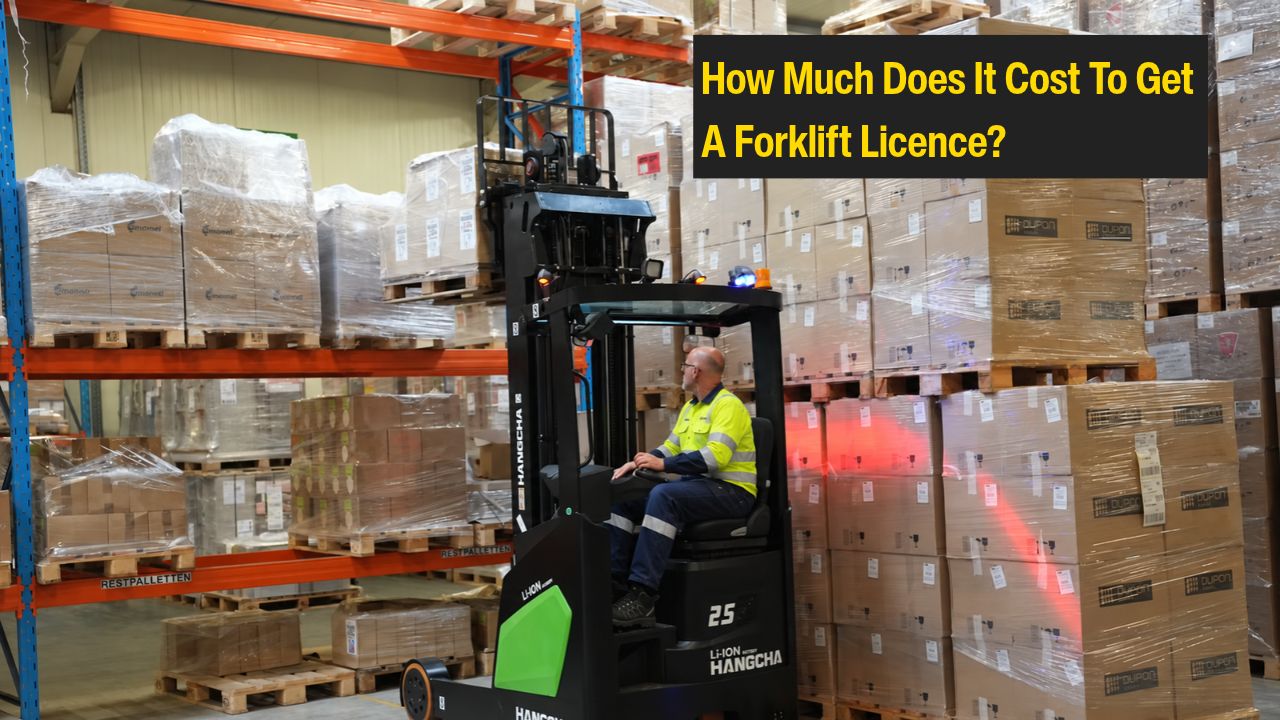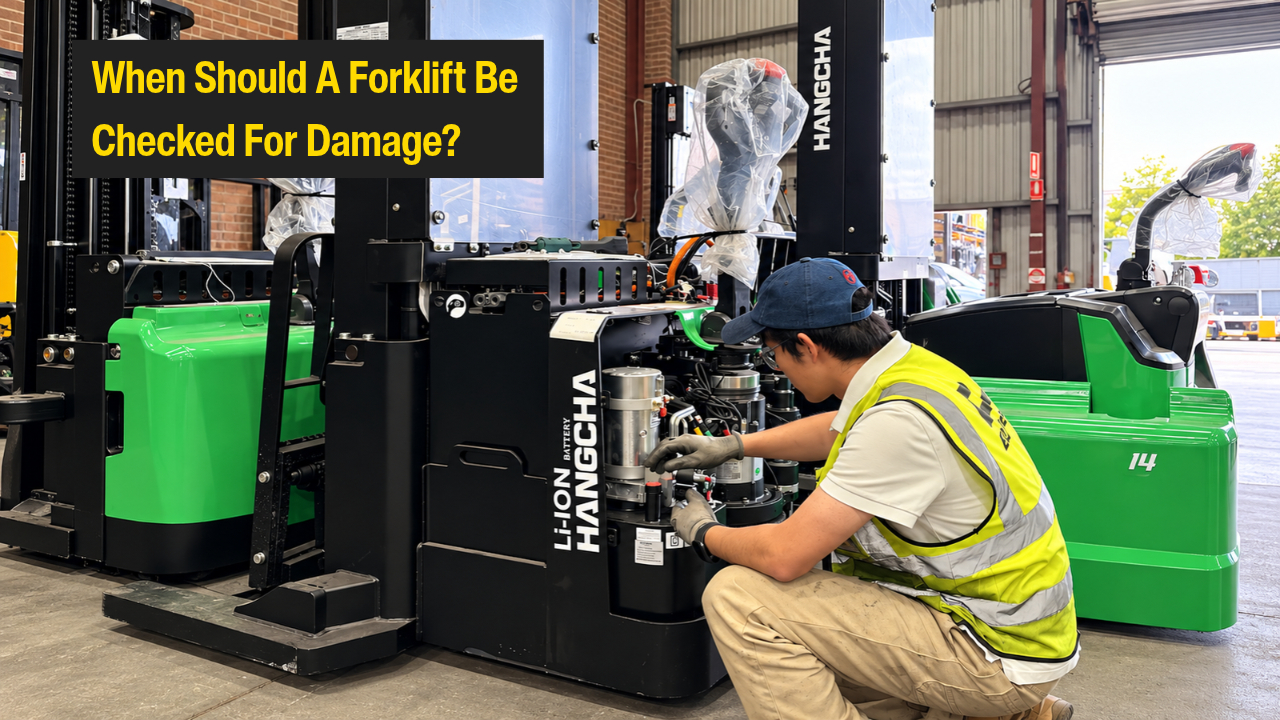
No. Driving a forklift truck at work in Australia needs a high risk work licence with class LF, or class LO for an order picker that lifts the operator with the load. The rule covers warehouses, farms, building sites and back-of-store docks alike. The law leaves two short gaps: a trainee enrolled in a licence course can drive under the supervision of a licence holder, and a person who has passed the assessment can keep working for up to 60 days while the application is processed. Walk-behind stackers and pallet trucks are not forklift trucks under the licence rules, so their operators need training but no licence.
Which forklifts need an LF or LO licence?
Any powered truck with a mast and a carriage whose forks or arms can be raised 900 mm or more needs a licence. The class depends on where the operator stands. LF covers counterbalance forklifts, reach trucks, side loaders and ride-on stackers. LO covers order-picking forklift trucks, where the operator's controls are built into the lifting gear and rise with the load.
The licence follows the machine's layout, not its brand, fuel or size. Pedestrian-operated trucks and pallet trucks sit outside the legal definition of a forklift truck, and that exclusion is the answer to the question of a forklift licence for a walkie stacker. The rule sorts common machines in the DJJ Equipment range like this:
| Machine | Example model | Licence to operate |
|---|---|---|
| Counterbalance forklift | Hangcha XA Series 2-3.8 t electric, masts up to 7 m | LF |
| Reach truck | Hangcha XC Series reach truck 1.4-2.5 t, lift up to 13 m | LF |
| Ride-on pallet stacker | Hangcha X Series rider pallet stacker 1.4-1.6 t, lift up to 6 m | LF |
| Order picker | Hangcha A Series high-level order picker 1.2 t, picking height up to 11.36 m | LO |
| Walk-behind pallet stacker | Hangcha WS Series pallet stacker 1.2-1.5 t, lift up to 4 m | No licence, training required |
| Electric pallet truck | Lifts the pallet just clear of the floor | No licence, training required |
| Telehandler with forks or a bucket | Telescopic boom, no mast | No licence in NSW, QLD or WA, training required |
The table shows that lift height alone does not decide the licence. The walk-behind WS Series stacker lifts to 4 m, far above 900 mm, yet needs no licence because the operator walks with it. The X Series rider pallet stacker does a similar job, but the operator rides it under an overhead guard, so it is an LF machine.
Operators of walk-behind and ride-on stackers both need training; only the ride-on operator also needs LF. A telehandler used as a crane, or fitted with a work platform, can need a crane or work platform licence instead.
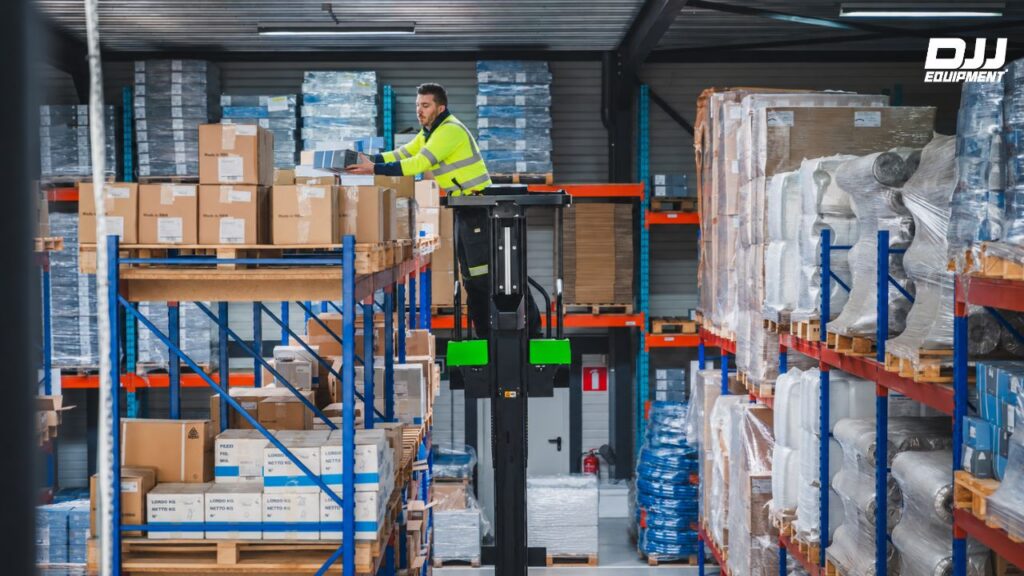
LF and LO do not cover each other. The A Series high-level order picker needs an LO licence, because its platform carries the operator and the controls up with the load, from 266 mm off the floor to a picking height of 11.36 m. An LF holder cannot drive it. Working at that height brings fall and rescue risks that LF training does not cover.
Can you drive a forklift without a licence while training?
Yes, but only while you are training towards the licence and a licence holder supervises you. No licence is needed when the work is done while training towards a high risk work licence and under the supervision of a person who holds one.
SafeWork NSW requires that supervision to be direct, and the employer must make sure it is. A reduced level of supervision is allowed only when direct supervision is impractical or unnecessary for the task and the change does not put the trainee or anyone else at risk. In a busy warehouse with people on foot, that test is hard to pass.
Being shown the controls by a workmate is not the same thing. The exemption is for training towards the licence, delivered by a Registered Training Organisation (RTO). To be licensed you must be at least 18, be assessed as competent by an accredited assessor working for that RTO, and speak English well enough to do the work safely with other people.
Can you drive a forklift while your licence application is pending?
Yes, for up to 60 days. In NSW you must apply within 60 days of the date your Notice of Satisfactory Assessment is issued, and the notice is valid for 60 days from the assessment. Until the card arrives, you can show the notice or the digital licence in the Service NSW app.
The 60 days run from the assessment, not from the day you lodge the paperwork. Once the window closes, the notice no longer covers you, so lodge the application in the first few weeks.
What happens when a forklift licence expires?
You must stop driving the forklift on the day the licence expires, unless you lodged the renewal before that date. A high risk work licence lasts 5 years. SafeWork NSW sends an email or text message about 60 days before expiry, and an application submitted before expiry lets you keep working until the renewal is confirmed.
After expiry you have 12 months to renew without retraining, but you cannot do the work during that gap. Past 12 months, you start again: training with an RTO, a new assessment and a new application.
Driving a forklift on an expired licence is treated like driving one without a licence. In September 2021, Queensland inspectors saw the director of a family transport company driving a forklift while his licence had expired and he was applying for a new one. In October 2022 he was fined $2,160, plus $500 in legal costs and $101.40 in court costs, against a maximum fine of $20,000.
What is the fine for driving a forklift without a licence?
In NSW, the maximum fine for driving a forklift without a licence is 243 penalty units for an individual and 1,214 penalty units for a company. With a penalty unit worth $128.36 for 2026-27, that is about $31,190 and $155,830. The figures come from section 43 of the Work Health and Safety Act 2011 (NSW), and the value of a penalty unit rises with inflation each financial year.
The same maximum applies twice. One offence is doing the work without a licence. The other is a business that directs or allows a worker to do it, so a supervisor who hands the keys to an unlicensed new starter exposes the business as well as the worker.
Other states set their own maximums, and Queensland's was $20,000 in the 2022 case above. Inspections are also more likely now. Forklifts are on the SafeWork NSW list of regulatory priorities for 2026-2027, which means inspectors look at them first when they visit a workplace.
Does the forklift licence rule apply on a farm or private property?
Yes. The licence follows the work, not who owns the ground. SafeWork NSW says a high risk work licence is generally needed for any high risk work, residential, commercial or industrial, regardless of the cost or size of the job.
A forklift loading fruit bins in a packing shed or moving pallets in a private yard needs the same LF licence as one in a distribution centre. A rough terrain forklift on a farm is still a forklift truck with a mast and forks, even with off-road tyres.
Do you need a car licence to drive a forklift?
Not to drive a forklift at work. A car licence is not one of the requirements for a high risk work licence, which asks for age, RTO training, an assessment and enough English to work safely.
A car licence matters once the forklift leaves the site. In NSW, a forklift driven on a road or road-related area needs conditional registration, and the driver must hold a valid car licence (class C) as well as the forklift licence. Other states have their own road rules, so check with the state road authority before a forklift crosses a public road.
What must a business check before someone drives a forklift?
A business must see evidence that the worker holds the right licence class before the worker drives, and then check regularly that it is still current. In NSW, the business must also keep a high risk work licence register for the workplace. Check NSW licences against the Verify NSW public register, and licences from another state with the regulator that issued them.
The class matters as much as the card. A mixed fleet of forklift trucks, reach trucks and order pickers can need LF for most drivers and LO for the order pickers whose controls rise with the operator, so record the class next to each name in the register.
A licence issued in one state is generally recognised in the others. The licence must be issued by the state where the holder usually lives, so a worker who moves to NSW permanently has to transfer it. Victoria issues forklift licences under its own Occupational Health and Safety Regulations 2017, through WorkSafe Victoria.
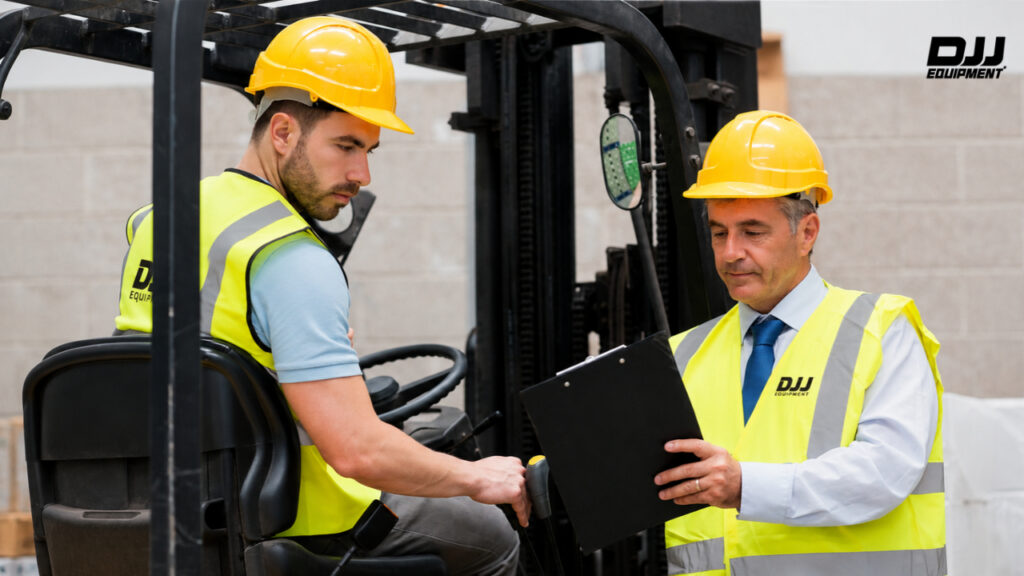
Do you need a forklift licence to hire a forklift?
The person who drives the hired forklift needs the licence, not the person who signs the agreement. DJJ hires machines on a dry hire basis, with no operator supplied, so the hirer must provide licensed, trained operators and hold public liability insurance.
The optional Equipment Waiver in DJJ's forklift hire terms costs 10% of the weekly hire cost. It is not insurance, and damage caused by an unlicensed operator is one of its exclusions, so the hirer pays for that damage in full.
At a branch, staff can explain the controls and basic operation of a machine. That walk-through is not training and does not replace a licence. DJJ does not run licence courses, so book the training and assessment with an RTO before the forklift arrives.
When you choose a machine for a site with few licensed staff, count who will drive it as well as what it must lift. A walk-behind stacker can stack pallets to 4 m with trained operators, while a ride-on stacker, reach truck or counterbalance forklift needs LF holders on every shift. To match a machine to the licences your team already holds, call DJJ on 1800 355 388.