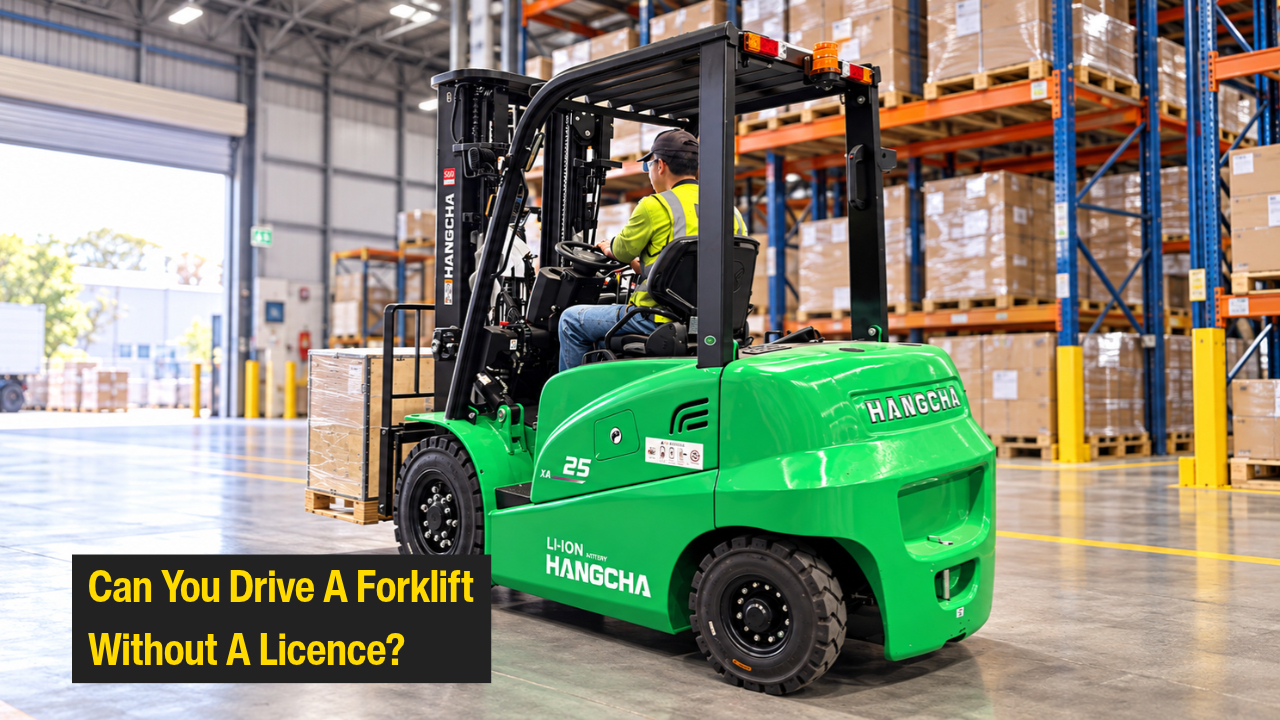
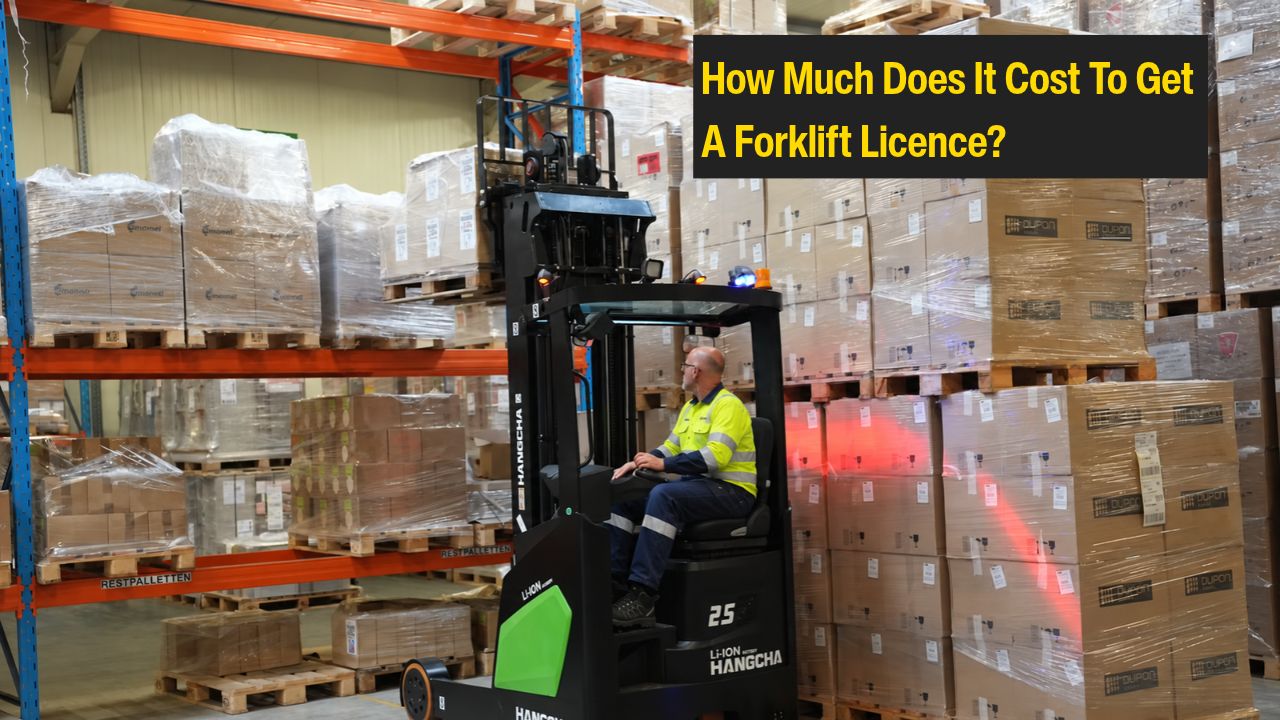
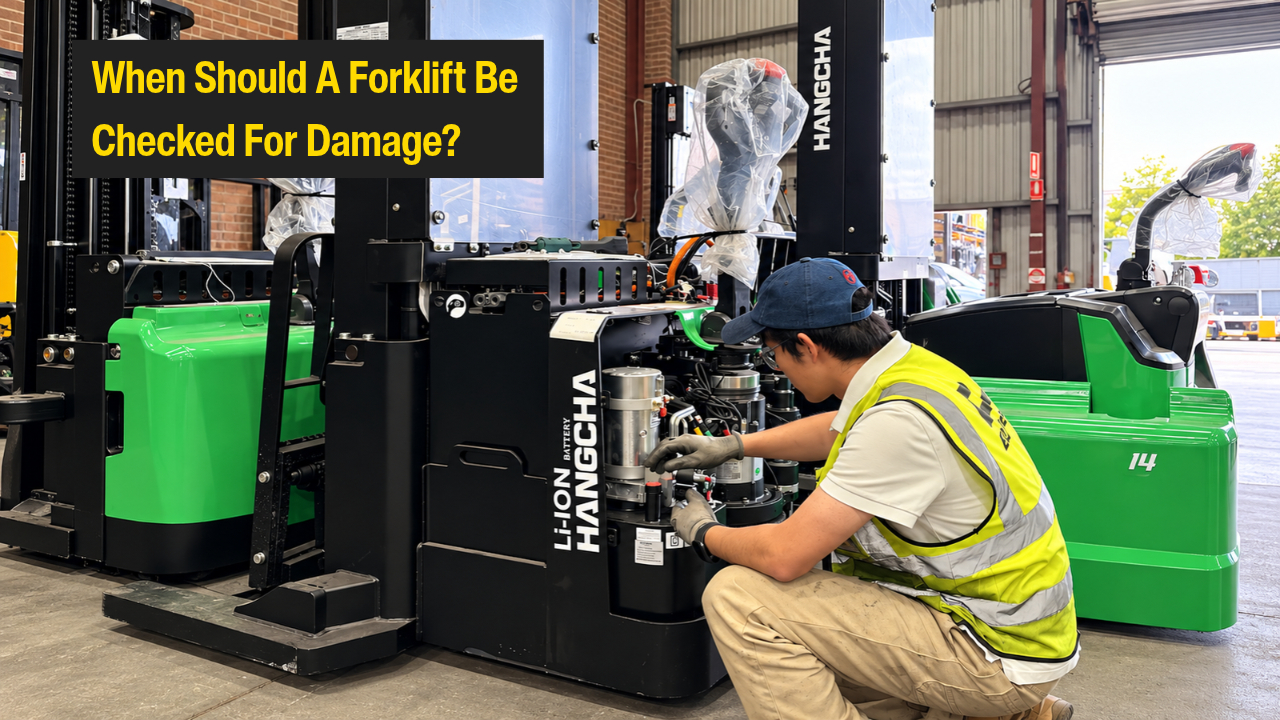
A tow tug, also called a tow tractor or tug truck, is a small electric or engine-powered vehicle that pulls trolleys, carts and trailers instead of lifting pallets. One tug can move a whole train of loaded carts in a single trip, which is why tow tugs work in warehouses, factories, large hospitals and airports. Tugs are rated by the weight they can pull on level ground, and the Hangcha models DJJ Equipment sells tow from 2 t to 40 t.
How a tow tug works
A tow tug pulls its load through a coupling at the back, while the load rolls on its own trolleys or trailer. Because the tug never has to lift the weight, a compact machine can move far more than it could carry.
Two ratings tell you what a tug can handle. Towing capacity is the total weight it can pull on a smooth, level floor. Drawbar pull is the force at the coupling, measured in newtons, and it decides whether the tug can start a heavy train, climb a ramp or keep moving on a rough surface.
The gap between the two is bigger than most buyers expect. The A Series tow tractor 3-5 t QDD5 tows 5,000 kg, yet its rated drawbar pull is 1,000 N, with up to 3,200 N for five minutes, and it climbs only 4% laden. That's plenty on a flat warehouse floor, but not on a loading ramp.
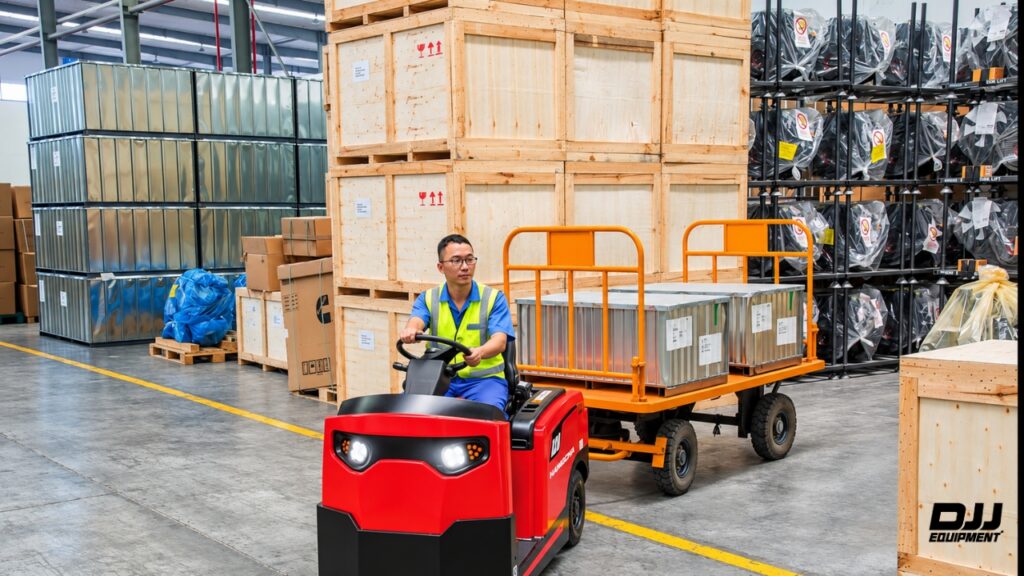
Types of tow tugs
Tow tugs differ mainly in how the operator rides and what powers them, and that decides the load, speed and ground each one suits.
Stand-on electric tow tugs
A stand-on tow tug suits indoor towing in aisles and around production lines. The operator stands on a cushioned platform, so it's quick to step on and off at each stop. The Hangcha A Series is 830 mm wide, tows 3,000 or 5,000 kg and travels at 7 km/h laden and 10 km/h unladen, with a turning radius of about 1.2 m.
Seated electric tow tractors
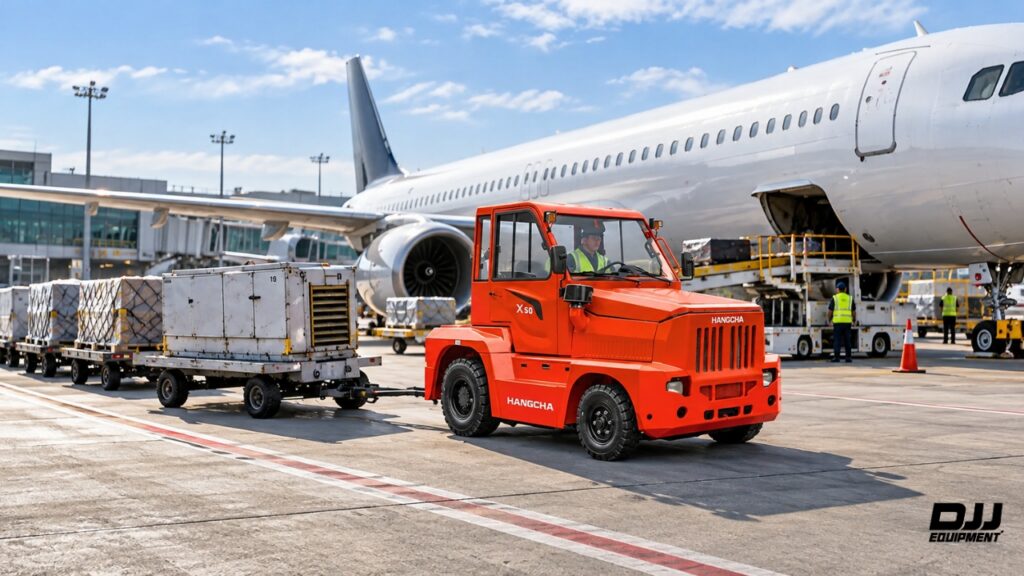
A seated electric tow tractor suits longer runs and heavier trains. The X Series tow tractor 6-18 t reaches 18-23 km/h depending on the model, climbs up to 25% unladen and brakes on both front and rear wheels. Larger X Series tractors tow up to 40 t for industrial and airport work.
Engine-powered tow tractors
An engine-powered tow tractor suits outdoor yards and long runs where charging isn't practical. Hangcha's X Series engine tractors tow 2-8 t, and the 3.5-8 t models travel at up to 24 km/h and climb up to 30%. Exhaust rules them out of enclosed buildings.
Walk-behind tugs
Walk-behind tugs are small units steered with a tiller, used to move a single trolley, bin or bed. They suit short, occasional moves rather than trains of carts. DJJ doesn't currently sell this type.
Tow tug vs pallet jack vs forklift
A tow tug, a pallet jack and a forklift all move loads across a site, but each does a different job. The table compares them.
| Tow tug | Pallet jack | Forklift | |
|---|---|---|---|
| What it does | Pulls trolleys, carts or trailers | Lifts one pallet just clear of the floor and moves it | Lifts pallets onto racking, trucks and stacks |
| Loads per trip | A train of several loaded carts | One pallet | One or two pallets |
| Lift height | None | A few centimetres | Several metres |
| Best for | Repeated runs between fixed points | Short moves at docks and in aisles | Loading, unloading and stacking |
| Licence | No high risk work licence class | No LF licence for pedestrian models | LF licence |
If you move many loaded carts over the same route every day, a tug saves trips. If you move one pallet at a time over short distances, electric pallet jacks do it with less machine. If loads go up onto racking or a truck deck, you need a forklift.
Where tow tugs are used
Tow tugs are used wherever goods move on wheels along the same routes again and again:
- Warehouses and distribution centres: trains of roll cages between picking, packing and dispatch.
- Factories: parts and materials to assembly lines, and finished goods back to the warehouse. In many plants the tug feeds the line while manufacturing forklifts work the receiving docks and storage racking.
- Large hospitals and campuses: linen, meal and waste carts along service corridors.
- Airports: baggage and cargo trailers between terminals and aircraft stands.
- Outdoor yards: trailers of materials across sealed yards, usually with an engine-powered tractor.
Towing safely: braking, couplings and trains of trolleys
Towing safely starts with remembering that towing capacity isn't lifting capacity, and that braking distance grows with every cart behind the tug. A heavy train takes longer to stop, so plan routes with room to slow down.
Match the trolleys and couplings to the tug, including the coupling height. Keep the whole train within the rated towing capacity, and check the laden gradeability before you send a tug up any ramp. A long train also cuts in on corners, so allow for it at intersections and doorways.
Some tractors make hooking up safer. On the X Series 6-18 t, switches at the front and rear and an emergency shut-off at the back let the operator control the tractor while coupling carts.
Do you need a licence to drive a tow tug?
No high risk work licence class covers tow tugs in Australia, because the forklift licence applies to trucks with a mast and an elevating load carriage. That applies to electric and engine-powered tractors alike.
Your business still has to train operators and manage towing risks under WHS laws. That includes the route, the load, the trolleys and people walking nearby.
Lithium or lead-acid tow tug?
A lead-acid tow tug usually costs less to buy, while lithium suits sites that tow across more than one shift. On the A Series, lead-acid batteries are 24V and 270-360 Ah, and the lithium versions are 24V and 125-228 Ah and charge fully in about 2 hours.
Lithium can be topped up at breaks and needs no watering. Lead-acid needs full charge cycles and a ventilated charging area, which is fine for a tug that works one shift and charges overnight.
How to choose a tow tug
Choosing a tow tug starts with the heaviest train you'll pull and the steepest ramp on its route. Check these points before you compare models:
- Total weight of the loaded train, including the trolleys
- Ramps and floor surface, compared with the laden gradeability
- Run length and speed, which point to stand-on or seated
- Indoor or outdoor work, which decides electric or engine power
- Shifts per day, which decide the battery
- Coupling height and the trolleys you already use
- Turning space at the tightest corner
The right tow tug is the one that starts your heaviest train on your steepest ramp, not just the one with the biggest towing figure. Hangcha tow tractors for sale at DJJ run from compact stand-on tugs to 40 t seated tractors, at Silverwater, Meadowbrook and Bayswater. Tell us the total load, the route and any ramps, or call 1800 355 388, and we'll suggest the models that fit.