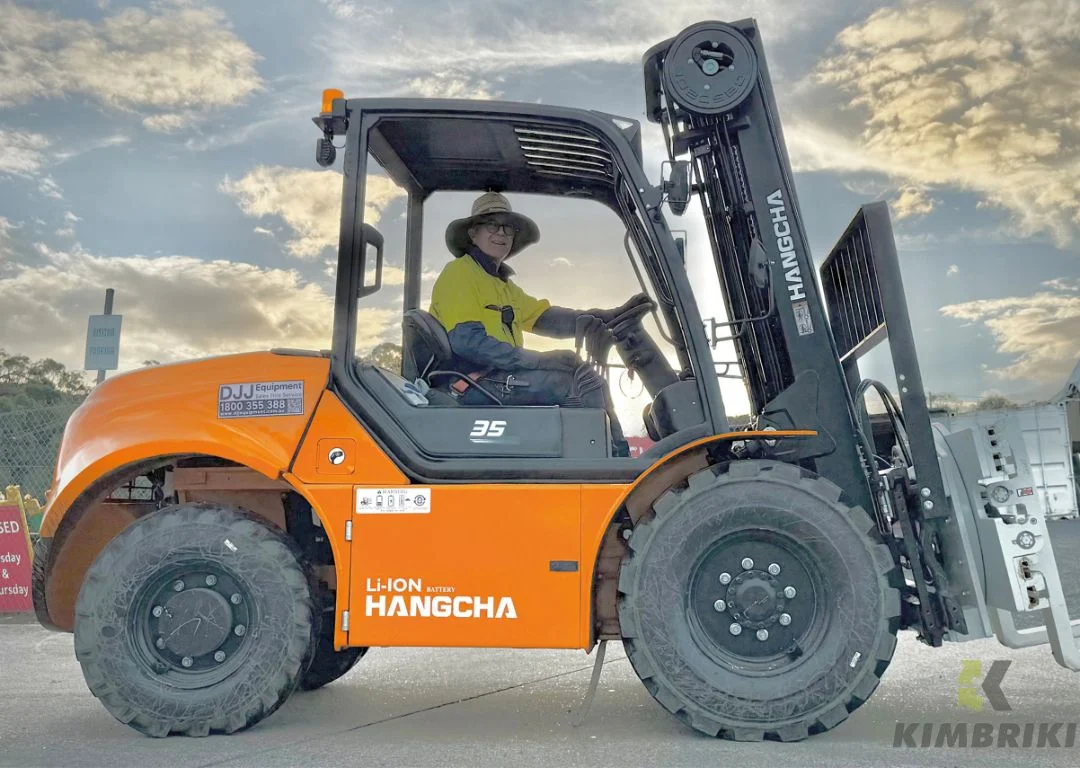
The Australian construction machinery market is growing steadily rather than quickly. Mordor Intelligence values it at about USD 3.45 billion in 2025 and forecasts USD 4.5 billion by 2031, growth of around 4.5% a year. Behind that growth are a housing shortfall, a record public infrastructure pipeline, a shortage of skilled operators, a gradual move to electric machines and more buyers who hire or finance instead of paying upfront. Each one changes which machines are in demand and how buyers pay for them.
How big is the Australian construction machinery market?
The answer depends on which machines a report counts and whether it measures dollars or units sold. Three widely quoted estimates show the range.
| Source | What it measures | Latest figure | Forecast |
|---|---|---|---|
| Mordor Intelligence | Value of construction machinery used in construction, infrastructure and mining | USD 3.45 billion (2025) | USD 4.5 billion by 2031, about 4.5% a year |
| Research and Markets | Number of machines sold | 24,422 machines (2024) | 27,180 machines by 2030, about 1.8% a year |
| IMARC Group | Value, counting a different range of machines | USD 2.0 billion (2025) | USD 2.5 billion by 2034, about 2.45% a year |
The dollar figures differ because each firm draws the line around "construction machinery" in a different place, for example whether mining support machines and material handling equipment are included. The trend they agree on matters more than the exact size.
The clearest signal is the gap between the two growth rates. The number of machines sold is forecast to rise by less than 2% a year, while the value of the market rises by around 4.5%. Buyers are paying more for each machine, as more of them come with lithium batteries, better cabs, operator aids and remote monitoring.
What is driving demand?
Demand comes from four directions, and each one favours different machines.
Housing
The National Housing Accord aims for 1.2 million new homes between July 2024 and June 2029. The National Housing Supply and Affordability Council expects about 938,000 to be completed in that time, roughly 262,000 short of the target. ABS figures for the first two years of the Accord show 355,817 homes completed, about 124,000 behind the pace needed, while the number of homes under construction reached a record of almost 249,000.
Every new estate needs site clearing, trenching for drainage and services, and local roads before the houses go up. That work keeps compact machines busy: mini excavators for trenching and footings, skid steers for levelling and moving fill, and small wheel loaders for stockpiles and loading trucks.
Public infrastructure
Infrastructure Australia's 2025 Market Capacity Report puts the major public infrastructure pipeline at $242 billion over the five financial years to 2028-29, the highest level since the agency began tracking it. Transport is the largest share at $129 billion. Utilities, mainly energy transmission, have more than doubled to $36 billion, and building projects, including social housing, make up $77 billion.
The pace is uneven from quarter to quarter. In the June quarter ABS figures, engineering work such as roads, rail and energy was 5.1% lower than a year earlier after peaking in the March quarter, while building work was 10% higher. Contractors on large projects often hire the heavy machines each contract needs, so demand for big machines rises and falls with project timing.
Mining
Mining and quarrying is the fastest-growing user of construction machinery, forecast by Mordor Intelligence to grow 4.72% a year to 2031. Iron ore and lithium in Western Australia, and coal and metals in Queensland, drive demand for excavators, loaders and haul trucks, along with the forklifts and support machines that keep mine sites and processing plants running.
Warehousing and logistics
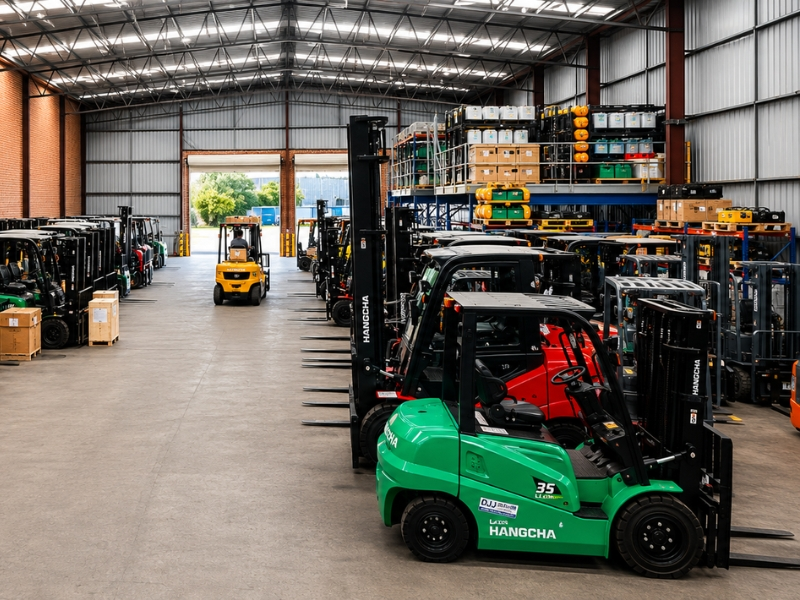
Away from construction sites, new warehouses and distribution centres keep forklifts, reach trucks and telehandlers in steady demand. The shift to lithium power is further along here than in any other segment, and the rise of electric forklifts in Australia shows how quickly warehouses are changing over.
The labour shortage is changing what buyers want
Infrastructure Australia estimates the industry is about 141,000 workers short of what the public pipeline needs, and projects that the shortage could reach around 300,000 by 2027. Regional areas are hit hardest, with shortages there expected to roughly quadruple between 2025 and 2027.
When skilled operators are hard to find, buyers look for machines that new operators can learn quickly and that can do more than one job. That favours simple controls, good visibility and comfortable cabs, and compact loaders that take several attachments instead of a separate machine for each task. Telematics and GPS machine control on excavators and loaders also help a less experienced operator work accurately and let owners see how each machine is being used.
Electric machines are growing, but diesel still dominates
Diesel machines made up 80.6% of the market by value in 2025, according to Mordor Intelligence, and battery-electric machines are the fastest-growing group. The change is happening one machine type at a time rather than across whole fleets.
Compact machines that work indoors, in towns or on short shifts are switching first. Lithium batteries already power most new warehouse equipment, and electric skid steers can work inside sheds, greenhouses and buildings with no exhaust and far less noise than a diesel machine.
Large machines on remote sites are a different case. Without grid power for charging, and with long shifts, most still run on diesel, and the nearer-term changes there are cleaner engines and renewable diesel rather than batteries.
More buyers hire, finance or rent to own
High purchase prices, interest rates and uneven project work are leading more businesses to spread the cost of machinery instead of paying upfront. Each option suits a different pattern of work.
| Option | Suits | Watch for |
|---|---|---|
| Short-term hire | Seasonal peaks, one-off projects, cover while a machine is being repaired | A higher weekly cost if the hire runs for many months |
| Long-term hire | Predictable monthly costs and no resale risk | Minimum terms and what servicing the plan includes |
| Finance | Owning the machine while spreading the payments | Approval, the interest rate and the total cost over the term |
| Rent to own | Paying weekly and owning the machine at the end | Finance approval and the total paid compared with buying |
| Outright purchase | Machines that work most days for years | Capital tied up, servicing costs and resale value |
Hire also moves the risk of owning a machine that becomes outdated as emissions rules and technology change. For warehouse and yard machines, a cost comparison of forklift hire and buying shows how the two options compare over time.
DJJ Equipment hires forklifts on short and long terms from its Sydney, Brisbane and Perth branches, and minimum hire terms depend on the machine and branch. Its mini excavators, skid steers and wheel loaders are sold rather than hired.
Value machines and local support
Contractors, farmers and warehouse operators are weighing purchase price more carefully against parts, warranty and service. Machines from Chinese manufacturers are now a common part of that choice, and many buyers who were sceptical at first change their view once the machines are working. The test is the same for any brand: the warranty terms on the product page, whether parts are held locally and whether a service team can reach the site when something goes wrong.
DJJ backs the machines it sells from branches in Silverwater in Sydney, Meadowbrook in Brisbane and Bayswater in Perth, each with a workshop, a service team and parts held for common repairs.
What these trends mean for buyers
| Trend | What it means | What to do |
|---|---|---|
| Housing shortfall | Steady work for compact machines on new estates | Favour mini excavators, skid steers and small loaders that move easily between sites |
| Infrastructure pipeline | Demand for big machines follows project timing | Hire heavy machines for each contract and own the machines you use every week |
| Labour shortage | Fewer experienced operators | Choose simple controls, good visibility and machines that take several attachments |
| Electric machines | Compact and indoor machines switch first | Go electric where charging fits the shift, and keep diesel for remote sites and long shifts |
| Higher machine values | Each machine costs more than it used to | Compare the total cost over the term, not just the purchase price |
| Local support | Downtime can cost more than a lower price saves | Check the warranty, local parts and service reach before you buy |
Trends by state
In New South Wales, Greater Sydney combines large transport projects with infill housing on tight sites, which suits compact and zero tail swing machines, as well as forklifts for the warehouses in Western Sydney.
In Queensland, population growth and preparations for the Brisbane 2032 Olympic and Paralympic Games add building and civil work to an already busy pipeline across South East Queensland.
In Western Australia, demand is tied closely to mining and mineral processing, from iron ore to lithium, and to road projects around Perth, so rough terrain forklifts and loaders work alongside warehouse equipment.
The Australian construction machinery market is growing slowly in the number of machines and faster in value, and the buyers who do best match each machine, power source and way of paying to the work ahead. DJJ hires and sells forklifts and sells mini excavators, electric skid steers and wheel loaders from Silverwater, Meadowbrook and Bayswater, with equipment finance available subject to approval. Call 1800 355 388 to talk through the machines your next projects need.