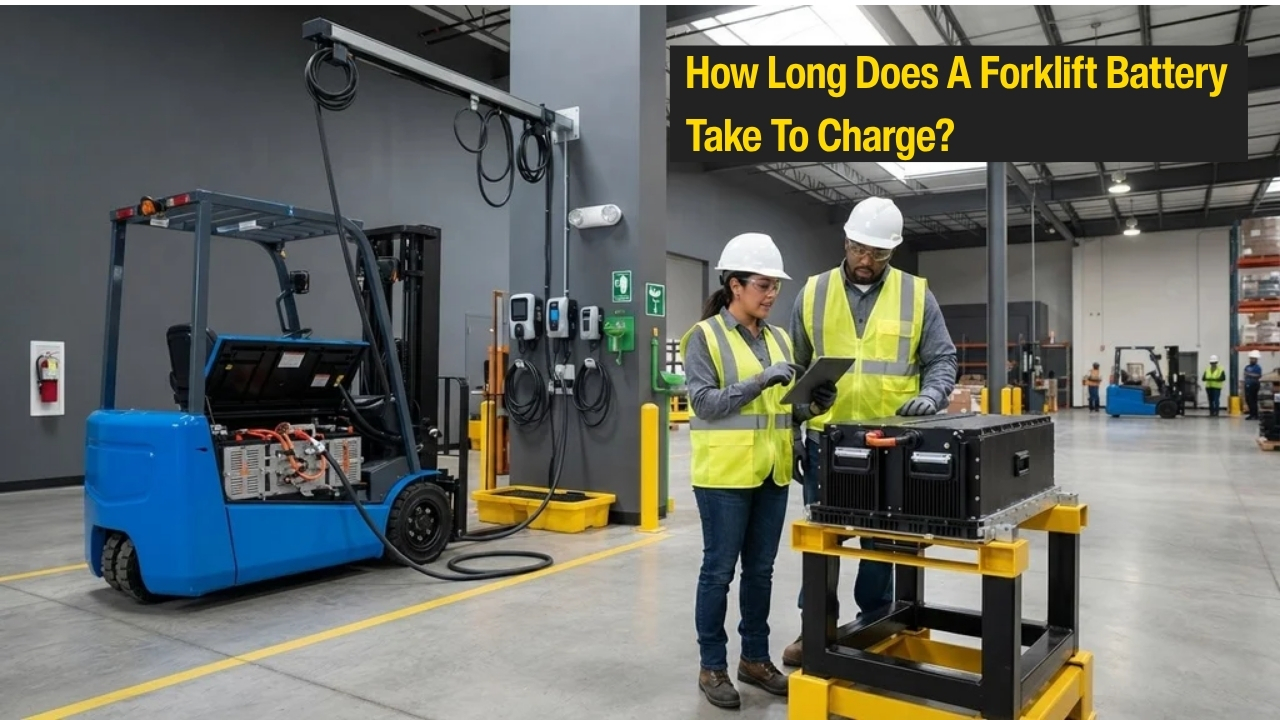
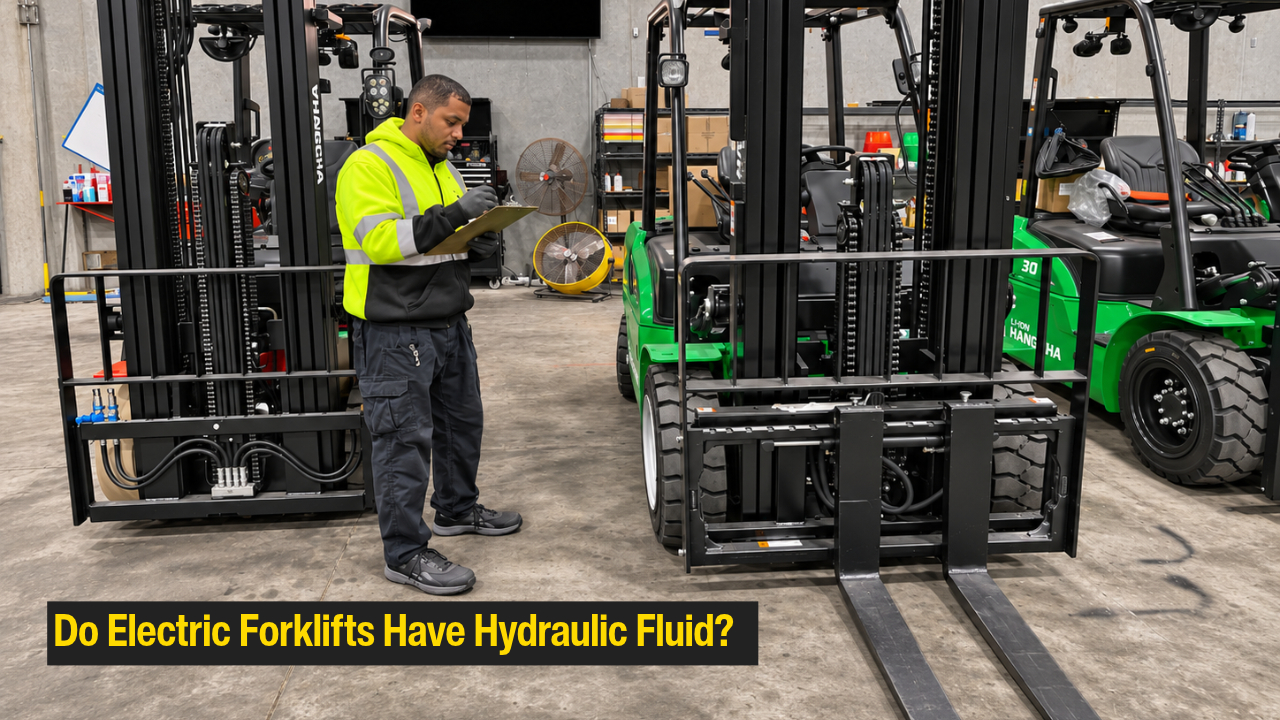
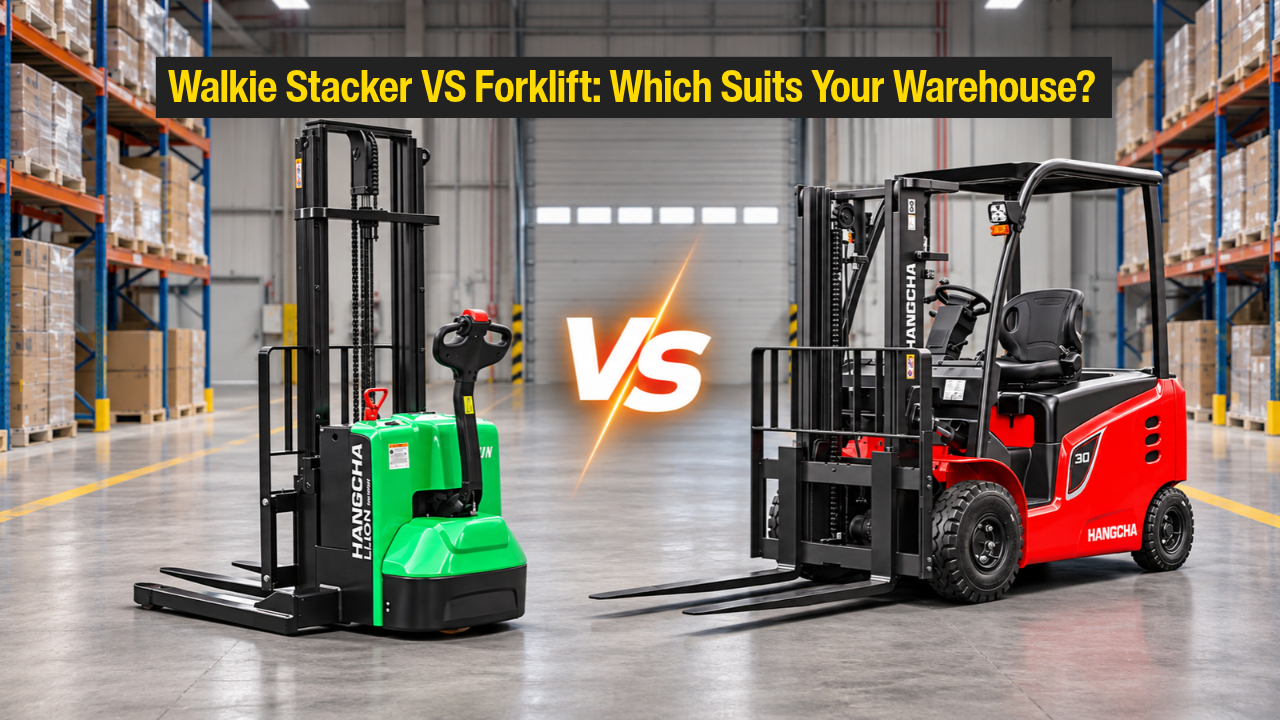
For a site that moves pallets between a warehouse floor and a sealed yard, the best forklift for both indoor and outdoor use is an electric counterbalance forklift on yard tyres with a water rating for the whole truck. Hangcha's XE Series 1.5-3.8 t is built that way, with IC truck axles and tyres, extra ground clearance and IPX4 protection, and it has no exhaust to manage inside. An LPG forklift on pneumatic tyres is the alternative when the building is well ventilated and charging is hard to set up. Diesel and cushion tyre forklifts each suit only one side of the door.
Which forklifts can work both indoors and outdoors?
Three forklift types can work on both sides of the door, and two of them come with a condition you have to check. DJJ Equipment sells Hangcha forklifts in every type below, sorted by where they can work:
| Forklift type | Hangcha ranges | Indoors | Outdoors |
|---|---|---|---|
| Electric counterbalance rated IPX4 | XE Series 1.5-3.8 t, XC Series 1.5-3.5 t, XH Series 2-3.8 t | Yes, no exhaust | Sealed yards and wet weather; park and charge under cover |
| Electric counterbalance on pneumatic tyres, no truck rating published | X Series 1-3.5 t, XA Series 2-3.8 t | Yes, no exhaust | Dry sealed yards; confirm before wet work |
| LPG counterbalance on pneumatic tyres | X Series diesel and LPG 1.5-3.8 t (LPG from 2 t) | Only with good ventilation | Yes |
| Diesel counterbalance | A Series 1.5-3.8 t | Short work in large, well-ventilated buildings | Yes, up to 35% laden gradeability |
| Cushion tyre, electric or LPG | XC Series electric cushion 1.8-3.5 t, XF Series LPG cushion 1.4-2.9 t | Yes | No |
| Rough terrain | High-voltage lithium rough terrain 2.5-3.5 t | Not a warehouse truck | Gravel and unsealed ground |
Only the first row, the IPX4-rated electric forklifts, works on both sides without a condition on the building or the weather. The second needs a dry yard, the third needs ventilation, and the last three belong to one side of the door, however capable they are there.
Forklift tyres decide which side of the door you can work
Tyres decide whether a forklift can leave the building at all. Cushion tyres are a solid rubber band pressed onto the wheel, made for smooth concrete. They keep the truck low and narrow, but they ride hard and sit close to the ground, so expansion joints, potholes and loose stones go straight into the axle and the load.
That's why cushion tyre trucks stay inside. Hangcha's XC Series electric cushion tyre forklifts are 1,070-1,158 mm wide with a 1,740-2,120 mm turning radius, built for tight warehouse aisles and nothing outside.
Pneumatic tyres carry the yard trucks. Air-filled tyres soften rough asphalt but can go flat on a nail or a strip of steel banding. Safe Work Australia's lift truck guide puts tyre wear, damage and inflation on the pre-start check, and warns that under-inflated tyres can reduce stability.
Solid pneumatic tyres, also called superelastic, keep the yard shape without the air. The CPD35 in both the X Series 1-3.5 t and the XC Series 1.5-3.5 t runs on superelastic tyres, and solid tyres are an option on the A Series diesel. If the truck comes back onto a light or epoxy floor, ask whether non-marking tyres are available for the model.
When is an electric forklift the best indoor and outdoor choice?
An electric forklift is the best indoor and outdoor choice when the whole truck carries a water rating and you can park and charge it under cover. It has no exhaust indoors. Safe Work Australia's lift truck guide says battery powered trucks should be used in poorly ventilated or enclosed areas.
The XE Series 1.5-3.8 t is the nearest thing to an engine forklift with a battery. Its axles and tyres come from Hangcha's engine trucks, and it drives through an 80V dual permanent magnet motor system. Battery heating helps on cold mornings. The higher-output H2 version travels at 19.5-20 km/h laden, against 15-17 km/h for the HA.
Heavier yard work goes to the XH Series 2-3.8 t. It runs a 309V lithium battery that charges fully in about an hour, travels at 21 km/h laden, and has IP67 motors, controls and high-voltage parts inside an IPX4 body. Running cost favours electric too: DJJ's estimate, based on Sydney figures, puts charging at about $7 a shift against about $40-70 a shift for LPG or diesel, depending on usage, power and fuel prices.
A water rating has limits. IPX4 sits at 4 on the IEC scale for liquids, which runs to 9 for high-pressure hot water, so it isn't a licence to hose the truck down. Hangcha publishes no truck rating for the X Series 1-3.5 t or the XA Series, so check which electric forklifts can be used outdoors or in the rain before you plan wet work around one.
When does an LPG forklift make more sense?
An LPG forklift makes more sense when the truck spends most of its day outside and charging would be hard to set up. The building it enters also has to be large and well ventilated. Refuelling is a bottle change, so there's no charging break and no switchboard to upgrade.
LPG isn't clean enough to go anywhere, though. Safe Work Australia's guide says ventilation must be provided where LPG, petrol and diesel trucks are used, to keep exhaust concentrations down, and notes that diesel engines produce less carbon monoxide than LPG. It also says LPG trucks should be refuelled, parked and stored in well-ventilated areas, away from ignition sources.
So a truck running between a yard and an open-sided shed suits LPG, and one working a cool room or a closed warehouse all shift doesn't. Hangcha's X Series 1.5-3.8 t LPG forklifts run a GCT GK25 engine from 2 to 3.8 tonnes on pneumatic tyres. At 2.5-3 t the LPG versions climb 20% laden, against 15% for the diesel.
Diesel and cushion tyre forklifts suit one side only
A diesel forklift is an outdoor machine and a cushion tyre forklift is an indoor one, so neither is the best forklift for both. Diesel climbs best: most A Series 1.5-3.8 t versions climb 25% laden, and the 2 t model reaches 35% with the 44.8 kW engine.
Inside, diesel exhaust is the problem. Safe Work Australia prefers diesel over LPG only in a poorly ventilated space where a combustion truck can't be avoided, because it produces less carbon monoxide, and it notes the visibly dirtier exhaust. Whether you can use a diesel forklift indoors at all turns on ventilation and the national exposure limits, which tighten on 1 December 2026.
Cushion tyre forklifts go the other way. Hangcha's XC electric and XF LPG cushion tyre trucks come from its North American range, rated at a 600 mm load centre rather than 500 mm, and suit smooth warehouse floors only.
Rough terrain forklifts for gravel, mud and steep yards
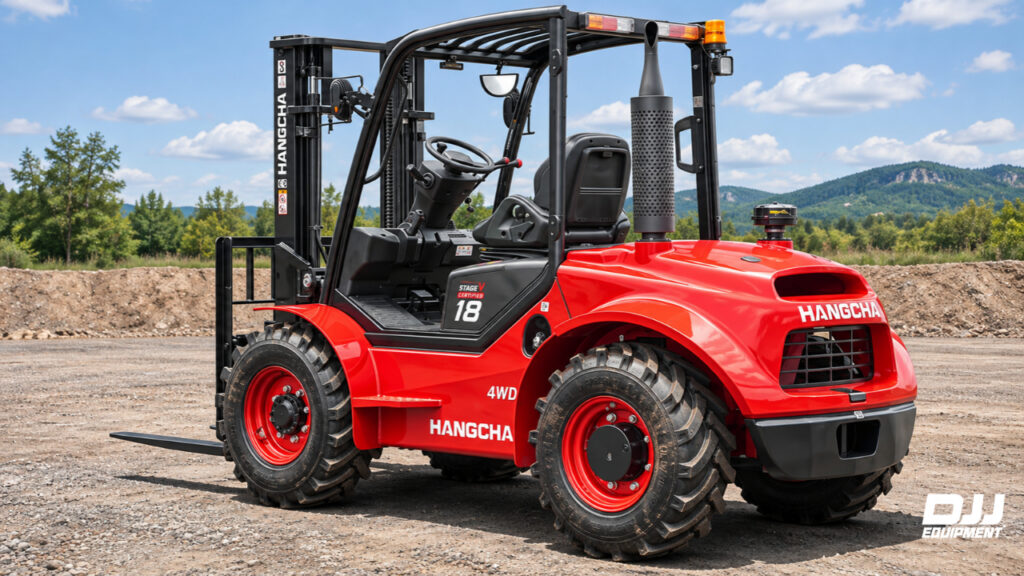
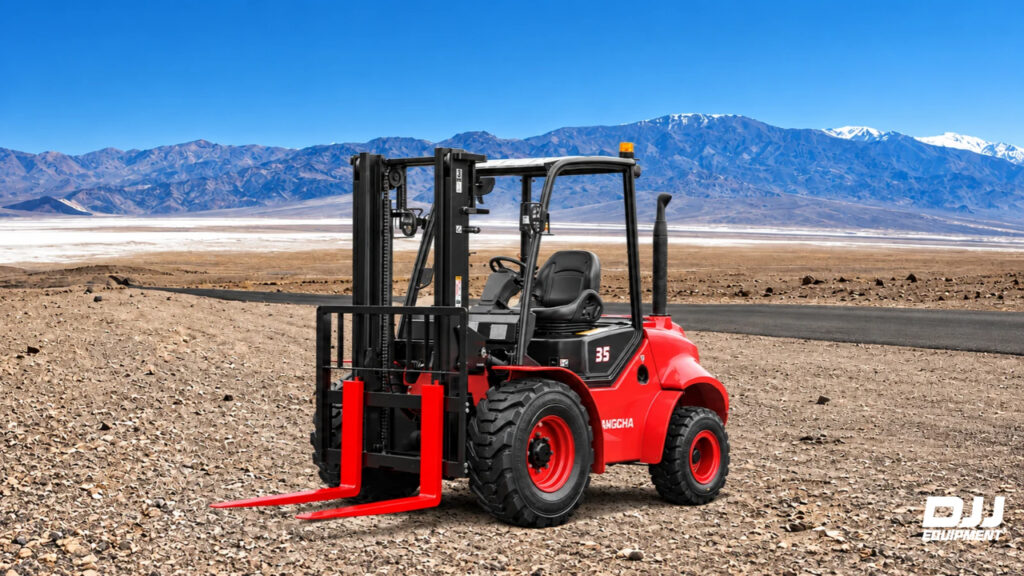
On gravel, mud or a steep unsealed ramp, a warehouse-style forklift is the wrong machine whatever its power. Hangcha's high-voltage lithium rough terrain forklifts run on deep-tread pneumatic tyres with wet brakes, a differential lock and 225-290 mm of ground clearance, and the 2.5 t models climb up to 63%.
That build costs space indoors. The 2WD model needs a 4,635-4,650 mm aisle for 1000 x 1200 mm pallets crossways and the 4WD model 5,085-5,100 mm, against 3,734 mm for an XC Series CPD25. A rough terrain forklift isn't a warehouse truck, so a site with racking inside and rough ground outside often runs two machines rather than one.
Which forklift carries long loads in and out of a building?
For timber, steel and pipe that comes through a doorway, a multidirectional side loader beats a counterbalance forklift. A counterbalance truck carries long lengths across its forks, so the door and aisle have to be wider than the load. Hangcha's X Series multidirectional side loader 3-4.5 t drives forwards, sideways or turns on the spot. Its quoted aisle is 2,600 mm with a 1200 x 6000 mm load.
The trade-off is outside. The 3 t CCD35 climbs 9% laden, the 4-4.5 t models travel at 9-10 km/h laden, and the truck is 2,500 mm wide, so it suits a sealed yard with gentle ramps.
Checking a forklift against your indoor and outdoor route
Walk the forklift's whole route before you choose, and measure it. These numbers rule a model in or out:
- Aisles: the clear width with stock in place, against the model's aisle figure for your pallet size
- Ramps: the steepest gradient, against laden gradeability, which drops to 15-16% on the heaviest XA Series models
- Doorways: height and width, against the truck's lowered mast height and overall width
- Surfaces: every change from floor to yard, including the dock plate, threshold, crossfall and wet patches
- Parking: where the truck stops overnight, and where it charges or swaps bottles
Say you move 2-tonne pallets of 1000 x 1200 mm between 4 m aisles and a sealed yard with a 15% ramp to the truck bay, and the building has power. An XC Series CPD25 needs a 3,734 mm aisle, climbs 20% laden and carries IPX4, so it clears the aisle by about 270 mm and the ramp with room to spare. The LPG X Series CPYD25 also climbs 20% laden, but it needs a 3,990 mm aisle, which leaves 10 mm in a 4 m aisle. On that site the electric truck fits better, provided it parks and charges inside.
Send us photos and measurements of your loads, aisles, doorways, ramps and yard surface, with your operating hours, and our team can suggest the forklift that fits both sides of your door. Call 1800 355 388 or send an enquiry to your nearest DJJ branch in Sydney, Brisbane or Perth.