There's no single best excavator attachment for concrete recycling, because each step of the job uses a different tool. A hydraulic breaker breaks slabs and footings, a pulveriser crushes the concrete off the reinforcing steel (reo), a bucket or grapple sorts the pile, and a crusher bucket turns clean pieces into aggregate. On a mini excavator of 1 to 6 t, a breaker and a small pulveriser are realistic. Crusher buckets from the best-known makers start at excavators of about 6.5 t, so on small jobs the crushing usually happens somewhere else.
The steps in concrete recycling and the tool for each
Concrete recycling on site runs in up to five steps, and each step has an attachment that does it best. The table shows the usual tool for each step and whether it's realistic on a mini excavator.
| Step | What happens | Usual attachment | On a 1-6 t mini excavator |
|---|---|---|---|
| Break | Slabs, paths and footings are broken into pieces a machine can lift | Hydraulic breaker | Yes: breakers are made for excavators from about 0.5 t |
| Separate the reo | Concrete is crushed off the steel so the steel can go for scrap | Pulveriser | Yes, mostly on machines from about 1.5 t |
| Sort | Steel, timber, soil and rubbish are picked out of the pile | Bucket and thumb, sorting grapple or magnet | Yes, within the machine's hydraulics |
| Crush | Clean concrete is crushed to a set size | Crusher bucket | Rarely: the smallest from the best-known makers suit about 6.5-10 t |
| Screen | Soil and fines are separated from the larger pieces | Screening bucket | Check the maker's carrier weight range |
Read down the last column and the pattern is clear: a mini excavator handles breaking, separating, sorting and loading, while crushing is usually done by a mobile crusher or a recycling yard.
Hydraulic breaker: the first tool for most concrete jobs
A hydraulic breaker is the first tool on most concrete jobs, because it turns slabs, paths and footings into pieces a bucket can lift. Breakers are made for excavators from about half a tonne up, so every mini excavator class has one sized for it.
A breaker can't cut reo, so a reinforced slab comes apart as lumps still tied together with steel. It's also slow at reducing rubble to smaller pieces, and the hammering is loud and sends vibration through the ground, which matters next to houses.
If the concrete has no reo, such as an old path or a mass footing, a breaker and a bucket may be all you need. A guide to the types of excavator attachments covers breaker tool points and how to use one.
Concrete pulveriser: separating concrete from reo
A concrete pulveriser crushes concrete between a fixed jaw and a moving jaw, so the concrete falls away and the reo is left to cut and stockpile as scrap. It's the usual choice for reinforced slabs, walls and piles.
Most pulverisers carry cutter blades for the bars, but each model lists a maximum bar size, so check it against the reo in your concrete. Because the jaws squeeze rather than hammer, it's quieter than a breaker.
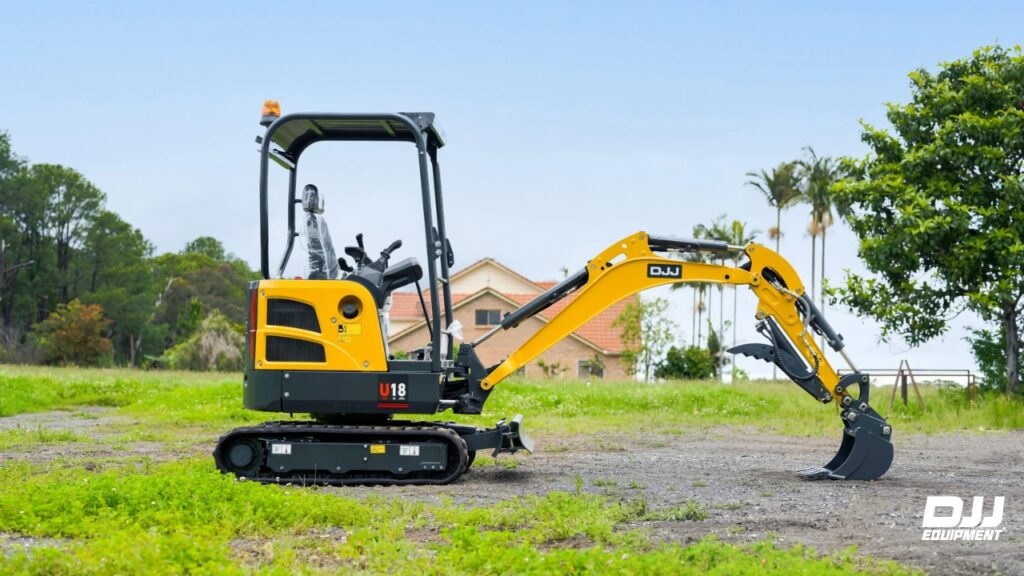
Fixed pulverisers are the simpler design. Rotating models turn the jaws to line up with each piece without moving the machine, but powered rotation needs an extra hydraulic line. Most small pulverisers are rated for excavators from about 1.5 t, with only a few very small concrete crushers listed for lighter machines, so a 1.88 t machine such as the U18 mini excavator sits inside that class. The next size up suits machines of roughly 3.5-7 t.
Crusher bucket: making aggregate on site
A crusher bucket is a bucket with a jaw crusher built in: you scoop up broken concrete, and the jaws crush it and drop it out at a set size. The output size is adjustable, and crushing on site means fewer trucks taking concrete away and bringing fill back in.
For small machines, the catch is size. The smallest crusher bucket from one of the best-known makers is recommended for excavators of about 6.5-10 t, and another major maker's range starts at machines of about 16 t. A few compact crusher buckets are sold for mini excavators and skid steers, but one listed model weighs about 400 kg, which is more than a fifth of the operating weight of a 1.88 t excavator.
If you have more than a few loads to crush, it usually makes more sense to keep a mini excavator on breaking, separating and loading, and send the clean concrete to a recycling yard or bring in a mobile crusher.
Screening buckets, sorting grapples and magnets
Screening buckets, sorting grapples and magnets clean the material before and after crushing. A screening bucket uses rotating drums or shafts to let soil and fines drop through while the larger pieces stay in the bucket.
A sorting grapple picks out bars, timber and oversize lumps, and a magnet lifts loose steel offcuts from the pile. On a mini excavator, a bucket and thumb do much of what a sorting grapple does, at a fraction of the weight. Sorting also matters for the rules on recycled aggregate covered below.
What can a mini excavator realistically handle?
A mini excavator can break, separate, sort and load concrete from driveways, paths, house slabs and small footings, but it isn't a crushing plant. DJJ Equipment sells four mini excavators from 1 t to 5.7 t, and the table shows the concrete work each size suits.
| Machine | Operating weight | Realistic concrete work | Attachments to look at |
|---|---|---|---|
| E12 and YC10 | 1,000 kg | Thin paths and small slabs where access is tight | Small breaker, bucket |
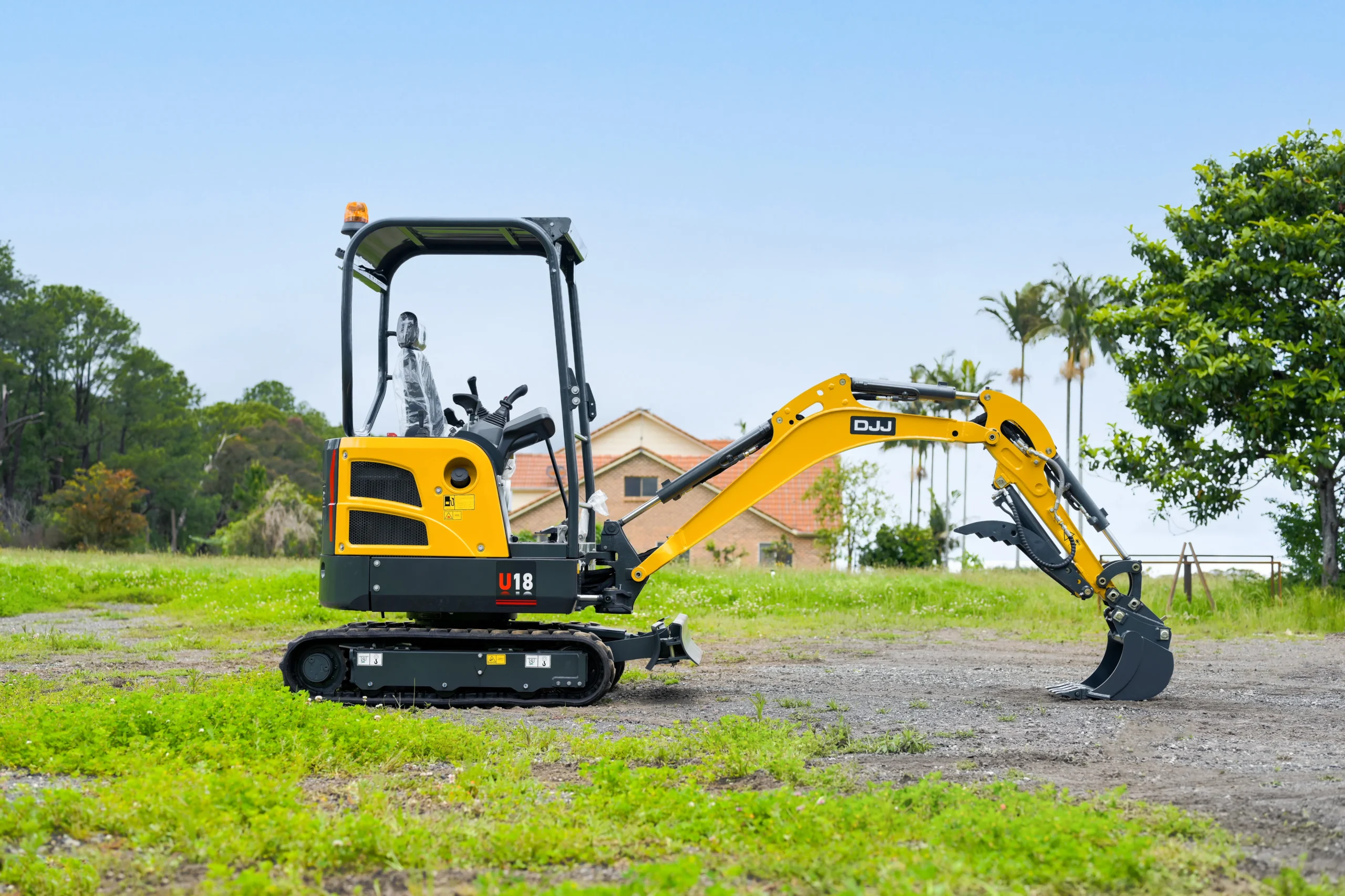
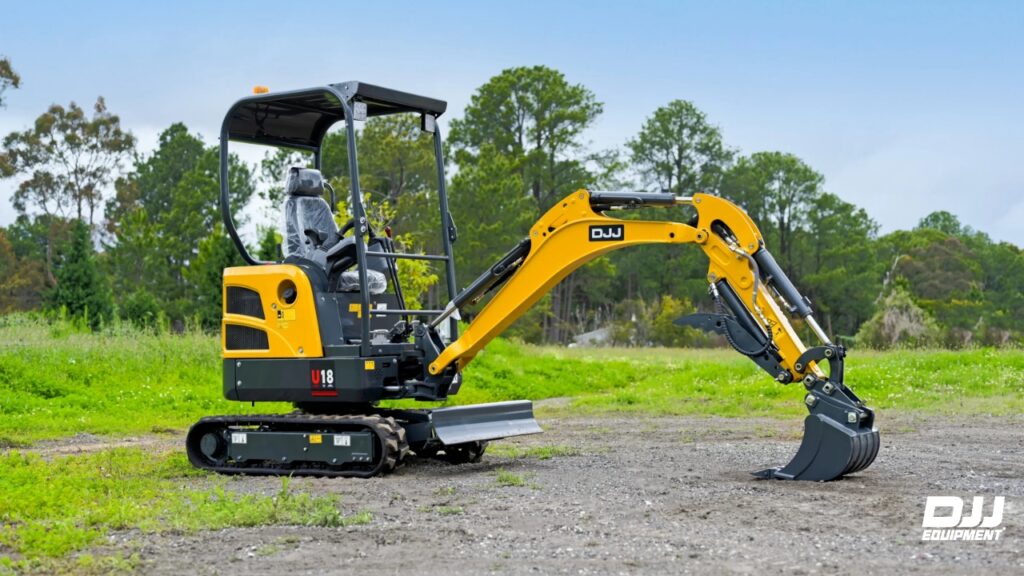
| U18 | 1,880 kg | Driveways, house slabs, low walls, separating reo | Breaker, small pulveriser, bucket and thumb |
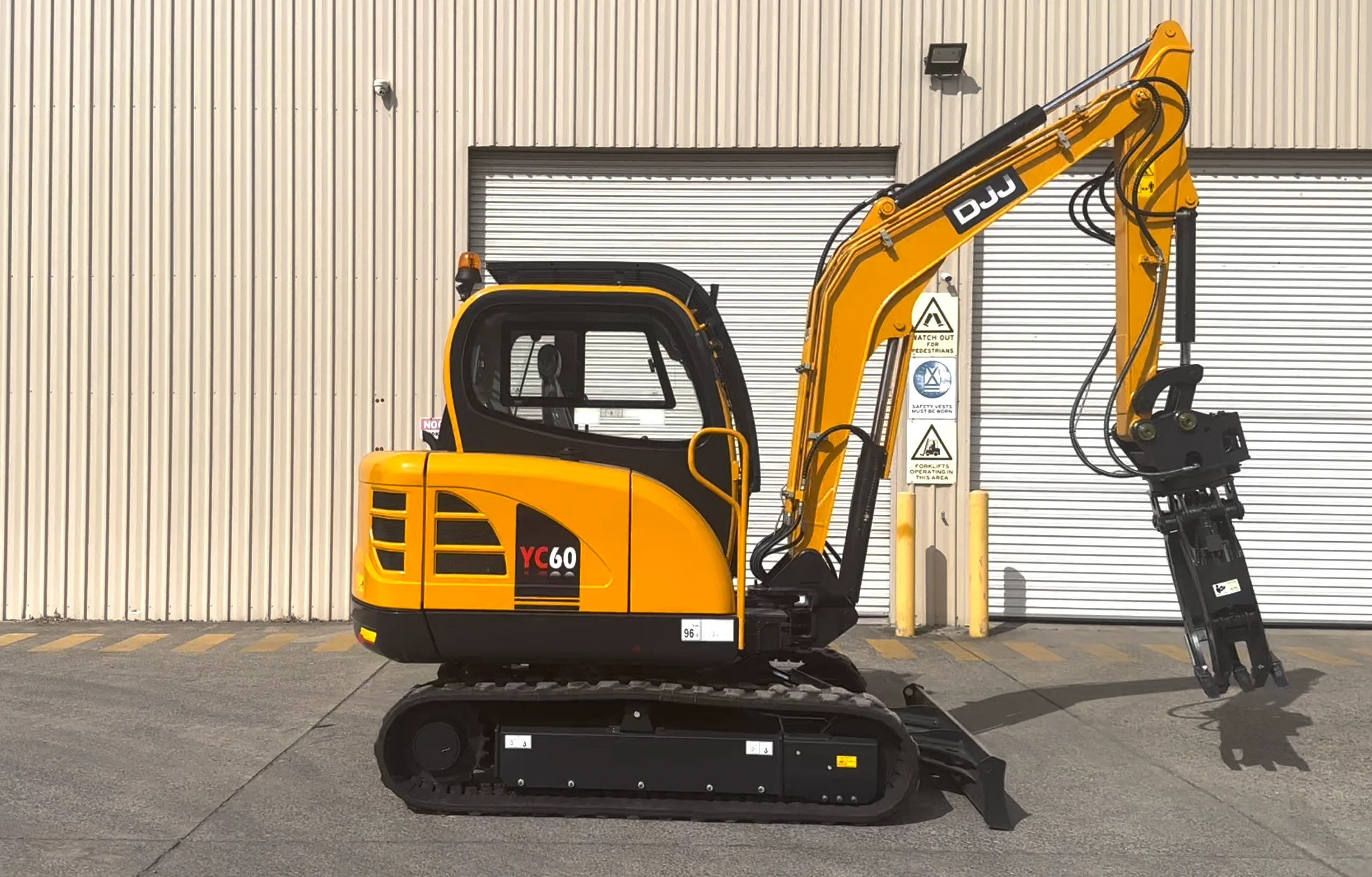
| YC60 | 5,700 kg | Larger slabs and footings, reinforced pieces, loading trucks | Breaker, pulveriser rated for its weight class, bucket and grapple |
The step that matters is from 1 t to 1.88 t. The 1 t machines sit below most pulverisers, while the U18 can carry one and separate reo as well. The YC60 adds weight and 5,945 mm of digging reach for bigger pieces and truck loading. You can compare all four mini excavators side by side, including width and dig depth.
How do you match an attachment to your excavator?
Matching an excavator attachment starts with the maker's carrier weight range, then the hydraulics, then the hitch. Too heavy makes the machine unstable at reach; too light and the attachment can be overloaded and damaged.
The hydraulic flow and pressure have to sit inside the attachment's stated range. A breaker needs a one-way circuit with a return line, and a pulveriser needs a two-way circuit, plus another line if it rotates hydraulically. The E12, for example, has a 24 L/min pump with preset hammer and rotation lines, so check any attachment's required flow against that figure.
Then check pin diameter, ear width and the quick hitch. A heavier attachment also reduces what the machine can safely lift.
Before you buy for a machine such as the YC60, get the attachment's carrier range, weight, flow and pressure in writing, then confirm compatibility with your excavator supplier.
What rules apply to concrete dust and recycled aggregate?
Breaking and crushing concrete releases respirable crystalline silica, and WHS rules that took effect on 1 September 2024 in most states treat this work as processing a crystalline silica substance. Before you start, you must assess whether the work is high risk and record that assessment in writing. High-risk work needs a silica risk control plan, or a safe work method statement on construction work.
The workplace exposure standard for respirable crystalline silica is 0.05 mg/m3, averaged over 8 hours. Controls include wet dust suppression, an enclosed cab with high-efficiency air filtration, isolating the dusty area and fit-tested masks. SafeWork NSW sets out the duties in its guidance on working safely with crystalline silica, and details differ between states, so check with your own WHS regulator.
Using or supplying crushed concrete is regulated separately, by your state's environment protection authority. In NSW, for example, anyone who supplies recovered aggregate made from concrete, brick or asphalt for road making, landscaping or construction must sample and test it, and the product must stay within limits that include an average of 1% metal and 0.2% timber, plastic and similar material. Rules differ by state, so check with your EPA before crushed concrete leaves the site or goes back into the ground.
Excavator attachments from DJJ
DJJ supplies excavator buckets, hydraulic breakers and augers for the mini excavators we sell, so the breaking and loading side of a concrete job can be set up with the machine. For a pulveriser or crusher bucket, get the carrier range and hydraulic figures from the attachment maker and check them against your excavator.
For most mini excavator owners, the right setup for concrete recycling is a breaker to start, a pulveriser when the concrete carries reo, and a crusher at a recycling yard or on a hired plant for the rest. Call 1800 355 388 with the size and thickness of the concrete, whether it has reo and where the crushed material will go, and our team will match a mini excavator, breaker and buckets to the work.