Repair a forklift when its frame, mast and drive are sound, the repair costs less than the value of the work the truck still has in it, and the truck still suits the work coming up. Replace it when several major parts are due at once, the same faults keep coming back and stopping work, or the next job needs a different truck. The evidence for the decision sits in the truck's repair records. Get the repair quote and a trade-in value at the same time, so both figures are current when you decide.
The table sets the signs for each choice side by side, with the checks that decide them.
| Check | Points to repairing | Points to replacing |
|---|---|---|
| Major parts | One part due, with the frame, mast and drive sound | Engine and transmission due together, or a worn mast with damaged channels or rollers |
| Last 12 months of invoices | Steady against the hours the truck worked | The same fault keeps coming back, or each month costs more than the last |
| Downtime | Parts are easy to find and stops are rare | Waits for parts, or short stops that add up over each shift |
| Warranty | Ask what warranty the repair carries | A new Hangcha XH Series 2-3.8 t comes with 24 months or 2,000 hours |
| Work ahead | Loads, racking height and shifts stay the same | Heavier loads, higher racking, more shifts, or engine exhaust indoors |
| Trade-in value | Check it today and after the repair | Higher before a major failure than after it |
One sign in the right-hand column is a reason to look closer. Several together point to replacing the truck.
Can the forklift be fixed safely, and is it worth fixing?
Whether a forklift can be fixed safely is a technician's call; whether it is worth fixing is your own sum, comparing the repair with the work the truck still has to do.
Some faults decide the first question for you. Worn forks are one: once heel wear passes 10 percent, SafeWork NSW requires the fork to be replaced rather than repaired. Any fault that makes the truck unsafe should be fixed before it is used again. Brakes that don't hold, a leaking LPG fitting or a cracked fork should take the truck out of service until they are fixed, and how soon forklift repairs should be made depends on the type of fault. The repair-or-replace decision starts once the truck is safe to assess.
Make sure the right person does the assessment. WorkSafe Queensland says car and truck mechanics are generally not competent to maintain forklifts, and only a licensed gas fitter may repair or replace parts on an LPG system.
What the forklift's repair history tells you
One large invoice says little on its own; the pattern over the last 12 months says much more. Add up every repair invoice for that period against the hours the truck worked, and set aside damage from collisions or misuse, because that says more about how the truck is driven than how worn it is.
If the same fault keeps coming back, or each month costs more than the one before, the truck is telling you where it is heading. Those records also have to exist: WorkSafe Queensland's forklift maintenance guidance says to keep records of all maintenance, including servicing, testing and alterations.
Leave out what you have already spent. Money put into the truck last year is gone either way, and it is not a reason to spend more on it now.
What forklift downtime really costs
Forklift downtime adds costs that never appear on the repair invoice. It includes the hours the truck waits for parts as well as the hours a technician works on it, the operators standing idle, freight backing up at the dock, a hire truck booked at short notice and the overtime to catch up.
Small faults count too. A truck that stops for a few minutes several times a shift loses hours over a month, even if no single stop looks serious. Ask how quickly parts can be found: DJJ Equipment's forklift servicing and repairs team holds commonly needed parts at its Silverwater, Meadowbrook and Bayswater branches and works on site within 50 km of each branch.
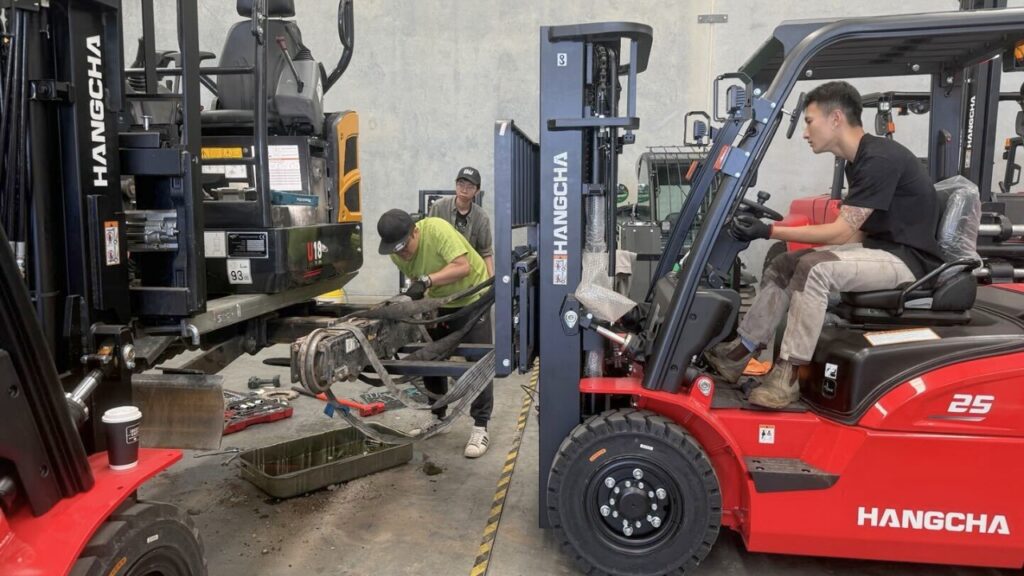
Battery, engine or mast due: repair the forklift or replace it?
When one of the most expensive parts is due, compare its cost with a newer truck, not with last month's invoice. On an electric forklift that part is usually the battery, and a new battery in an old truck leaves you with an old truck.
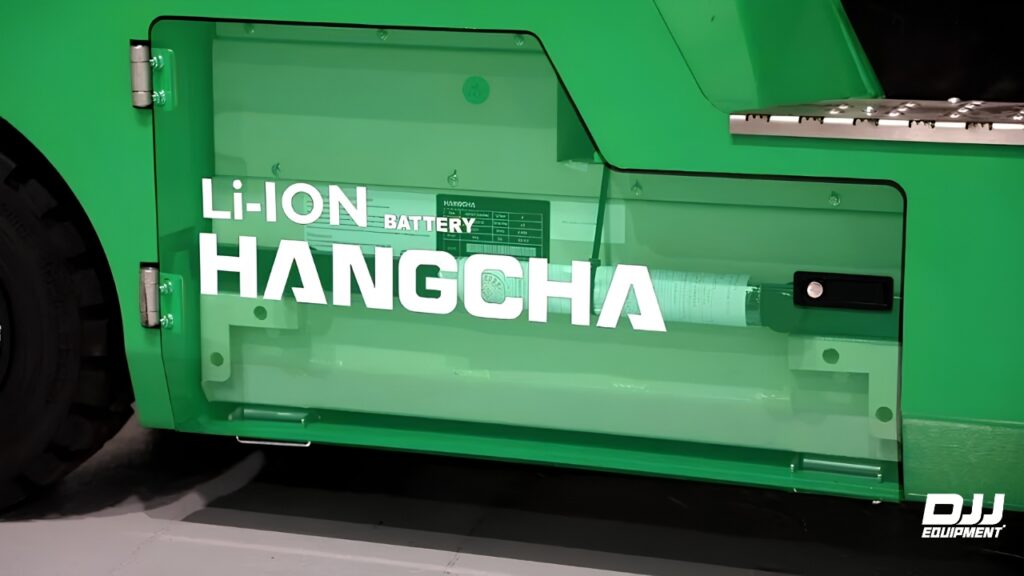
The battery choice changes the sum. A lead-acid battery can cost less overall when a forklift works only a few hours a week, and the cost gap between lithium and lead-acid forklift batteries narrows as hours rise. A new lithium truck can also carry a separate battery warranty: on the Hangcha XH Series heavy duty 4-5 t, the battery has a 6-year or 12,000-hour warranty.
On LPG and diesel trucks, the warning sign is the engine and transmission coming due at the same time. A worn mast, with damaged channels or rollers, is another repair that can cost a large share of the truck's value.
Will the forklift suit the work ahead?
A cheap repair is still a waste if the truck won't suit the next few years of work. Check whether loads are getting heavier, racking is going higher, shifts are being added, or the truck has to move into a building where engine exhaust is a problem.
A replacement is also a chance to switch power type. The Hangcha XH Series 2-3.8 t, for example, is a 309V lithium forklift aimed at sites replacing engine forklifts, and it charges fully in about an hour. It comes with a 24-month or 2,000-hour warranty, so ask what warranty the repair carries and compare the two. SafeWork NSW's advice for buyers is to plan the maintenance, parts and manufacturer support for any truck before you buy, and to ask for the service history of a used one.
Compare the repair against the trucks that would replace it. Current forklifts for the same work give you a specification to weigh the repair against, and a quote gives you the price.
When to trade in a forklift for the best value
A forklift traded in before a major failure is worth more than one traded in after it. Waiting for the big breakdown means selling a truck that doesn't run, often in a hurry.
When a dealer works out forklift trade-in value, it looks at the hours, service history, battery or engine condition, appearance, attachments and demand.
DJJ accepts trade-ins of all forklift brands and also sells used machines, so ask about both if a new truck is more than you need.
Questions to ask before you repair or replace a forklift
Put these questions to the technician and the dealer, and get the answers in writing:
- What exactly failed, and what caused it: wear, damage or a missed service?
- Which other major parts are close to the end of their life?
- Are the parts in stock, and if not, how long will they take?
- Is the frame, mast and chain condition recorded on the inspection report?
- Are the forks worn past the 10 percent heel-wear limit?
- What warranty comes with the repair, and what comes with a replacement truck?
- What is the truck worth as a trade-in today, and after this repair?
- Would a hire truck cover the work while you decide?
Hiring a forklift while you decide
A hire truck keeps work moving while a repair waits for parts or a new truck is on order. Forklift hire also suits work that only peaks for part of the year, where buying another truck would leave it idle the rest of the time. Minimum hire terms depend on the machine and branch. Under DJJ's standard hire terms the machine is serviced during business hours, and on dry hire you supply licensed, trained operators and public liability insurance.
Send the DJJ team the make, model, year and hours of the truck, the repair quote, photos and the service records. They can look at repairing it, trading it in or replacing it with a new or used machine. DJJ repairs Hangcha forklifts, and repairs on other brands are assessed case by case. Call 1300 646 747 for service and repairs, 1800 355 388 for sales and trade-ins, or send an enquiry to your nearest branch.