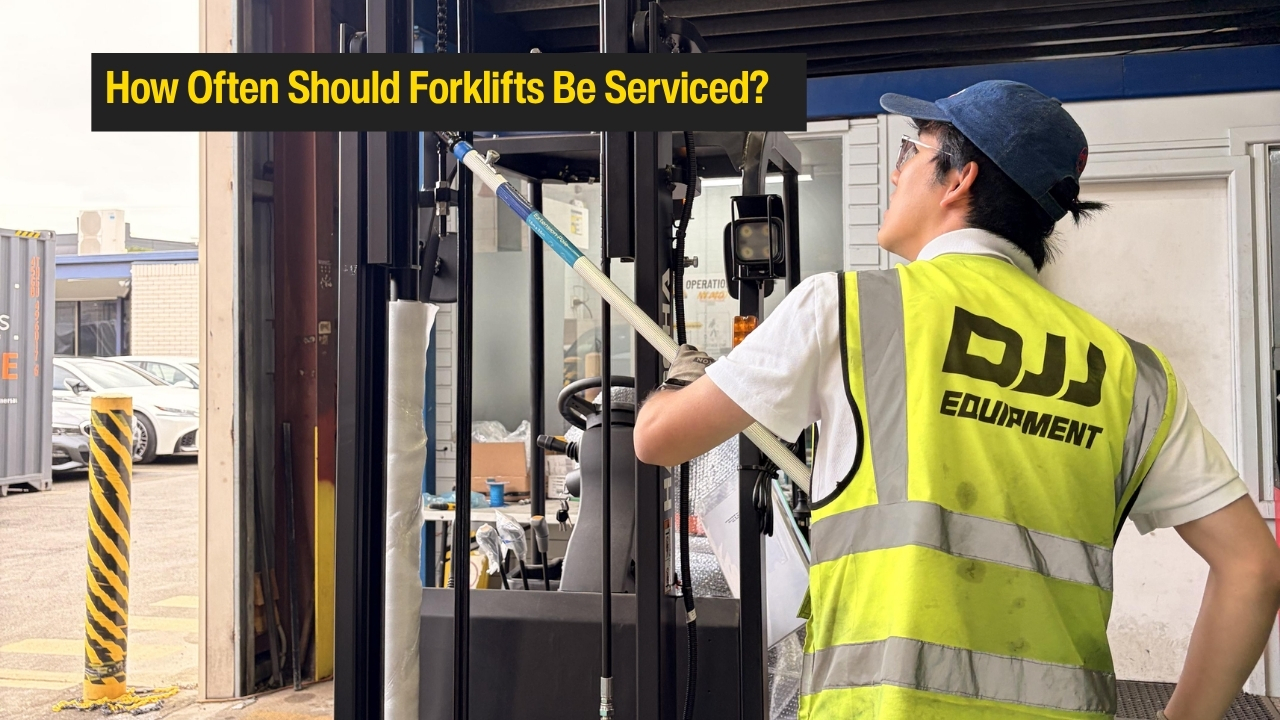
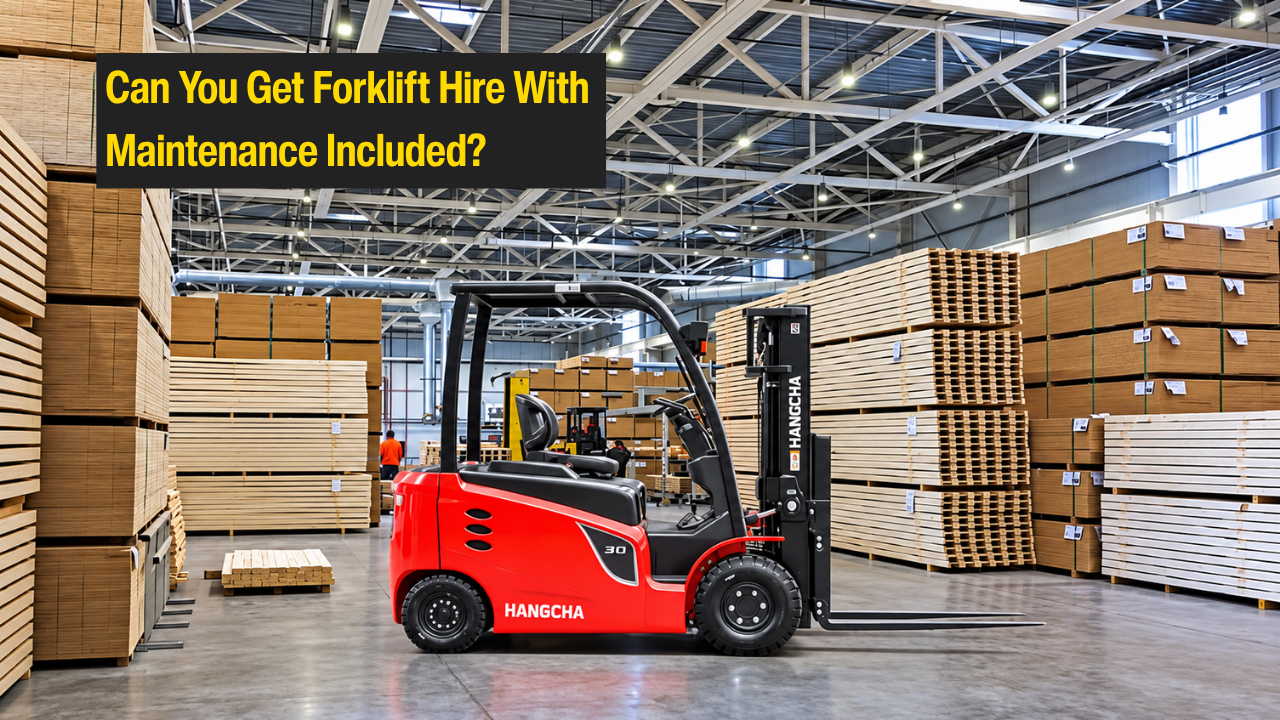
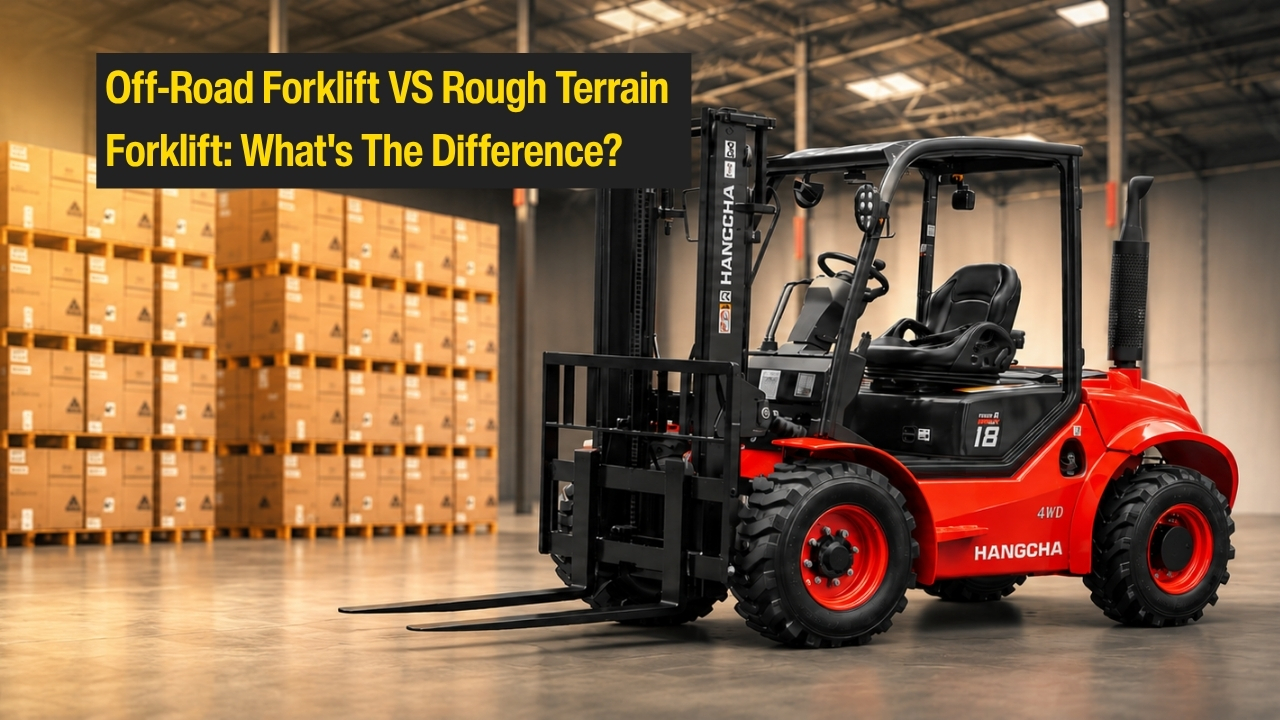
Repairs should be made before the forklift is used again: if a fault could affect safe operation, the forklift stays out of service until a competent person fixes it. On a licence theory question, pick the answer that keeps the forklift out of use until it's repaired. Before the forklift is used again is the safe choice, not at the next scheduled service or at the end of the shift. Faults that don't affect safety can be booked in for a later repair, but only once a competent person has made that call, and they still need fixing.
How soon different forklift faults need repairing
How soon a forklift fault needs repairing comes down to one test: could the fault affect safe operation? SafeWork NSW tells businesses to record and report faults, and to isolate and remove the forklift from service if a fault could affect safe operation. The table shows how that test plays out in common situations.
| Fault found | How soon | Who acts |
|---|---|---|
| Brakes, steering, controls, the lifting system or hydraulics, forks, tyres, seatbelt, horn, lights or guards not working as they should, or a gas leak | Out of service now, repaired before the next use | Operator reports it, supervisor isolates the forklift, competent person repairs it |
| Damage after a collision, tip-over or dropped load | Out of service until a competent person has assessed it | Competent person |
| A fork worn more than 10% at the heel | Out of service, and the fork is replaced rather than repaired | Competent person |
| An LPG cylinder past its test date | Swapped for an in-date cylinder; the old one isn't refilled until it's retested and restamped | Trained staff swap it, an authorised tester retests it |
| A fault a competent person judges doesn't affect safe operation | Recorded, reported and booked in, then checked at each pre-start until it's fixed | Supervisor books it, competent person repairs it |
If you can't tell which row a fault belongs in, treat it as a safety fault and keep the forklift parked. A daily pre-start checklist covers the items to check and the signs that mean a forklift should be tagged out.
Can a forklift be used with a minor fault?
A forklift can be used with a minor fault only when a competent person has decided the fault doesn't affect safe operation, and the fault has been recorded and booked in for repair. Australian regulators don't publish a list of minor faults, so the test stays the same: anything to do with braking, steering, lifting, stability or warning devices is a safety fault.
Minor doesn't mean optional. When NSW Resources Regulator inspectors checked forklifts on NSW mine sites in 2022, they found operators had reported the same issues on pre-start checks many times, over long periods, without anything being done. A fault that keeps coming back on the pre-start sheet needs a technician, and possibly a second look at whether it was minor in the first place.
Who decides and who repairs a faulty forklift?
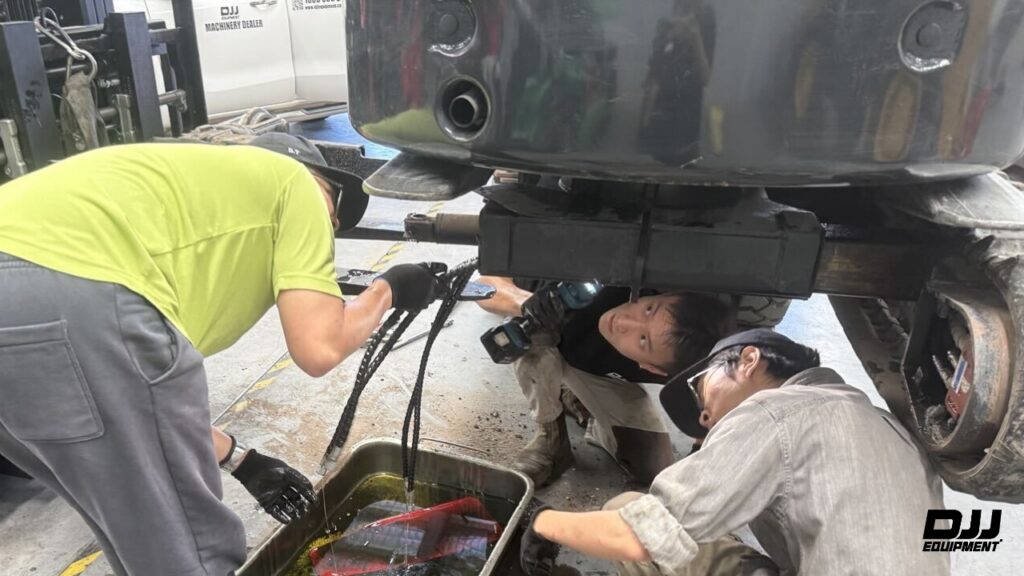
The operator reports a forklift fault, the business takes the forklift out of service, and a competent person repairs it. Operators shouldn't attempt repairs themselves, even ones that look simple.
Under the WHS Regulations in NSW, Queensland and WA, the business that manages the forklift must have its maintenance, inspection and testing done by a competent person, following the manufacturer's recommendations. Where the manufacturer gives none, a competent person's recommendations apply.
Competent means competent on forklifts. WorkSafe Queensland warns that car and truck mechanics are generally not competent to maintain forklifts. Its forklift safety guidance says only licensed gas fitters should repair or replace parts on LPG forklifts, and only qualified tyre fitters should remove and fit tyres.
Only the person who has made the forklift safe should remove the out-of-service tag. Until then, the forklift stays parked, even if the shift is short a machine.
How to tag out a faulty forklift
Tagging out a faulty forklift means isolating it and marking it so nobody uses it until it's repaired. Your site procedure and the manufacturer's manual come first, and the usual sequence looks like this:
- Stop using the forklift and park it where it won't block traffic or exits.
- Remove the key.
- Fit an out-of-service tag, plus a lock if your procedure uses one.
- Report the fault to your supervisor straight away and record what you found.
- Before any repair work starts, the technician isolates stored energy, such as hydraulic pressure or a raised carriage.
- The competent person repairs the forklift, checks it and removes the tag.
Recording the fault and the repair
Each forklift fault and repair should be written down. Safe Work Australia's guidance is to keep maintenance records at or near the workplace for as long as the forklift is there. Each record covers the forklift's ID, the date and hour meter reading, the repair, and who did it and their competency. Those records also show a technician which faults keep coming back.
Temporary fixes that aren't forklift repairs
A temporary fix doesn't return a forklift to service; only a repair by a competent person does. These shortcuts leave a faulty forklift in use:
- Driving the forklift carefully until the next scheduled service.
- Removing the tag before the repair is done.
- Welding, heating or modifying forks, the mast or the frame without the manufacturer's or a competent person's specification.
- Fitting replacement forklift parts that don't meet the manufacturer's specification.
- Refilling an LPG cylinder that's past its test date.
A repair that skips the specification can end up in court. In a Queensland case decided in 2015, a business had been engaged to replace the hooks on a pair of forklift tines. The welds failed, the operator fell from the cabin and was seriously injured, and the business was fined $35,000. WorkSafe Queensland's summary notes the business could have followed the manufacturer's specifications or an Australian Standard for the task.
What happens when forklift repairs are delayed?
A delayed forklift repair leaves workers using a machine that's known to be faulty, and leaves the business exposed under WHS law. The duty to have plant maintained sits with the business that manages it, and a fault written on a pre-start sheet is a record that the problem was known.
Regulators are paying attention. SafeWork NSW has made forklifts a regulatory priority for 2026-2027, which means its inspectors will focus on forklifts when they visit workplaces.
Delays can also cost more, because a small fault left running can damage the parts around it. If an older forklift keeps failing the same checks, compare the repair bills with what new forklifts for sale cost.
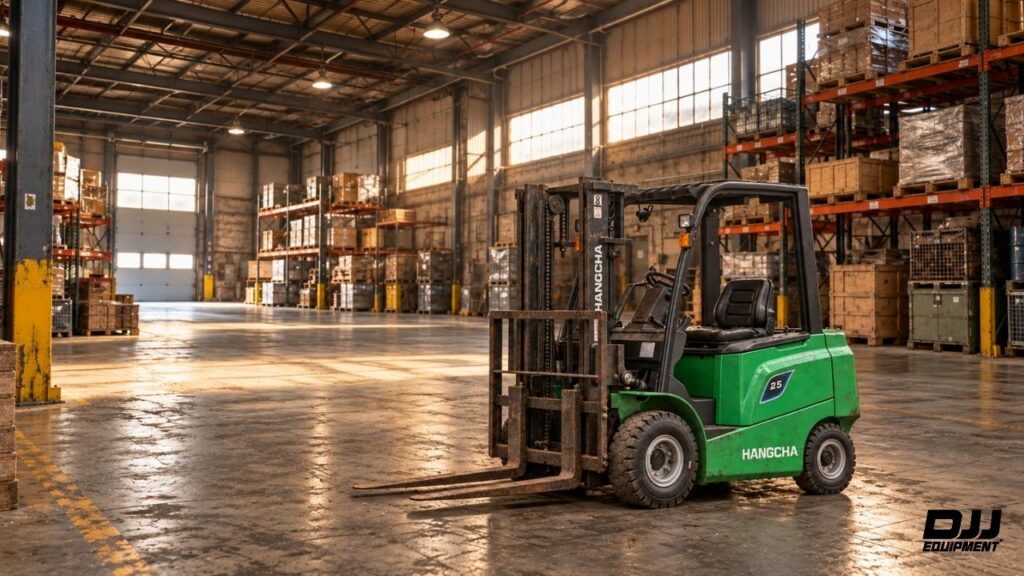
Repairs on a hired forklift
On a hired forklift, report the fault to the hire company straight away and leave the repair to them. Tag the forklift out the same way you would your own while you wait.
Under DJJ Equipment's forklift hire terms and conditions, the hirer must report accidents and faults to DJJ immediately, and only DJJ's authorised staff may repair, modify or adjust the machine. We service and maintain hired equipment during business hours, Monday to Friday, 8am to 5pm, and service outside those hours, if we agree to it, is at the hirer's cost.
The hirer still does the daily checks and pays for damage caused by misuse, so a fault found at the pre-start gets reported, not worked around.
If you're not sure whether a fault can wait, treat the forklift as out of service until a technician has looked at it. The DJJ Service Team services Hangcha forklifts and works on most major brands, so check your model with the team first. Repairs are done at our Silverwater, Meadowbrook and Bayswater workshops, with on-site service in selected areas, subject to technician availability. Call 1300 646 747 or request forklift repairs online.