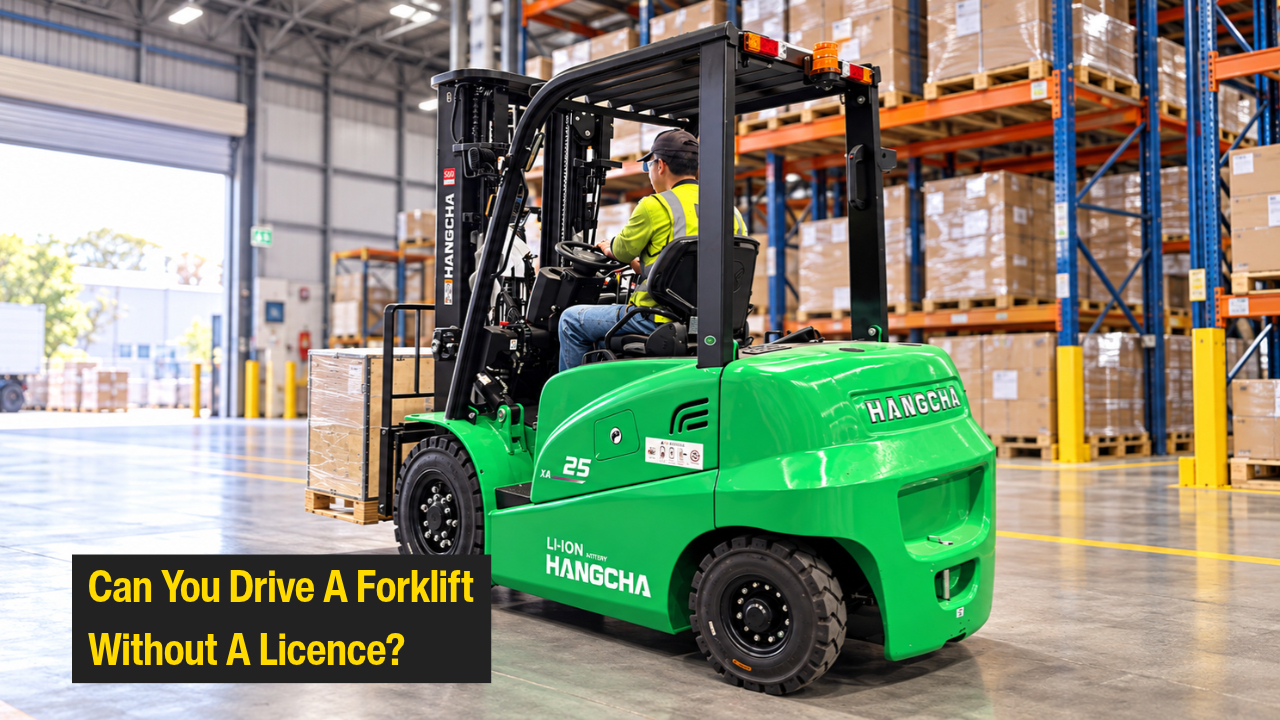
Hangcha rates its X Series 4-wheel lithium electric forklift at 7.2 to 9.6 hours of average running on one charge, depending on the model and battery. The 1.4-1.6 tonne models average 8.3 hours, the 1.8-2.9 t models 7.2 hours, and the larger models reach 9.6 hours with the biggest optional battery. Your own figure moves with the weight of the loads, how often the forks lift, how far the truck travels and the size of battery fitted.
How many hours does an electric forklift run per charge?
An electric forklift's run time per charge rises with battery size and falls as the truck and its loads get heavier. The X Series 4-wheel figures show both effects:
| X Series 4-wheel models | Capacity | Battery | Battery energy | Average run time per charge |
|---|---|---|---|---|
| FB15CLi, FB18CLi | 1,360-1,600 kg | 48V/604Ah | 29.0 kWh | 8.3 hours |
| FB20CLi to FB32CLi | 1,810-2,950 kg | 48V/684Ah | 32.8 kWh | 7.2 hours |
| FB20CLi to FB32CLi, optional battery | 1,810-2,950 kg | 48V/912Ah | 43.8 kWh | 9.6 hours |
The bigger trucks carry a bigger battery and still run for less time. Divide energy by hours and the small models average about 3.5 kWh an hour, while the 1.8-2.9 t models average about 4.6 kWh. A heavier truck lifting heavier pallets draws more power every hour, so the 1.8-2.9 t models need the 912Ah battery to outlast the small ones.
The figures are for the X Series 4-wheel electric forklift, a North American specification on cushion tyres for indoor floors. They're averages, so a truck that lifts heavy pallets all shift on your site will come in under them.
How do you work out an electric forklift's run time?
Hangcha works out electric forklift run time in two steps. Usable energy is the battery's voltage times its amp-hours times 90%, because the truck cuts power below about 10% charge to protect the battery. Run time is that usable energy divided by the truck's energy use per hour.
Take the XC Series 3-wheel lithium forklift. Its standard 80V/230Ah battery gives 80 x 230 x 0.9 = 16,560 Wh, or about 16.6 kWh of usable energy. The 2 t model's 280Ah battery gives about 20.2 kWh. The largest 460Ah option gives about 33.1 kWh, so at the same work rate it runs twice as long as the standard battery.
The battery side of the sum is on the spec sheet. The energy-use side is set by your work, which is why two identical XC Series 3-wheel forklifts can finish a shift with very different charge left. One loads trucks on a flat dock, the other climbs a ramp to a mezzanine all day.
Heavy loads and ramps drain an electric forklift battery faster
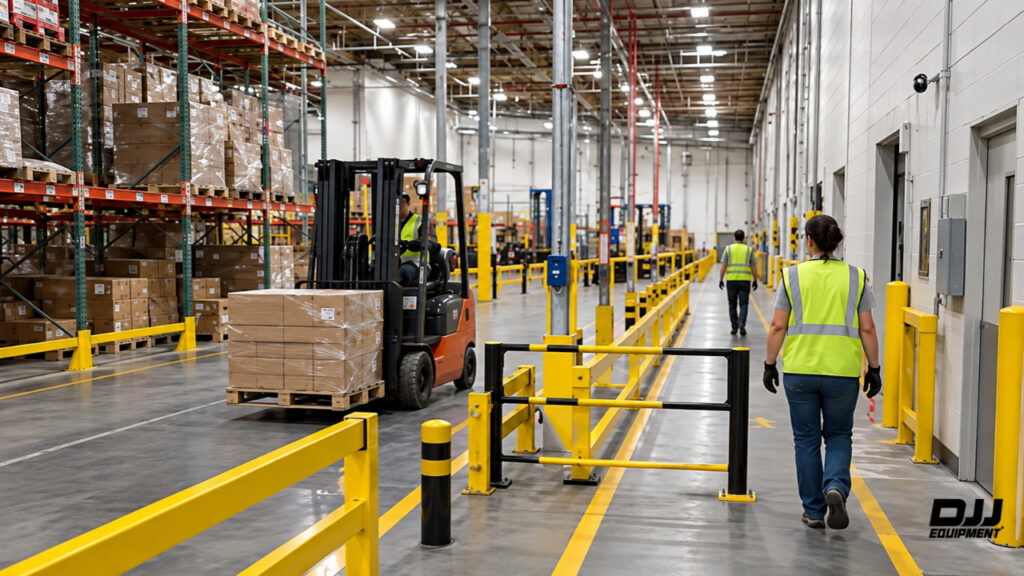
Heavy loads, frequent lifting, long travel and ramps drain an electric forklift battery fastest. Lifting a pallet to the top beam takes far more power than driving with the forks down, and a ramp makes the drive motor push the truck's weight as well as the load. DJJ Equipment asks buyers about all of these, because working time depends on load, lifting frequency, floor, travel distance and battery capacity.
The common drains on an electric forklift battery are:
- pallets near the truck's rated capacity, lifted many times an hour;
- high racking, where every lift goes to the top levels;
- long runs between the dock and the racking, or yard work outside;
- ramps and rough floors, which make the drive motor work harder;
- attachments such as clamps or rotators, which run on the same hydraulics.
Some energy comes back. The X Series uses regenerative braking, which feeds braking energy back into the battery and extends the operating time between charges. Hangcha's XA mini pallet stacker goes further and recovers energy as the forks come down.
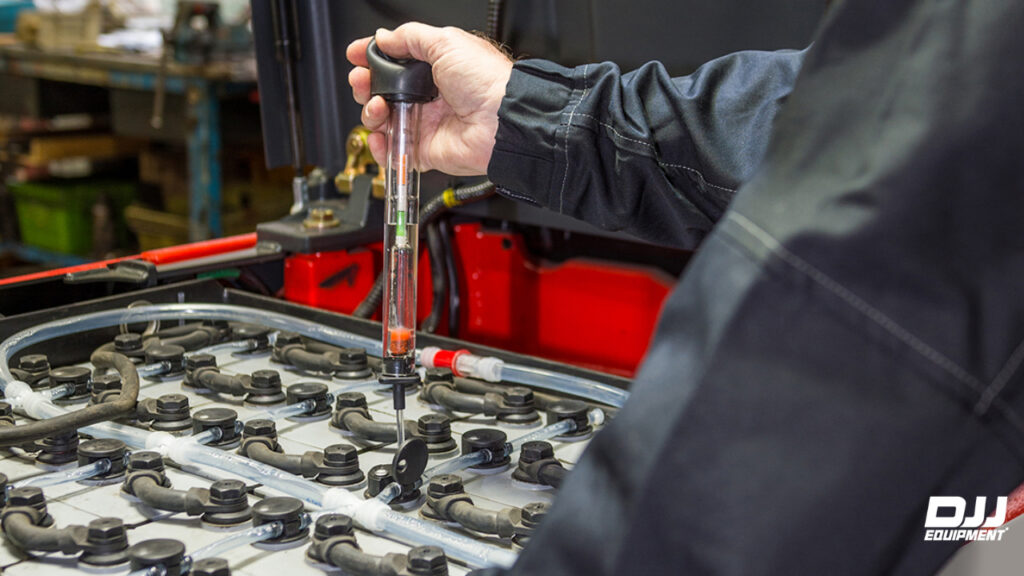
When to put an electric forklift on charge
Put a lithium electric forklift on charge once the battery drops below 20%, well before the cut-out. Hangcha recommends working between 50% and 100% charge and charging as soon as possible below 20%. So your useful run time between charges ends at about 20%, not at zero.
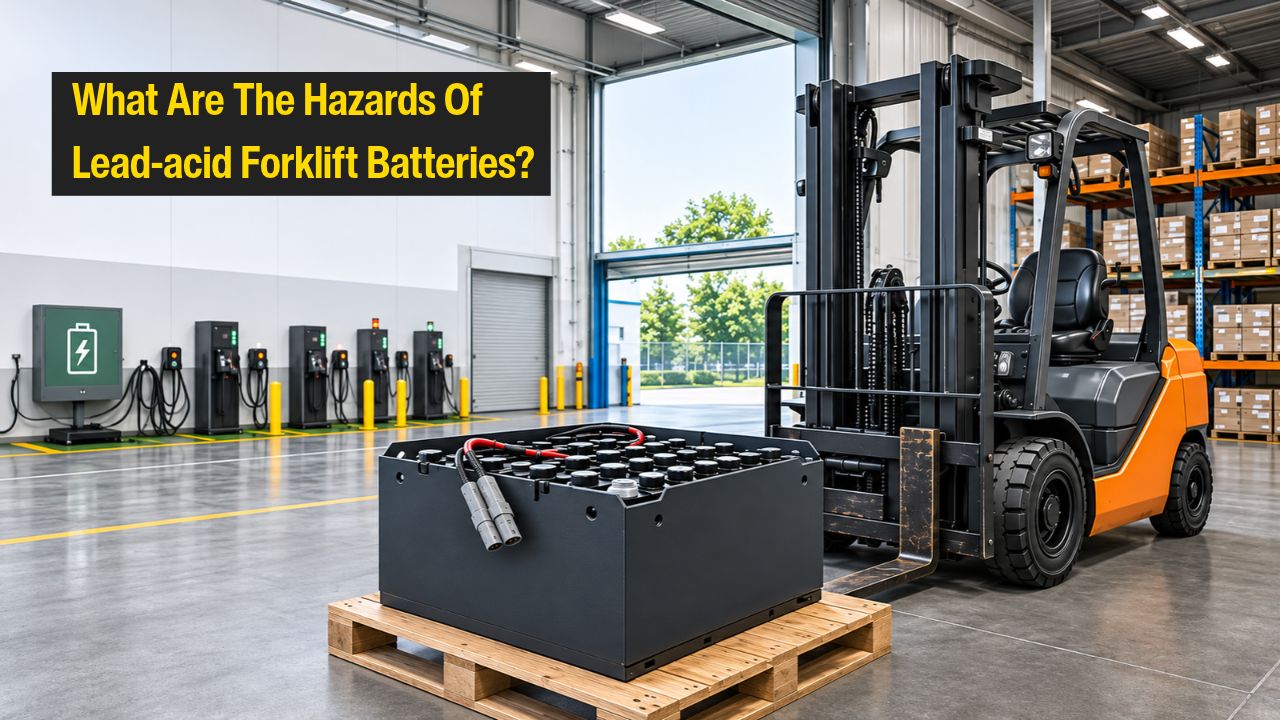
Lead-acid batteries are less forgiving. They're built for full charge cycles, and running one flat again and again damages the plates and shortens the forklift battery lifespan. If a lead-acid truck regularly runs flat before knock-off, the battery is too small for the shift or past its best.
Can an electric forklift run two shifts on one battery?
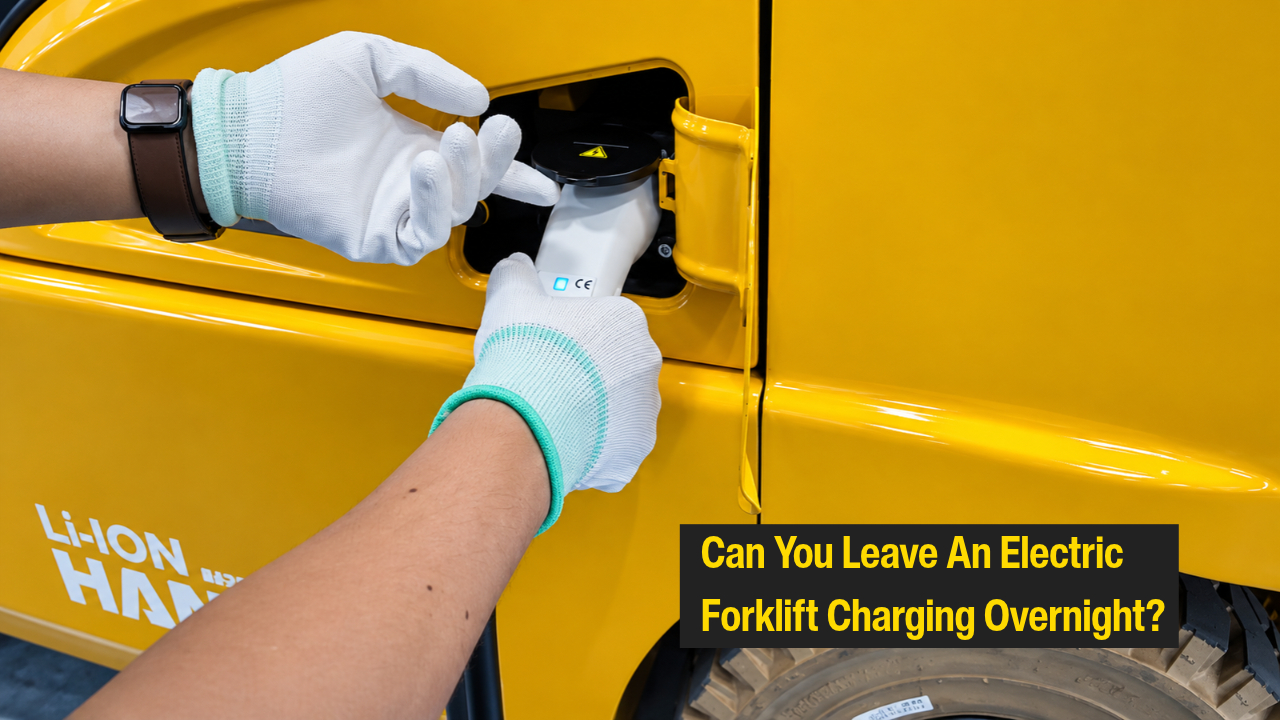
A lithium electric forklift can run two or more shifts on one battery if you top it up during breaks and shift changes. Hangcha says its XC Series 3-wheel trucks give full performance across several shifts thanks to this interim charging, and a full charge on the X Series takes about 2 hours with the matching charger.
Lead-acid works differently. A full lead-acid charge takes 8-10 hours, and short top-ups at breaks wear a flooded lead-acid battery, so it suits one shift followed by a full overnight charge. A second shift needs a second charged battery, because how long a forklift battery takes to charge on lead-acid is about as long as the shift it just worked. That means two batteries to buy and water, and room to charge them.
Battery age and cold shorten electric forklift run time
Battery age and cold both shorten electric forklift run time, because the battery holds or delivers less energy. Hangcha rates the lithium battery in the XC Series 3-wheel for 4,000 full charging cycles with at least 75% of its original capacity left. If an X Series that averaged 8.3 hours when new dropped to 75%, it would average about 6.2 hours on the same work.
Cold cuts run time only while the truck is cold, not for good. A lithium battery delivers less energy when it's cold, and its battery management system limits charging and discharging at low temperatures to protect the cells. For cold store work, the XH Series 4-5 t electric forklift has low-temperature battery heating, and a cold store version is optional.
If your truck once finished the shift with charge to spare and now comes back early, check whether the work has changed before blaming the battery. More lifts, heavier pallets or a new ramp cut run time just as much as age does.
Matching the electric forklift battery to your shift
Pick the electric forklift battery from your busiest shift, not your average day. If a 1.8-2.9 t X Series works one 8-hour shift with a lunch break, the standard 7.2-hour battery leaves little margin, so a lunchtime top-up or the 912Ah battery rated at 9.6 hours is the safer choice. On a lighter shift of short runs and low lifts, the truck uses less energy each hour, so the standard battery goes further.
If you run two or three shifts, choose lithium and plan where the truck charges at each break. If you run one shift and can charge overnight, lead-acid still works and costs less to buy, as long as you size it for the full shift. Across our range of battery-electric forklifts, battery options run from 36V packs on stand-up 3-wheel trucks to 309V high-voltage packs on the XH Series.
DJJ can match the truck and battery to your shift once we know your loads, lift heights, travel distances, floors and shift pattern, including your busiest day and when the truck can charge. Call 1800 355 388 or send an enquiry, and tell us how many hours a day the forklift needs to work.