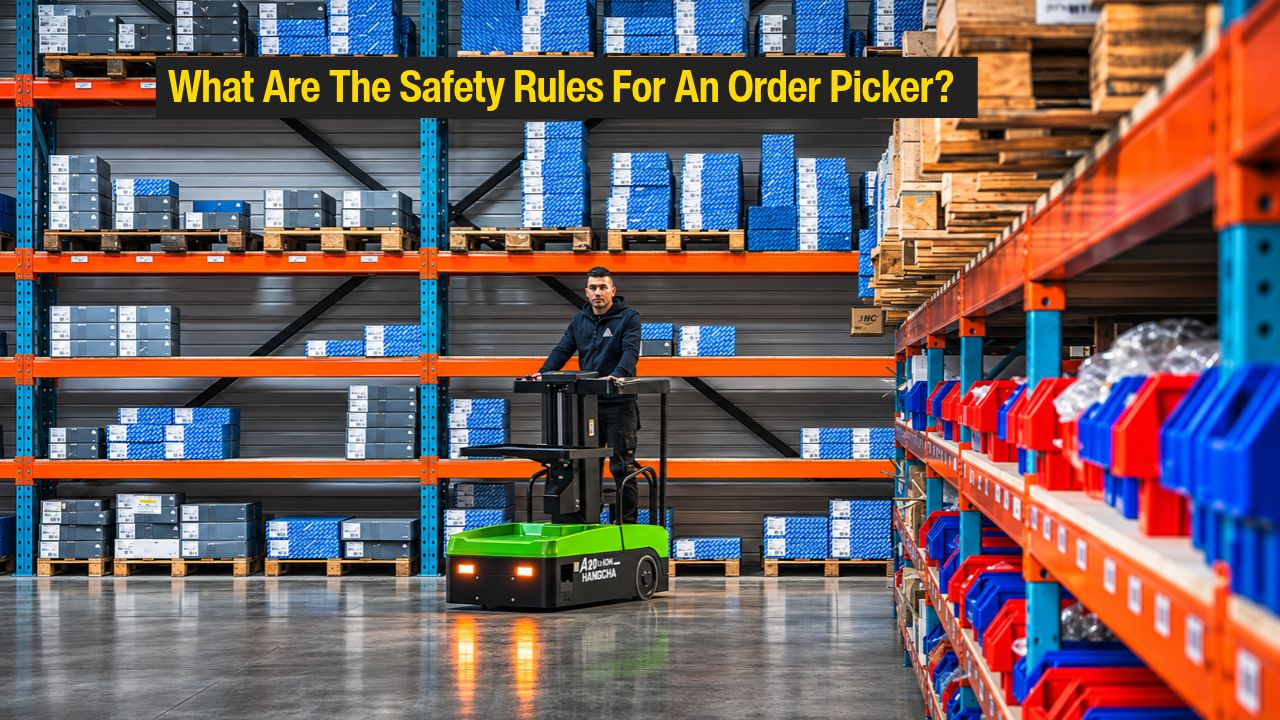
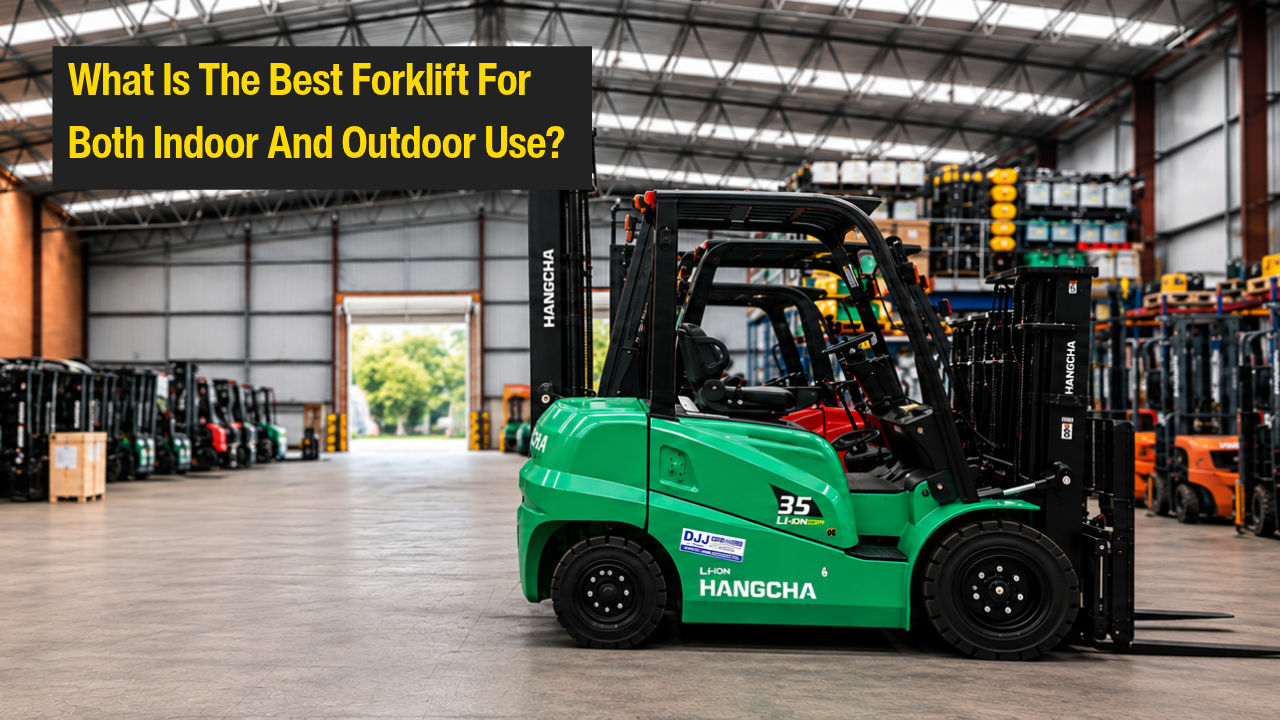
A lead-acid forklift battery takes about 8-10 hours to charge fully, so most sites charge it once a day, between shifts or overnight. A lithium forklift battery charges far faster on its matched charger: about 2-3 hours on Hangcha's A Series stand-up 3-wheel forklift, and about an hour on its XH Series high-voltage lithium forklifts. The time on your site depends on three things: how flat the battery is, how big it is, and how much power the charger delivers.
How long does a lead-acid forklift battery take to charge?
A lead-acid forklift battery needs about 8-10 hours for a full charge. Hangcha gives that figure for lead-acid when it compares battery types for its A Series stand-up 3-wheel forklift, against 2-3 hours for the lithium pack in the same truck.
The time goes into the last part of the charge. A lead-acid battery takes current quickly while it's low, then the charger has to slow right down as it nears full, or the cells overheat and gas. Pushing harder doesn't save hours, it costs battery life.
Lead-acid also works best on full cycles: run it down through the shift, then give it one complete charge. Short top-ups during the day leave it partly charged, which wears the plates over time. After charging, the battery should cool and rest before heavy work, and it's the right time to check water levels once it's full and cool.
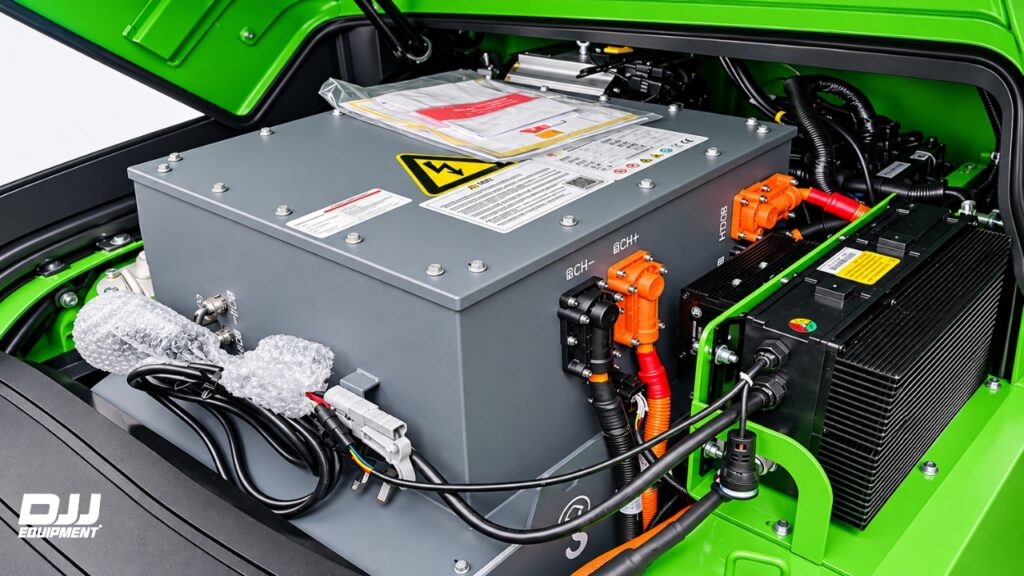
How long does a lithium forklift battery take to charge?
Most lithium forklift batteries in the Hangcha range charge in about 1-3 hours, and the high-voltage models are the fastest. Every lithium forklift in DJJ Equipment's Hangcha range charges in about 1.5 hours or less on its matched charger, except the 36V A Series at 2-3 hours:
| Hangcha forklift | Lithium battery | Charging time |
|---|---|---|
| A Series stand-up 3-wheel, 1.5-2.3 t | 36V, 684Ah or 906Ah | About 2-3 hours to full, depending on the charger |
| XH Series 2-3.8 t | 309V, 125Ah (150Ah optional) | Full in about 1 hour |
| XH Series 4-5 t | 309V, 173Ah (53.4 kWh) | Full in about 1 hour |
| XH Series 6-10 t | 309V, 228Ah or 302Ah | About 1 hour, with the battery cooling running |
| XH Series 12-18 t | 541V/228Ah (123 kWh) or 608V/302Ah (184 kWh) | 20% to 100% in 1.3 hours |
| XH Series 28-35 t | 618V, 282 kWh | 20% to 100% in about 1 hour |
| XH Series 38-48 t | 618V, 423 kWh | 20% to 100% in about 1.5 hours |
| Rough terrain 2.5-3.5 t | 317V, 150Ah (46.4 kWh) | Full in about 1.5 hours |
Battery size alone doesn't set the charging time. The 423 kWh pack in a 48-tonne forklift charges in about the same time as a 2-tonne truck, because its charging system is sized to match. Read the last column carefully too: some figures run from 20% to 100%, others from flat to full.
Lithium charges faster because it doesn't need the long, slow finish that lead-acid does. The battery management system (BMS) controls the current and only eases off close to full. High-voltage packs move the same power with less current, which keeps cables and cells cooler during a fast charge.
How do you work out the charging time for your own forklift battery?
Charging time is roughly the energy the battery needs back, divided by what the charger can deliver. For a lithium battery, work in kWh: volts x amp-hours / 1,000 gives the battery's nominal energy, and the share you need to put back gives the energy to replace.
Take the XH Series 4-5 t. Its 309V/173Ah battery holds 53.4 kWh, so a charge from 20% to 100% puts back about 42.7 kWh. Doing that in about an hour means the charger supplies around 40 kW or more. On the XH Series 28-35 t, the same 80% of a 282 kWh battery is about 226 kWh in an hour, so that charger needs well over 200 kW. That's why the site's power supply has to be planned before a large electric forklift arrives.
For a lead-acid battery, work in amp-hours. Take the amp-hours you need to put back and divide by the charger's rated current on its data plate, then allow extra time for the slow finishing stage. A 48V/500Ah battery, as fitted to the 1.6 and 1.8 tonne models of Hangcha's A Series reach truck 1.2-2 t, run down to 20% needs about 400Ah back before charging losses.
The charger also draws more from the grid than ends up in the battery. For the cost side, see how much electricity an electric forklift uses per charge and per shift.
Why does a forklift battery take longer to charge on some days?
A forklift battery takes longer to charge when it starts flatter, when it's cold or hot, or when the charger doesn't match it. A truck plugged in at 20% needs four times the energy of one plugged in at 80%, so a hard day of lifting shows up as a longer charge.
Temperature is the next factor. Batteries charge more slowly in the cold, which matters in cold stores and on winter mornings. Hangcha fits low-temperature heating to the battery pack on the XH Series 4-5 t for that reason. Heat works the other way: on the XH Series 6-10 t, the one-hour charge assumes the battery cooling is running.
Then there's the charger. A charger that doesn't suit the battery's voltage, capacity or chemistry will be slow or won't start at all. When charging suddenly takes much longer or stops partway, the cause is usually the power supply, the plug, the charger or a BMS protection stop, and a forklift battery not charging is rarely a worn-out battery on the first day it happens.
Can you charge a forklift battery during breaks?
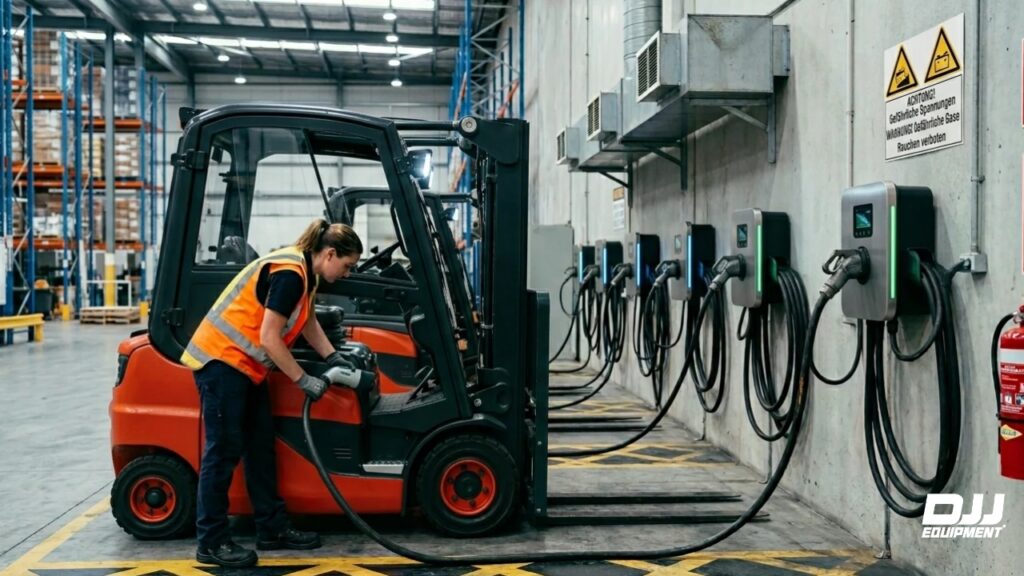
A lithium forklift battery can be charged during breaks, and that's how most multi-shift lithium fleets run. Hangcha designs the A Series stand-up 3-wheel's lithium battery to be charged at breaks and shift changes, so the forklift keeps working across shifts. The XH Series 28-35 t is set up the same way, with top-ups at breaks instead of long stops.
Lead-acid is different. Frequent short charges without a full cycle shorten its life unless the battery and charger are built for opportunity charging. Lead-acid costs less to buy, so the faster charge has to pay its way in shifts, spare batteries and labour, which is the real trade-off between lithium vs lead-acid forklift batteries.
How much charging time does your forklift shift pattern leave?
A single 8-hour shift leaves 16 hours for charging, which covers a lead-acid battery with time to spare. Add a second shift and the gap shrinks to 8 hours, which is tight for an 8-10 hour charge before cooling. Here's how the hours fall:
| Shift pattern | Hours off each day | Lead-acid (about 8-10 h) | Lithium (about 1-3 h) |
|---|---|---|---|
| One 8-hour shift | 16 | One full charge overnight | Overnight or at breaks |
| Two 8-hour shifts | 8 | Tight: plan a spare battery or extra truck | Between shifts and at breaks |
| Three 8-hour shifts | Breaks only | Battery changes, with spares on charge | Top-ups at breaks and shift changes |
Lead-acid stops fitting once the off-shift gap drops below the 8-10 hours a full charge needs: from then on, every truck needs a second battery, a battery-change area and someone to swap packs. A lithium truck that charges in 1-3 hours fits into the gaps the day already has.
Charging time is also forklift time. Five forklifts on site doesn't always mean five forklifts ready to work, because one may be on the charger when the truck arrives at the dock. Count charging as part of the day when you work out how many forklifts the site needs.
What should you ask before buying an electric forklift for your shifts?
Ask whether the battery and charger cover your busiest day, not an average one. Bring the shift times, the breaks, the hours of travel and lifting, and where the forklift will park to charge. A charging point that's hard to reach in your layout costs time every day.
DJJ matches the battery and charger to that workload when you choose from our range of battery-electric forklifts, and tells you what power supply its charger needs on site. Call 1300 646 747 or send us your shift pattern, and we'll work out the charging plan with you.