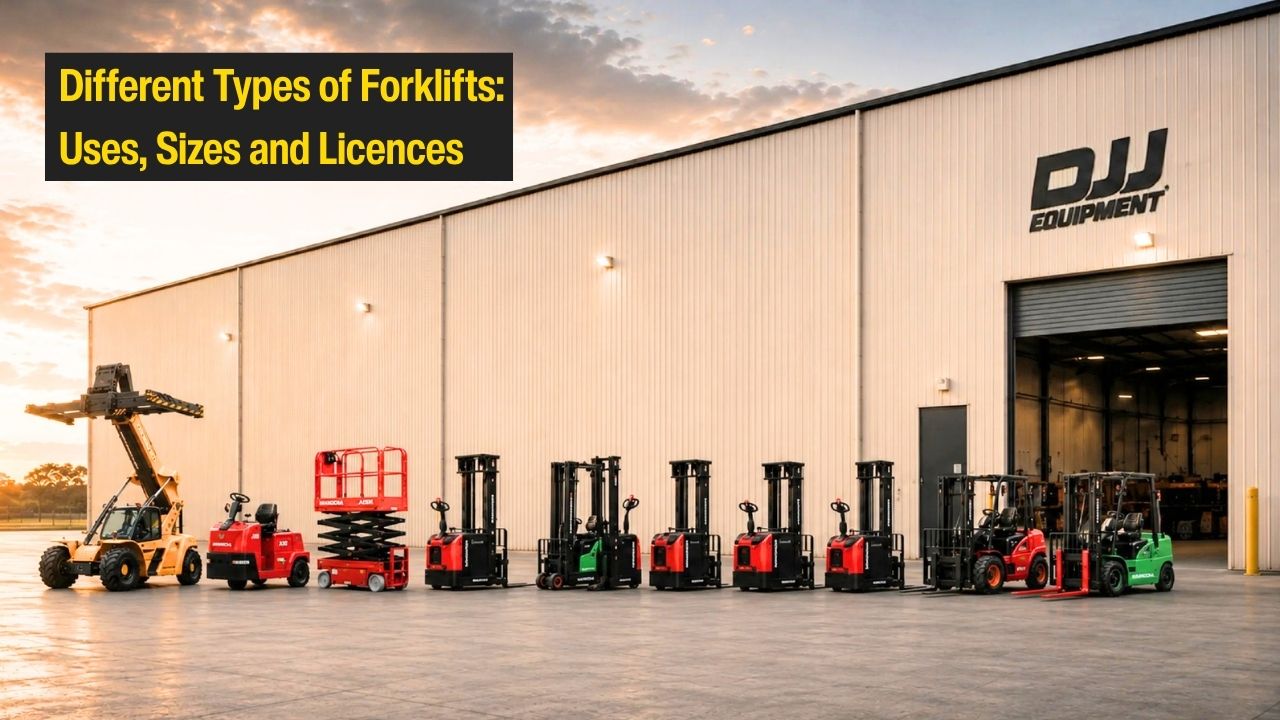
Forklifts are used to lift, carry, stack and load palletised goods over short distances: unloading trucks and containers, putting pallets into racking, picking stock and moving heavy or awkward loads around a site. In Australia, you'll see them in warehouses and distribution centres, factories, building sites, farms, the back of shops, ports and recycling yards. The floor, the lift height and the load decide which machine does each job, and they're also what separates the main types of forklift and how they work.
The main jobs a forklift does
Most forklift work comes down to eight jobs, and a single site often needs two or three of them. The table matches each job to the machine that usually does it.
| Job | What it involves | Machine that usually does it |
|---|---|---|
| Loading and unloading trucks | Taking pallets off trucks at a dock, or from the side of a truck in a yard | Counterbalance forklift |
| Moving pallets around a site | Short runs from the dock to staging, production or storage | Electric pallet jack, or a forklift for longer runs |
| Stacking into high racking | Putting pallets away on upper beams and bringing them back down | Reach truck, or a turret truck in very narrow aisles |
| Order picking | Picking cartons or single items from racking rather than whole pallets | Order picker |
| Long and awkward loads | Pipe, timber, steel and sheet material that hangs well past the forks | Side loader |
| Outdoor and rough ground work | Building sites, farms and unsealed yards | Rough terrain forklift |
| Container handling | Unpacking shipping containers and stacking empty boxes in the yard | Container forklift, or an empty container handler |
| Towing | Pulling trains of trolleys or trailers through a factory or distribution centre | Tow tractor |
The counterbalance forklift is the all-rounder on this list. It loads trucks, moves pallets and works on sealed yards, which is why most businesses start with one and add specialist machines as the work grows.
Forklift uses by industry
The same jobs turn up in a different mix from one industry to the next. These are the industries where forklifts do most of their work in Australia, and the machines each one tends to use, all of which DJJ Equipment sells in the Hangcha range.
Warehousing and distribution
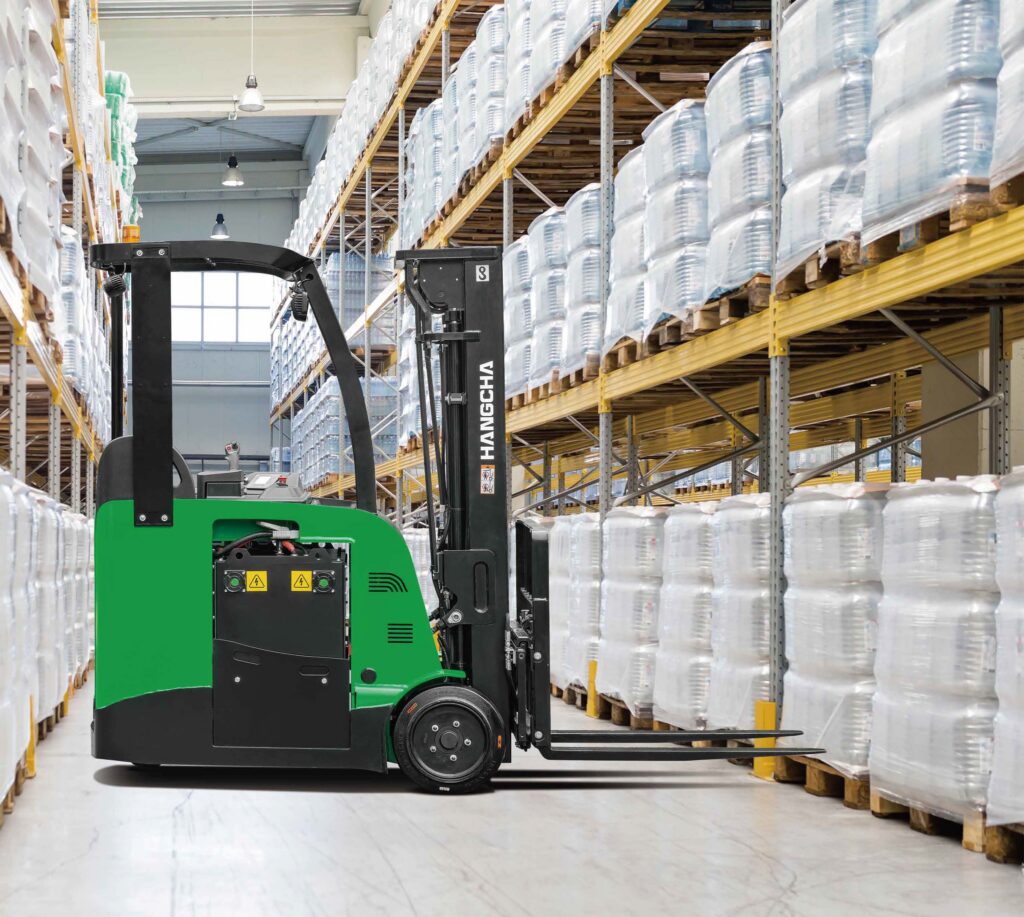
Warehouses and distribution centres are where forklifts do the most varied work. Pallets come off trucks at the dock, move to a staging area, go up into racking and come back down when orders ship. A counterbalance forklift usually handles the dock, while reach trucks work the racking because they stack in much narrower aisles than a counterbalance forklift needs. The Hangcha reach trucks in our range lift to about 13 m.
Where racking is very high and floor space is expensive, some warehouses go further with very narrow aisle (VNA) storage. A VNA turret truck turns its forks rather than its body, so it can put away and pick from racking on both sides of an aisle only a little wider than the truck. VNA needs a very flat floor and usually a guidance system in the aisle, so the truck, the racking and the floor are planned together as one project.
Order picking is the other big warehouse job. When staff pick cartons rather than whole pallets, an order picker raises the operator with the platform, and the operator needs a High Risk Work Licence class LO rather than LF. Smaller warehouses that move a few pallets a day often get by with a walkie stacker and an electric pallet jack. Both are walk-behind machines that don't need a forklift licence, although operators still need training.
Manufacturing
In manufacturing, forklifts bring raw materials from the store to the production line, move work in progress between processes and take finished goods to dispatch. Electric forklifts suit enclosed factories because they produce no exhaust and run quieter than engine-powered trucks. LPG forklifts are common in well-ventilated plants that run long shifts, since a cylinder swap takes minutes.
Some plants have a flammable gas or dust risk, such as paint, chemical or grain processing. Those areas need an explosion-proof forklift built to keep sparks and hot surfaces away from the atmosphere, and the site's hazardous area classification decides which model fits. Larger factories also use tow tractors, which pull a train of trolleys between stations instead of a forklift making many single trips.
What are forklifts used for in construction?
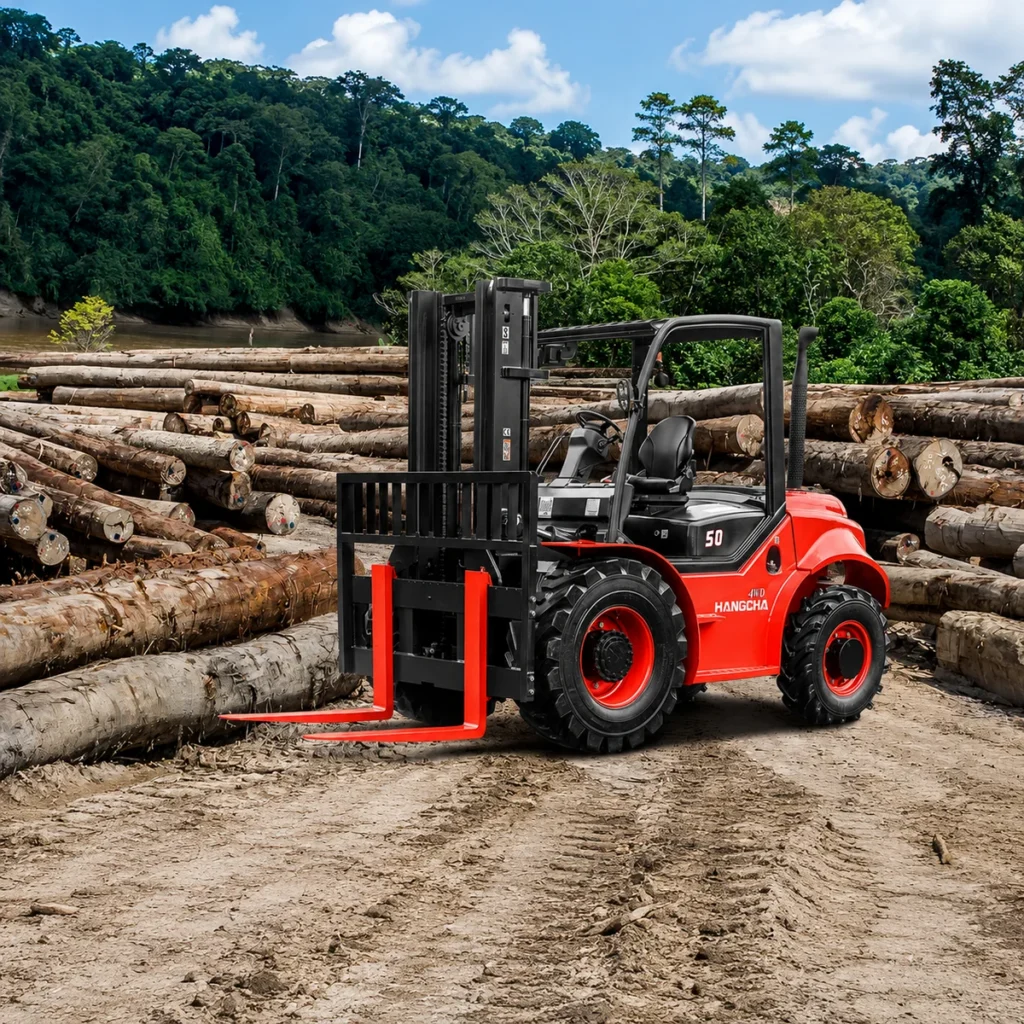
On building sites, forklifts unload deliveries of bricks, blocks, timber frames, steel and bagged products and move them across the site to where the trades need them. Most sites have unsealed or rutted ground, so the usual machine is a rough terrain forklift with large pneumatic tyres, high ground clearance and often four-wheel drive.
When materials have to go up onto a slab or over an obstacle, builders often use a telehandler instead. It lifts with forks on a telescopic boom, so it can reach forward and up in a way a mast forklift can't. A telehandler is a different machine from a forklift, and the licence it needs depends on its configuration and the state, so check with your regulator before assuming an LF licence covers it.
Smaller equipment has its place on site too. One of our Perth branch customers wrote that their pallet jack is great to use on their construction site.
Timber, steel and long loads
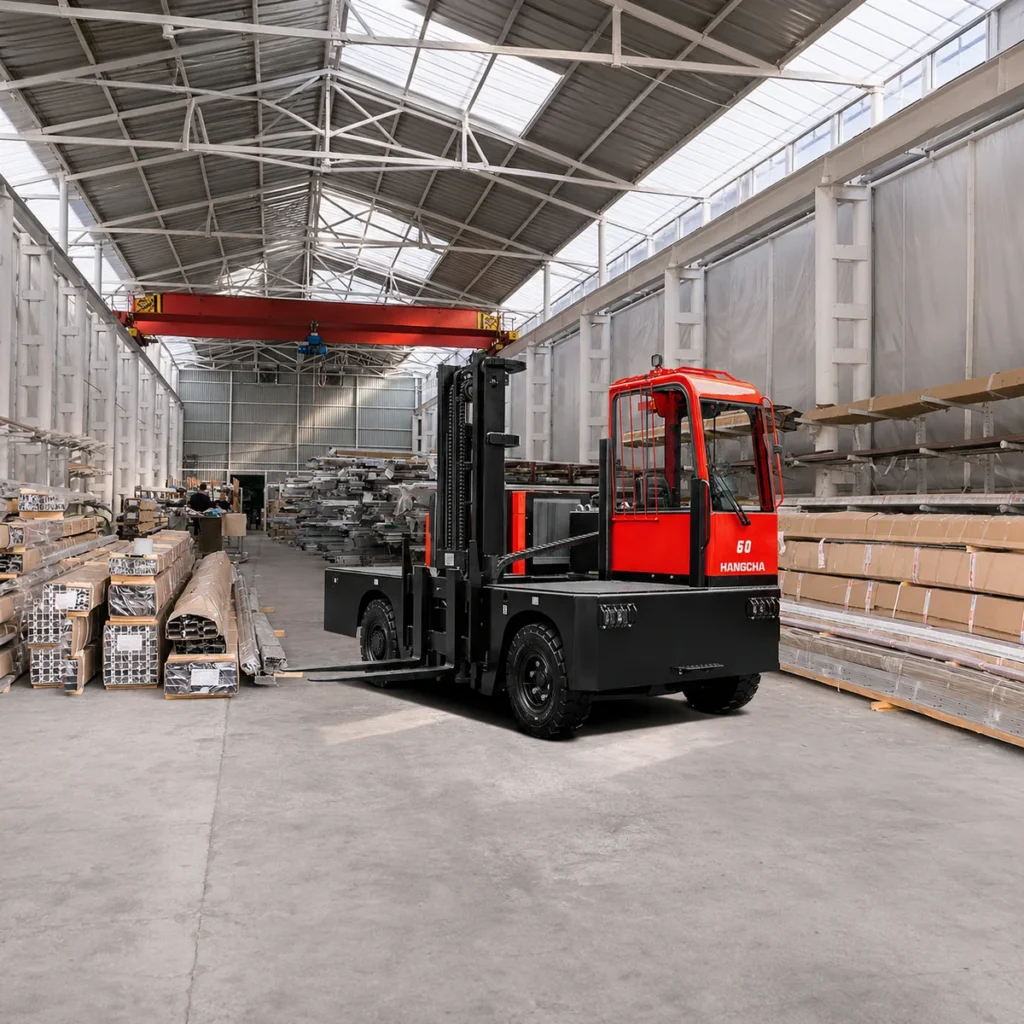
Timber yards, steel suppliers and pipe merchants handle loads that are long, flexible and hang well past the forks. A standard forklift has to carry them sideways through a wide gap, which is slow and risky in a yard full of racks. A side loader carries the load along its side instead, so long lengths travel lengthwise down a narrow aisle. The Hangcha side loaders we sell lift 3-6 t, in electric multidirectional and diesel versions.
For timber packs that don't need long aisles, a counterbalance or rough terrain forklift with long forks or a clamp often does the job. One Perth branch customer bought a Hangcha forklift to handle timber floor pallets and describes it as handy and reliable.
Farming and agriculture
On farms, forklifts move pallets of feed, fertiliser and chemicals, load and unload hay bales and shift fruit and vegetable bins around packing sheds. Paddocks, tracks and yards are rarely flat or sealed, so most farm work suits an all terrain forklift, while a packing shed with a concrete floor can run a standard counterbalance forklift.
Bales and bins need the right tool on the forks. Bale spikes, clamps and bin tippers are common attachments, and each one reduces the capacity the forklift can safely lift, so check the rated capacity with the attachment fitted.
Retail and supermarkets
In retail, forklifts work behind the scenes. Deliveries arrive at the dock or the back door, where an electric pallet jack or a counterbalance forklift unloads the truck, and stock goes into a backroom or storeroom. A walkie stacker suits backrooms with low racking because it's compact, quiet and doesn't need a forklift licence.
Ride-on forklifts belong in the dock and storage areas, not on the shop floor while customers are around. Pallets going onto the sales floor are usually moved with a pallet jack outside trading hours or through areas closed off from shoppers.
Ports, freight and container yards
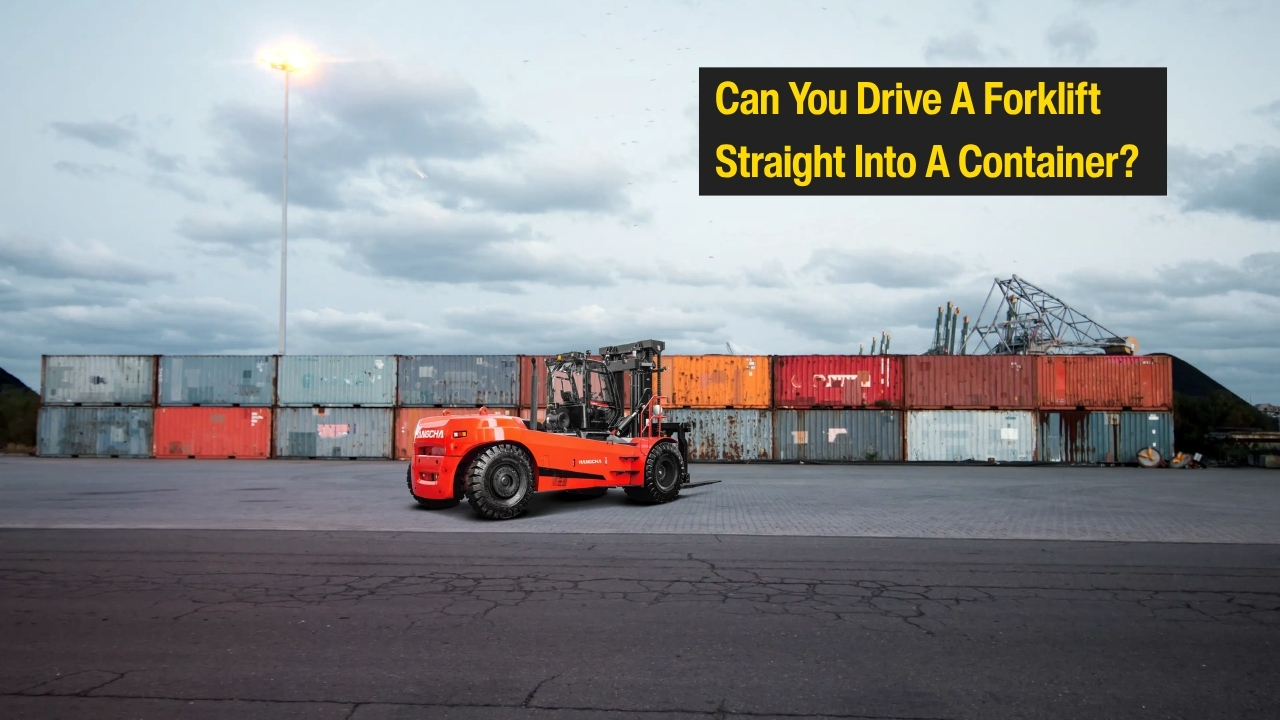
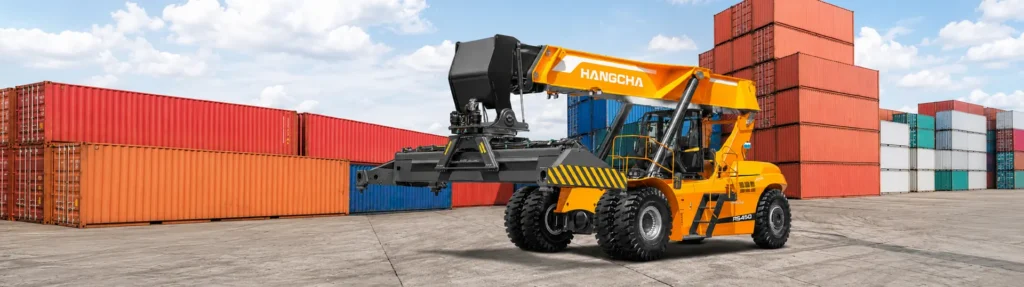
Freight depots and container yards unpack shipping containers, load trucks and move heavy freight around the yard. Unpacking a container calls for a forklift that can work inside the box without the mast hitting the roof. Lowered mast height, free lift and the container's door height decide whether a truck fits, and they're the first things to check when choosing the right forklift for container work.
Empty containers are a different job again. An empty container handler lifts and stacks empty boxes several high in the yard, while the heaviest freight calls for high-capacity forklifts, which DJJ supplies up to 48 t.
Waste and recycling
Waste and resource recovery sites combine rough ground, dust and long hours, which is hard on any machine. Forklifts there move bales of sorted material, bins and pallets around the site, and most of that work suits a rough terrain forklift.
One example is Kimbriki Environmental Enterprises at Terrey Hills in Sydney, which runs a Hangcha high-voltage lithium rough terrain forklift with switchable 2WD and 4WD and IP67-rated electrics. When dust affected the seat harness connection, our team fitted a dedicated connection socket at no charge.
Indoor, outdoor or both: matching the machine to the floor
After the job, the floor decides the machine. A truck built for smooth concrete struggles on gravel, and an outdoor machine is too big for most racking aisles.
| Where it works | Machine that usually fits | Power |
|---|---|---|
| Smooth indoor concrete with racking | Reach truck, order picker or stacker | Electric, mostly lithium |
| Indoors and a sealed outdoor yard | Counterbalance forklift | Electric or LPG |
| Mostly outdoors on a sealed yard | Counterbalance forklift | LPG or diesel |
| Gravel, dirt and building sites | Rough terrain forklift | Diesel or high-voltage lithium |
| Food sites and cold stores | Electric counterbalance or reach truck | Electric, on a model rated for the temperature |
Shift length matters as much as the floor. If your forklifts run two shifts a day, lithium usually makes more sense than lead-acid, because you can top it up at breaks instead of swapping batteries. Where refuelling speed matters more than exhaust, LPG and diesel forklifts refuel in minutes and keep working through long shifts.
What our customers use their forklifts for
Public Google reviews of our branches show how everyday most forklift work is: small warehouses, timber yards and building sites rather than giant distribution centres. Yuanpeng, a Sydney branch customer, bought a small forklift for their warehouse.
Got a small forklift for my warehouse roughly 6 months ago, been working smoothly
Yuanpeng L., Sydney branch customer
Walk-behind machines come up often. Ray, also a Sydney branch customer, chose a walkie reach stacker after comparing other suppliers, and Steve bought an electric walkie stacker for a small warehouse.
Very happy buying my electric Walkie stacker from these guys.
Steve A., Perth branch customer
These stories come from public Google reviews, and most of them are from customers of our Perth branch, where you can read the full Google reviews of our Perth branch.
Keeping people and forklifts apart on site
Wherever forklifts work, the main risk is the same: people on foot near moving machines and their loads. SafeWork NSW names three main ways workers are killed or seriously injured in forklift incidents: being hit or crushed by a forklift, being hit or crushed by the load, and being crushed when a forklift tips over.
The controls that work across industries are straightforward. Separate pedestrians from forklift routes with barriers and marked walkways, plan traffic at docks and intersections, keep speeds low where people work and check that every operator holds the right licence, as SafeWork NSW's forklift guidance sets out. Ride-on forklifts need a High Risk Work Licence class LF, order pickers need class LO, and walk-behind stackers and pallet jacks need training but no licence.
Buy or hire for the job
If the work is steady and happens every day, buying usually costs less over the life of the machine. If it's seasonal, tied to a project or covering a machine that's off for repair, hiring makes more sense.
Retailers before Christmas, farms at harvest and builders on a single project are typical hire customers. Forklift hire from our branches covers electric, LPG and diesel forklifts, reach trucks, stackers, order pickers and rough terrain forklifts on selected models, and minimum hire terms depend on the equipment and location.
Before deciding, count the hours the machine will really work each week. A forklift that sits idle most days is usually cheaper to hire when needed, while one that runs every shift pays back faster when you own it.
Forklifts earn their place wherever pallets and heavy loads need moving, from a supermarket backroom to a recycling yard, and the job, the floor and the lift height decide which machine fits. Tell DJJ the heaviest load, the highest lift, the ground the machine works on and how many hours a day it runs, and our team will match a forklift to the work. Call 1800 355 388, visit our Silverwater, Meadowbrook or Bayswater branch, or compare the range of forklifts for sale.