Choose a skid steer when the work is in tight or enclosed spaces, the loads are light and you change attachments often. Choose a wheel loader when you need to move large volumes, load trucks or carry material across an open yard. The two machines also steer differently: a skid steer has a rigid frame and turns by running its left and right wheels at different speeds, while a wheel loader bends at a hinge in the middle. At the small end of the range sold by DJJ Equipment, the LGMA LM920 weighs 3,800 kg with a 1,600 kg rated load and a 0.8 m³ bucket, and the Yuchai S35 Pro weighs 1,540 kg with a 350 kg rated operating capacity and a 0.29 m³ bucket.
The table sets the smallest wheel loader and the smallest skid steer DJJ sells side by side, using the figures from each product's specification table.
| Specification | LGMA LM920 wheel loader | Yuchai S35 Pro skid steer |
|---|---|---|
| Frame and steering | Articulated, bends in the middle | Rigid frame, skid steering |
| Power | 42 kW diesel engine | 21.29 kWh lithium iron phosphate battery, 17 kW of electric motors |
| Operating weight | 3,800 kg | 1,540 kg |
| Load rating | 1,600 kg rated load | 350 kg rated operating capacity (700 kg tipping load) |
| Bucket | 0.8 m³ | 0.29 m³ |
| Dump height | 3,200 mm | 1,850 mm |
| Width | 1,830 mm | 959 mm |
| Turning | 5,000 mm turning radius | Pivots on the spot |
Per bucket, the LM920 carries about 2.8 times the volume of the S35 Pro and tips it 1.35 m higher. The S35 Pro is about half as wide, gives off no exhaust and gets through gaps the loader cannot.
How a wheel loader works and where it fits
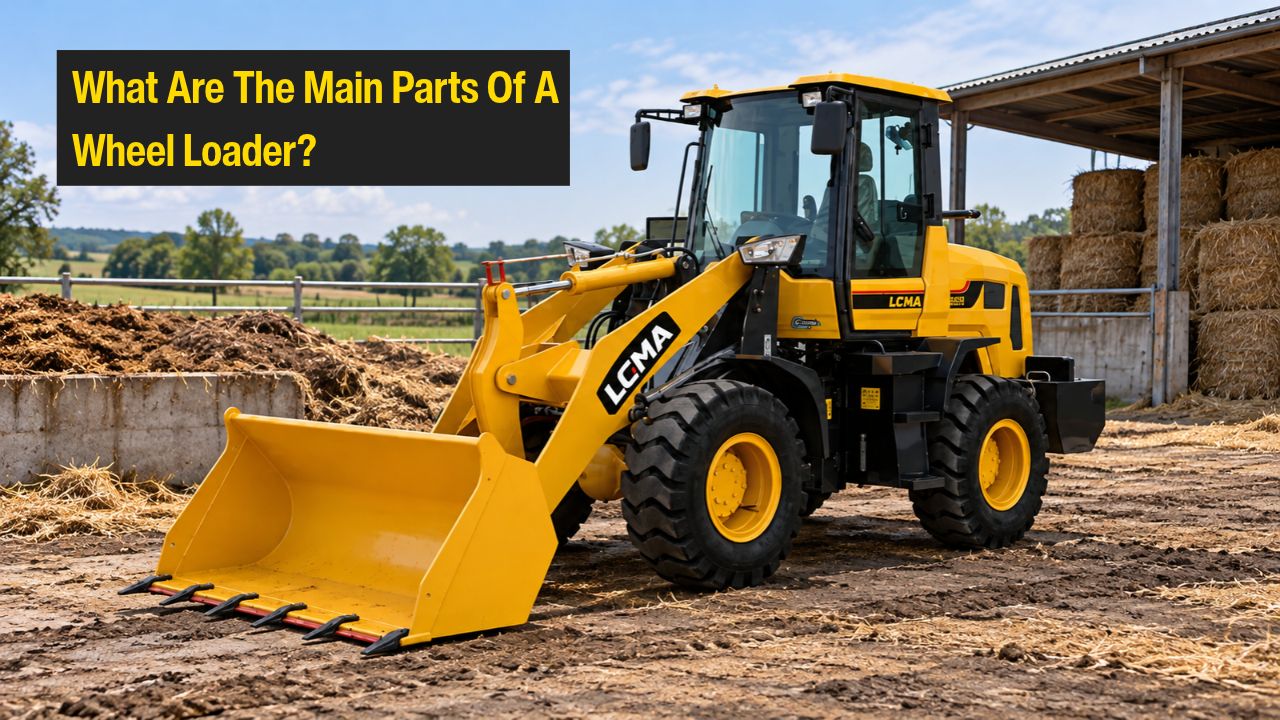
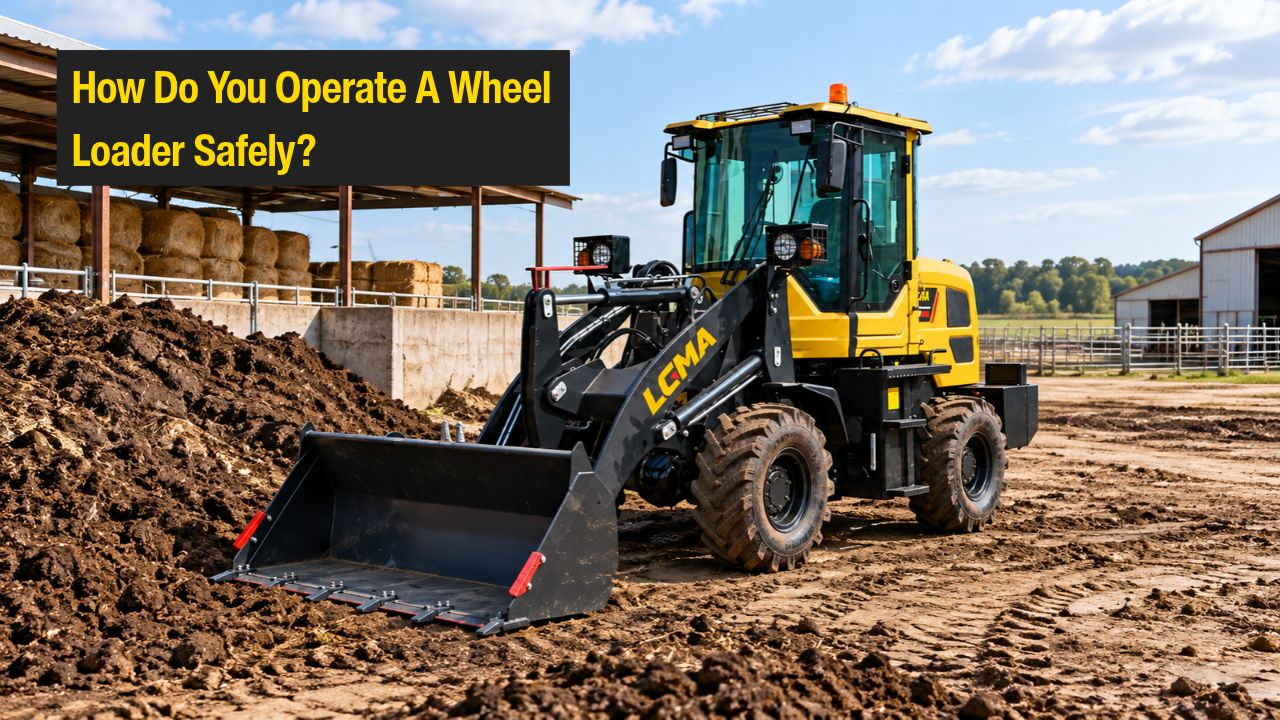
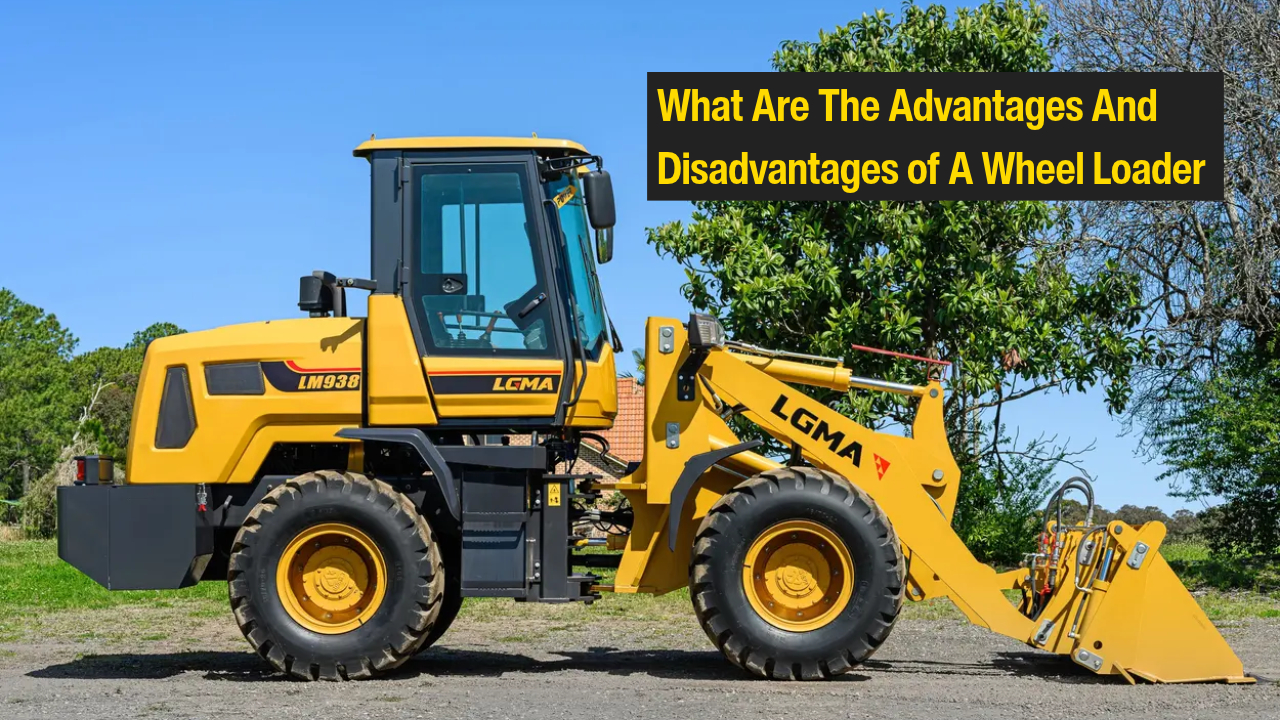
A wheel loader is a diesel machine built to scoop, carry and dump loose material such as soil, gravel, mulch and stock feed. Its front and rear frames meet at a hinge, and this articulated steering lets the rear wheels follow the path of the front ones, so a full bucket stays steady through a turn.
All four wheels are driven, and the large tyres and long wheelbase let it travel with a loaded bucket rather than creep. The LGMA LM range runs from 1,600 to 2,800 kg rated load, with operating weights of 3,800 to 8,200 kg and buckets of 0.8 to 1.5 m³. That makes a wheel loader the machine for work measured in tonnes and truckloads.
How a skid steer works and where it fits
A skid steer is a small loader with a rigid frame and a lift arm on each side of the cab. It steers by turning the wheels on one side faster than the other, or in opposite directions, so it can spin within its own length. Many Australians call any skid steer a bobcat, after the brand that built the first machines.
The Yuchai S35 Pro and S35 Max run on lithium iron phosphate batteries and are designed for both indoor and outdoor work. DJJ sells skid steers but does not hire them, so a skid steer from DJJ is a purchase rather than a short-term option.
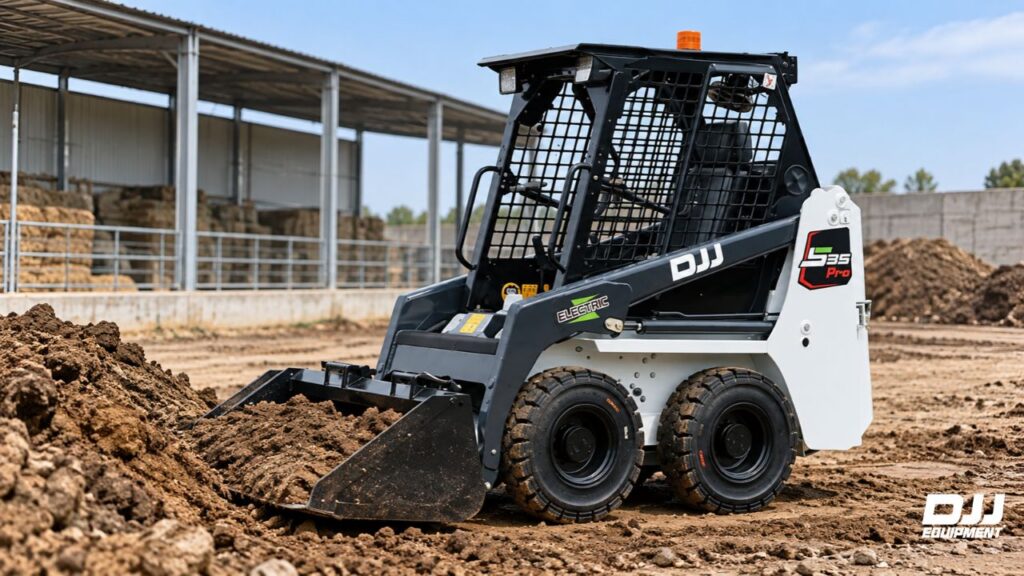
Wheel loader vs skid steer on lift capacity and dump height
A wheel loader lifts and dumps far more than a skid steer of the same size class. The LM920 has a 1,600 kg rated load and dumps from 3,200 mm, while the S35 Pro is rated at 350 kg and dumps from 1,850 mm.
Dump height decides which trucks and bins you can fill. A tipper or bin with sides higher than about 1.8 m is out of reach for the S35, so the material has to be stockpiled and loaded by another machine. For grain and other light bulk material, a 1.6-1.7 m³ grain bucket lets the LM920 unload at heights of up to 4.5 m.
Bucket size adds up over a day. Shifting a 10 m³ pile of mulch takes roughly 13 bucket loads with the LM920 and about 35 with the S35, before allowing for heaped or part-filled buckets.
What is the 70/30 rule on a skid steer?
The 70/30 rule describes how a skid steer's weight moves between its axles. With an empty bucket, about 70% of the machine's weight sits on the rear axle, so it pivots around the rear wheels. With a full rated load in the bucket the split reverses, and about 70% of the weight moves onto the front axle.
That shift is why a small skid steer carries far less than its own weight. The S35 Pro weighs 1,540 kg, tips forward at 700 kg in the bucket and is rated at 350 kg, half its tipping load. The exact weight split for each machine is in its operator's manual, and carrying the bucket low keeps a loaded skid steer stable on slopes and rough ground.
Which is better in tight spaces and indoors, a wheel loader or a skid steer?
A skid steer is the better machine for tight and enclosed spaces. The S35 Pro is 959 mm wide and 1,815 mm to the top of the cab, turns on the spot and runs on a battery, so it gives off no exhaust and runs quieter than a diesel. That suits poultry and pig sheds, warehouses, food sites, low doorways and narrow side gates into backyards.
Battery size sets how long it works between charges. The S35 Pro runs 6-8 hours on its 21.29 kWh battery and charges from 30% to 80% in about an hour, so it can be topped up over a break. The S35 Max carries a 29.17 kWh battery for 8-9 hours and lists a 1,650 mm turning radius.
The LM920 needs 1,830 mm of width and a 5,000 mm turning radius. Inside a building, a diesel loader also needs open doors and good airflow, which rules it out of many closed sheds and food sites.
How a wheel loader and a skid steer treat ground and surfaces
A wheel loader is gentler on finished surfaces than a skid steer. Skid steering drags the tyres sideways in every turn, which tears turf, scuffs pavers and fresh concrete, and wears tyres faster. An articulated loader rolls its wheels through the turn instead, so it leaves less damage on lawns, driveways and yard surfaces.
On soft ground, both machines run on tyres and both can bog down. A skid steer on rubber tracks spreads its weight over a much larger area, and the choice between wheeled skid steers and compact track loaders trades speed and running cost against grip and ground pressure. Weak traction on soft or wet ground sits high among the disadvantages of a wheel loader, next to the room it needs to turn.
Where only a skid steer fits on a lawn or paved area, wide and gradual turns do far less harm than spinning on the spot.
Attachments on a wheel loader and a skid steer
Both machines take attachments, but a skid steer is built around them. Swapping between a bucket, forks, an auger, a grapple or a broom is quick, so one skid steer can dig post holes, move pallets and sweep up on the same day.
What a skid steer can run depends on its mounting plate, its hydraulic flow and its rated operating capacity. The S35 hydraulics deliver 20.5 L/min at 33.7 MPa with 8 kN of bucket breakout force, which places it at the light end of the skid steer attachment list: buckets, forks and light tools rather than mulchers or cold planers.
A wheel loader's attachments are about scale. On the LM920, the 16 LGMA options run from pallet forks, grapples and a hay fork to a slasher, an auger, a dozer blade and a 4-in-1 bucket, and a quick hitch is an option. Each one changes the load on the arms, so it has to be rated for the loader it goes on.
What does a wheel loader or a skid steer cost to run and move?
A wheel loader costs more to run day to day because it burns diesel and needs engine servicing. An electric skid steer has no engine oil, fuel or fuel filters to buy, but it needs a place to charge where it parks and a charging routine that fits the working day.
The S35 battery carries a 5-year or 20,000-hour warranty, with 1 year or 2,000 hours on structural components. The LM920 costs $22,900 + GST ($25,190 inc. GST) before any extra buckets or attachments, which are quoted on their own, and the S35 is priced on quotation.
Moving the machine between sites is another cost. At 1,540 kg, the S35 Pro goes on a plant trailer behind a vehicle with enough towing capacity, while the 3,800 kg LM920 needs a heavier plant trailer or a truck. Check the vehicle's towing capacity, the trailer's ATM and whether your licence covers the combination before you tow either one.
Which jobs suit a wheel loader and which suit a skid steer?
Choose by the job the machine will do most of the time. The table matches common jobs to the machine that handles them better.
| Job | Better choice | Why |
|---|---|---|
| Cleaning out poultry or pig sheds | Skid steer (S35) | Electric, no exhaust, 959 mm wide |
| Backyard landscaping through a side gate | Skid steer (S35) | Narrow and turns on the spot |
| Post holes, levelling and sweeping | Skid steer (S35) | Quick attachment changes |
| Loading tipper trucks and bins | Wheel loader (LM920) | 3,200 mm dump height |
| Moving large stockpiles across a yard | Wheel loader (LM920) | 0.8 m³ bucket and 1,600 kg rated load |
| Handling grain or feed in an open yard | Wheel loader (LM920) | 1.6-1.7 m³ grain bucket option |
| Working on lawns or new paving | Wheel loader, where there is room | Articulated steering scuffs less |
Many farms and contractors end up running both machines, the skid steer for sheds and tight jobs and the loader for stockpiles and trucks. If you need a loader only for a season or a single project, DJJ also hires wheel loaders, while skid steers are for sale only.
Neither machine needs a High Risk Work Licence in Australia. WHS law still puts the duty on the business to train every operator for that machine and that site, and many principal contractors ask for a verification of competency.
Tell us the main job, the site and how you plan to move the machine, and we can weigh the S35 against the LM920 or a larger model from the LM range of wheel loaders. Call 1800 355 388 to talk it through.